

The government is accelerating the upskilling of Thai vocational education by partnering with China to expand cooperation across 210 majors, supplying future industries. It promotes a three-language formula combined with AI to develop a quality workforce, aiming for one million skilled workers in five years.
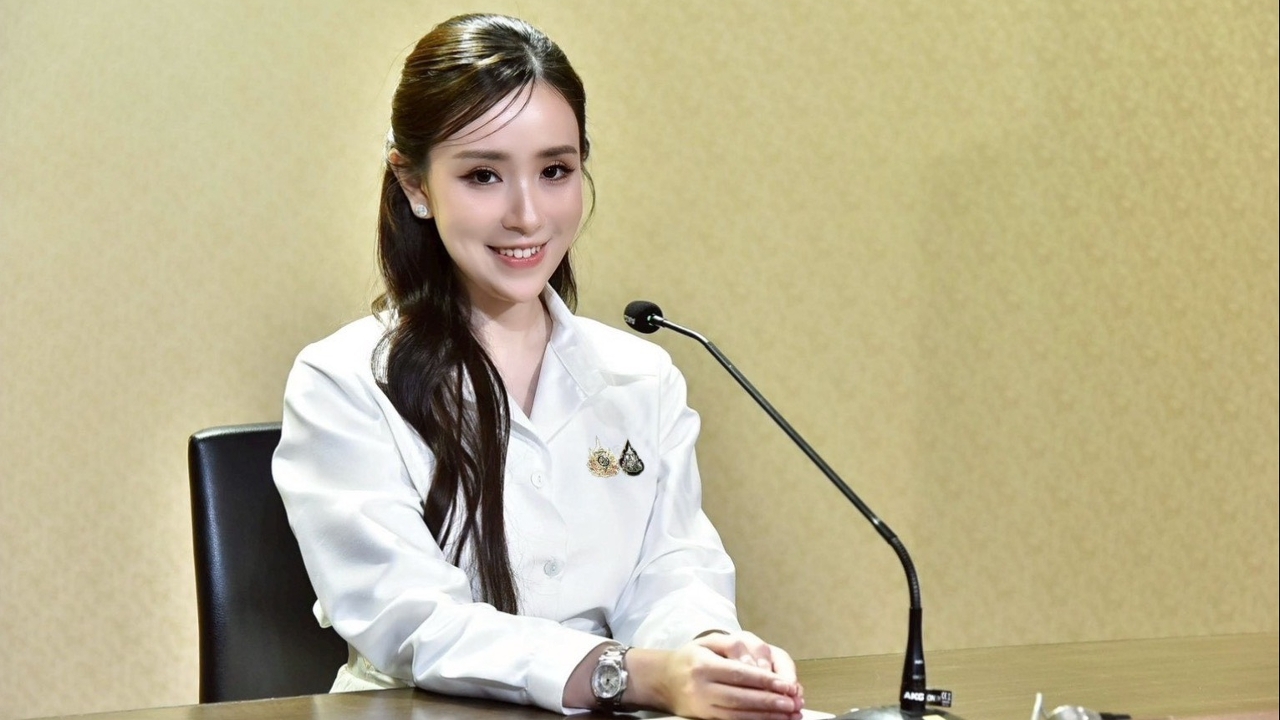
On 9 June 2026, Lieutenant Colonel Phatdarasmi Thongsaluyakorn, Deputy Spokesperson of the Office of the Prime Minister, revealed that the government, through the Ministry of Education, is advancing the development of Thai workforce aligned with the needs of the modern industry via cooperation with the People's Republic of China under the “China-Thailand Vocational Education Cooperation Project covering 210 Majors.” This project is a key mechanism to upgrade Thai vocational education by linking teaching with industry and increasing employment opportunities for students both domestically and internationally.
Mr. Prasert Chandraruangthong, Minister of Education, presided over the opening of the 6th Workshop on the China-Thailand Vocational Education Cooperation Project covering 210 Majors. (The 6th Workshop on China - Thailand Vocational Education Cooperation "210 Majors" Project) The workshop was held on 8–9 June 2026 at Asawin Grand Convention Hotel, Bangkok, attended by Somdet Phra Maharatchamongkolmuni, member of the Supreme Sangha Council and Chairman of the Confucius Institute on the Maritime Silk Road; Chinese Ministry of Education officials; Mr. Zhang Jianwei, Ambassador of the People's Republic of China to Thailand; Mr. Yosapol Wenuhkoset, Secretary-General of the Vocational Education Commission; along with government, private sector, and educational leaders from Thailand and China.
This cooperation builds on the China-Thailand Vocational Education Project covering 210 majors, focusing on curriculum development and teaching management aligned with industrial demands through the “3+1” concept: enhancing skills in Thai, Chinese, and English languages alongside AI knowledge to boost learners’ capacity to work in Thai and Chinese enterprises and meet labor demands in target industries and the Eastern Economic Corridor (EEC).
Vocational education plays a crucial role in producing and developing workforce to adapt to economic and technological changes globally, especially in digital industry and artificial intelligence (AI), rail systems, electric vehicles (EV), clean energy, logistics, robotics and automation, as well as high-quality services and tourism sectors—all areas with increasing labor demand in Thailand.
Furthermore, this integrates collaboration between educational institutions and the Thai and Chinese industries, from co-designing curricula, supporting internships, to employment after graduation, ensuring learners gain professional knowledge, real workplace experience, and skills matching labor market needs.
The Deputy Spokesperson added that vocational education cooperation between Thailand and China has been ongoing continuously. Between 2018 and 2024, China supported a total of 3,421 scholarships under the Thai-Chinese Dual Qualification Project, while the Vocational Education Commission has launched 19 dual qualification higher vocational certificate (HVC) curricula and began offering classes from the 2025 academic year onward.
The government prioritizes human resource development alongside economic growth. The Ministry of Education aims to elevate Thai vocational education under the policy “All for Education,” to develop one million quality workers within five years and promote the AI Literacy policy enabling teachers and students to use digital technology and AI effectively.
“This Thai-Chinese cooperation will provide learners with knowledge, professional skills, real workplace experience, and recognized qualifications, increasing their employment opportunities and stable income, aligning with the concept ‘Get a job, earn income, gain qualifications,’ and meeting the country's long-term workforce needs.” Lieutenant Colonel Phatdarasmi concluded.