

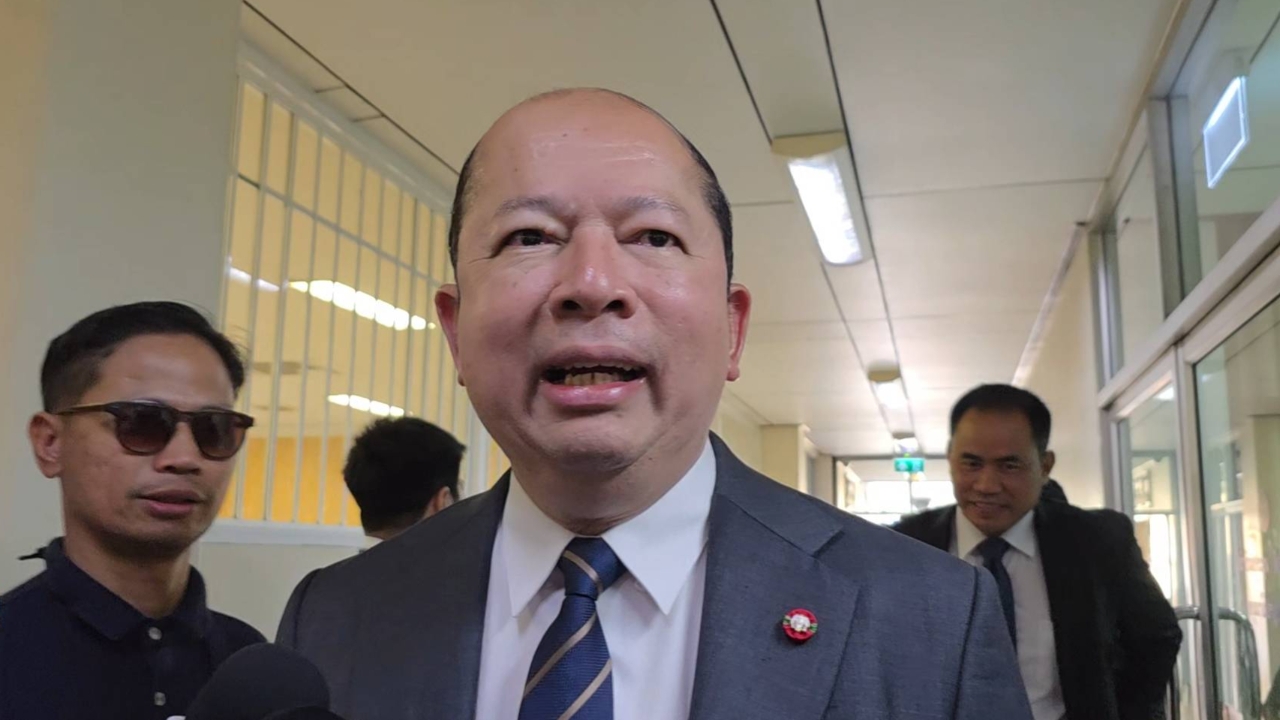
The National Security Council (NSC) Secretary-General revealed that the government's special delegation will meet this afternoon to address the southern border insurgency issues. He affirmed there will be no revision of the strategy, acknowledged the need to continue monitoring the Thai-Cambodian border situation, and is awaiting assessment of Hun Sen’s position. He emphasized that both nations must adhere to the ceasefire negotiation framework between them.
At 10:00 a.m. on 10 June 2026 GMT+7, Mr. Chatchai Bangchuad, Secretary-General of the National Security Council (NSC), spoke at the Government House, stating that this afternoon there will be a meeting of the government's special delegation committee to resolve the southern border provinces' issues. Deputy Prime Minister and Minister of Foreign Affairs, Mr. Sihasak Phuangketkaew, currently on an overseas mission, will join via phone-in. Also attending will be Lieutenant General Adul Boonthamcharoen, Minister of Defence.
Previously, Mr. Sihasak and Mr. Thanat Suwannanon, Director-General of the National Intelligence Agency and head of the southern border peace negotiation team, conducted field visits. Various dissident groups exist—some willing to cooperate in talks—while civil society, especially religious leaders, place importance on the peace process and wish to participate.
The NSC Secretary-General added that this afternoon’s meeting will focus on management and advancing key issues under preparation, involving mechanisms such as the Internal Security Operations Command (ISOC), the Southern Border Provinces Administrative Centre (SBPAC), and relevant agencies to organize efforts. He confirmed the NSC's southern border strategic plan will not be overhauled, as it is a policy already presented to Parliament with participation from all parties. The process is considered positive, meeting objectives, and will continue. He believes the special delegation members will use this as their main policy since it has public acceptance.
Additionally, Mr. Chatchai addressed resolving maritime border issues between Thailand and Cambodia under the 1982 United Nations Convention on the Law of the Sea (UNCLOS), following Cambodia’s move to implement binding conciliatory legislation. He noted this matter is under the Ministry of Foreign Affairs' purview, which will prepare detailed review mechanisms.
When asked about movements along the border after Cambodia received tanks from China and deployed them near the Thai-Cambodian border, Mr. Chatchai said it is an issue requiring close monitoring. The situation remains fragile, but the ceasefire agreement in place is still respected. He believes the situation is controllable locally, allowing for dialogue despite occasional clashes, enabling progress.
Regarding the stance of Samdech Hun Sen, President of the Cambodian Senate, who stated he would use negotiation mechanisms and military force to reclaim land from Thailand, the NSC Secretary-General said he understands this was said in that context. Thailand will have an appropriate approach as indicated by the Prime Minister’s interview. He cannot yet assess whether Hun Sen will follow through, but confirmed readiness to monitor and evaluate closely.
When asked if assessing Hun Sen’s stance is difficult, Mr. Chatchai replied it requires observation to determine, and whether it is difficult will be evaluated later. He reiterated that the ceasefire agreement remains the framework both countries must follow, noting even the Cambodian Prime Minister has affirmed commitment to it.