

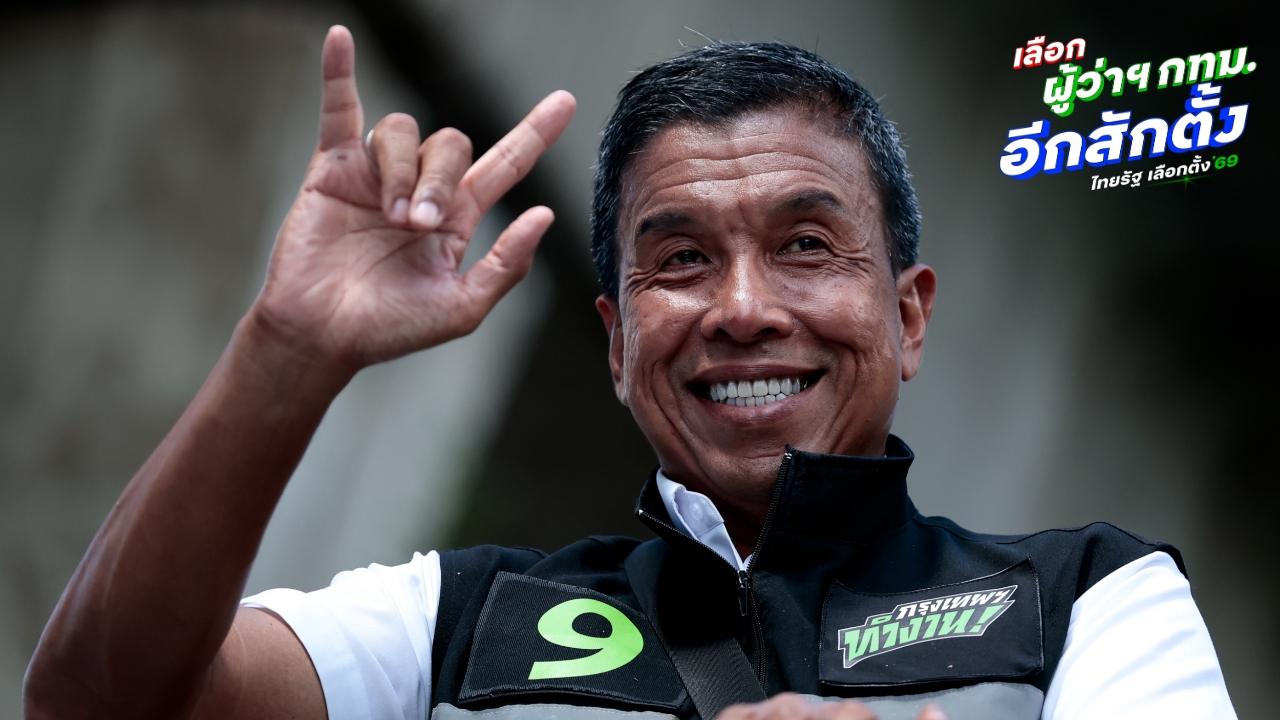
Bangkok Governor Election 2026: Chadchart campaigns in Chatuchak and Bang Sue, promoting the Next Learn policy to upgrade Bangkok's vocational training centers before moving on to Bang Pho. He remains cautious despite praise as the likely next governor and urges people to exercise their voting rights on 28 June.
On 10 June 2026, Chadchart Sitthiphan, independent candidate for Bangkok governor, campaigned in Chatuchak and Bang Sue districts. He presented policies on developing vocational skills and lifelong learning by expanding the Next Learn project to elevate Bangkok's vocational training centers into hubs for educational opportunities, new skill development, and income generation for people of all ages, preparing them for future labor market changes and economic conditions.
Chadchart said this visit was to listen to people's views and economic concerns. He noted many citizens currently face economic challenges, especially the elderly or those with traditional skills that may not align with modern labor market demands, making it essential for them to have opportunities to learn and develop additional skills.
He added that while Bangkok may not have sufficient budget to provide direct cash assistance to citizens, it can create opportunities by developing knowledge, enabling people to leverage this knowledge to build careers, generate income, and achieve sustainable self-reliance.

The Next Learn project, a key human capital development policy by Bangkok, is an online learning platform offering over 500–600 courses covering technology, artificial intelligence (AI), languages, and modern vocational skills. The goal is for citizens to accumulate more than one million learning hours, with several hundred thousand hours already completed to date.
Additionally, skill development initiatives like Next Job and Next Skill are underway. For Next Job, Bangkok collaborates with 13 private sector partners to develop training courses aligned with labor market needs. Trainees have opportunities to be considered for employment with participating businesses, significantly enhancing employment prospects for citizens.
Regarding vocational skill development, Bangkok operates 10 vocational schools and 11 training centers across various areas, offering over 400 courses. Most are free or charge minimal fees for materials, ensuring all groups have broad access to vocational skill development opportunities.

Chadchart noted that currently popular courses include beauty services such as nail and hair styling, along with computer and technology courses—skills that meet the needs of younger generations and the digital-era labor market. Plans are underway to make these courses more intensive and diverse in the future.
Former Bangkok Deputy Governor Sanan Wangsa-ngob said Bangkok currently has 10 vocational schools and 11 training centers, with plans to develop over 300 new courses in the next four years to keep pace with rapid global changes and labor market demands. There are also plans to expand vocational training services to all 50 districts, up from the current 21 centers and schools, to ensure equal access to skill development opportunities throughout the city.

Chadchart added that although some vocational centers have been renovated, many still face space and facility issues. During his visits, citizens voiced concerns about insufficient classrooms and limited space to meet demand, highlighting the need to quickly expand facilities and improve learning environments.
He emphasized that equipping citizens with new skills is a crucial tool for livelihood, especially given potential future economic challenges. Bangkok must develop its economy on two levels: the large-scale economy involving investment, employment, and attracting investors, and the grassroots economy of small entrepreneurs and micro-businesses—over 500,000 across Bangkok. He believes developing both levels concurrently will strengthen the city long-term, with knowledge promotion and vocational skill development being key mechanisms to improve quality of life, boost competitiveness, and foster inclusive urban economic growth.

Remaining cautious despite being praised as the likely next Bangkok governor, he urged people to vote on 28 June.
Later, Chadchart campaigned along Prachanarit Alley (Sai Mai Road, Bang Pho), promoting Street Economy policies and upgrading the area’s identity to build a proud city and strong community economy. He was warmly welcomed by residents who embraced him and posed for photos. He also met seniors and juniors from the Faculty of Engineering at Chulalongkorn University. During the walk, he encountered Pisit Lertsripanya, candidate for Bang Sue councilor from the Working People group. They greeted and encouraged each other, with Chadchart expressing willingness to collaborate if elected, and Pisit thanking him and bumping fists.
At one point, a citizen reported being unemployed, unable to sell goods locally, and having been assaulted, urging Chadchart to address issues of local influence over small vendors. Chadchart asked for calm, explained he had no direct authority, but promised to have his team investigate and resolve the problem. When asked how he would improve Bang Pho, Chadchart said the area has tourism potential; transportation must be improved, and a distinctive identity developed through souvenirs to represent Bangkok.

Residents also gave Chadchart campaign leaflets displayed like posters, as he does not put up his own signs. They presented him with a Chadchart keychain and a wooden golden sign with number 9, made recently in anticipation of his campaign visit. Chadchart thanked them and noted he had received a Chadchart model in Bang Rak the day before, and now the keychain, reminding everyone to vote on 28 June.
When asked about overall public response, Chadchart said he remains cautious. Despite people expressing confidence in his victory, if they do not turn out to vote on 28 June, he might lose votes and may not become Bangkok governor.

