

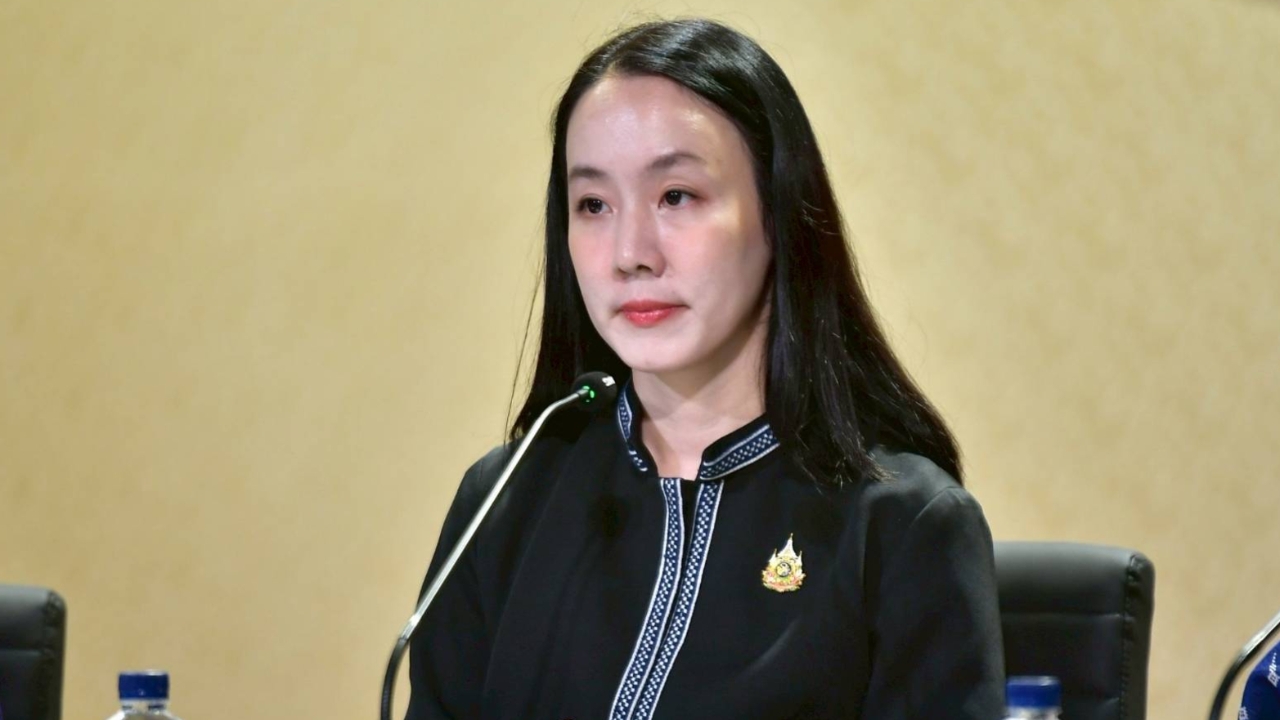
The Deputy Government Spokesperson clarified Democrat Party Deputy Leader Kandi's comments on the TH-AI Passport project, emphasizing that the contract is already binding. She pointed out that it is time to manage the contract, not to revisit debates about the TOR, and stated that the government is open to feedback to enhance benefits for the public and the country.
On 11 June 2026 GMT+7, Ms. Lalida Pertwiwatana, Deputy Spokesperson of the Office of the Prime Minister, commented on Democrat Party Deputy Leader Kandi Liaopyrojn’s remarks regarding the TH-AI Passport project, which suggested the TOR could still be reviewed or adjusted. She said the government respectfully considers all suggestions but noted some points may reflect misunderstandings about the project's legal status and the process of managing public contracts.
The Deputy Government Spokesperson stated that the TH-AI Passport project contract was duly signed on 7 April 2026 GMT+7, with procurement procedures fully compliant with legal requirements at every step. Therefore, the current government focus is not on drafting or revising the TOR but on managing the contract to maximize benefits for the public and the nation.
“Once the contract is binding, the responsible government agencies must manage it as efficiently as possible rather than revisiting discussions on steps already completed. If anyone still believes that the solution lies in going back to amend the TOR, it may indicate an incomplete understanding of the post-contract signing procedures in the public sector,” she said.
Ms. Lalida continued that the government clearly follows the principle: “Contracts cannot be undone but can be amended if both parties mutually agree, provided the benefits to the state do not diminish.” This is the approach currently being pursued by the Ministry of Digital Economy and Society.
“The government does not reject suggestions. On the contrary, we are opening channels to listen to opinions from all sides to discuss with the contracting parties and consider feasible improvements. The key condition is that benefits to the public and the state must not decrease; they can only remain the same or increase.”
Regarding claims that the first payment has yet to be made and thus the project can still be reviewed, the Deputy Government Spokesperson clarified that payment is not the determinant of the contract’s legal status, as the contract is binding from the signing date. The acceptance of the first deliverable is a normal procedure in contract management.
“Payment does not mark the start of the contract, and the absence of payment does not mean the project can be canceled or dismantled at will. Public project management must follow the law and existing obligations, not feelings or political trends,” she emphasized.
Regarding the public consultation forum on the TH-AI Passport project held on 11 June 2026 GMT+7, the Deputy Government Spokesperson affirmed that the event was organized with the genuine intention of hearing all sectors’ views. The Minister of Digital Economy and Society personally attended, inviting contractors to receive feedback directly, aiming to incorporate useful input to improve the project’s effectiveness.
“Prejudging this forum as mere whitewashing before it has even taken place is regrettable, as it may discourage citizens willing to share their opinions or cause concern, despite every opinion being valuable and the government ready to make practical use of them,” she said.
The Deputy Government Spokesperson added that the government is not fixed on any single approach but prioritizes the goal of making AI technology accessible and equitable for all citizens, while enhancing the country’s long-term competitiveness.
“Developing the country is the government's duty, while the opposition’s role is to scrutinize and advise, which the government always welcomes. However, criticism should be based on complete facts and legal grounds, as everyone’s ultimate goal should be the benefit of the people and the nation’s future.”
“If there are proposals to improve the project, increase its value, and create greater public benefits, the government is ready to listen fully. But if discussions remain stuck on issues already past in the process, they may not lead to increased benefits for the public. What matters now is to ensure the project achieves the greatest possible outcomes for Thai people, not to restart every time political debates arise.”