

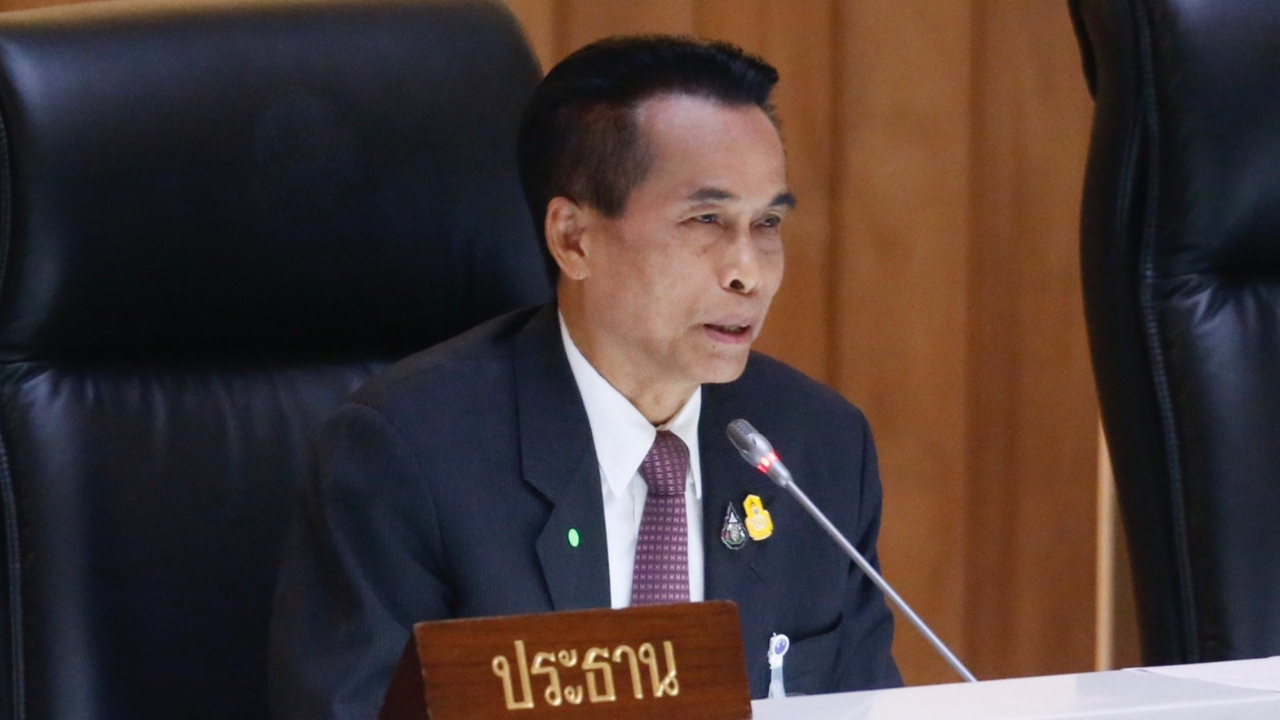
The Supreme Court has ruled to revoke the political rights of 'Teacher Kaew - Supachai Pho-su' for life, barring him from holding any political office and stripping his voting rights for 10 years over the ownership of 220 rai of forest land in Dong Phathai, Nakhon Phanom Province. The case concerns land ownership in the Dong Phathai forest area, Nakhon Phanom.
On 11 June 2026 GMT+7, the Supreme Court read its judgment in case number Kom.Jor. 2/2568 (black number) and Kom.Jor. 3/2569 (red number), between the National Anti-Corruption Commission (NACC) as petitioner and Mr. Supachai Pho-su, former Member of Parliament (MP) for Nakhon Phanom, representing the Bhumjaithai Party (BJT). In this case, on 17 September 2025 GMT+7, the petitioner submitted a complaint stating that the respondent, while serving as a fourth-term MP from 24 March 2019 to 20 March 2023, was subject to the 2018 Code of Ethics for Constitutional Court judges, independent agency officeholders, the Auditor-General, and administrative heads of the Constitutional Court and independent agencies.
The respondent held, possessed, and utilized land in the Dong Phathai large-scale land allocation project, Phathai Subdistrict, Tha Uthen District, Nakhon Phanom Province, totaling 40 land reservations covering 220 rai, valued at approximately 6,660,000 baht. This possession and use have continued since the respondent first became an MP on 6 January 2001. However, the respondent was not the person named on the land reservation documents (Nor Sor 2) and did not qualify for land allocation under the regulations for land distribution to the public.
Such actions prioritize personal interest over national benefit and cause damage to the dignity of holding the MP position. The petitioner requests a ruling that the respondent has seriously violated the ethical standards and that his right to run for election be permanently revoked, along with a voting rights revocation for up to 10 years.
The Supreme Court considered whether the petitioner had the authority to file the complaint. When the NACC decided to investigate suspected serious ethical violations by the respondent on 5 November 2020, the respondent was still serving as a fourth-term MP for Nakhon Phanom. Therefore, this is not a case where the accused has left public office for more than five years, as defined in the 2018 Anti-Corruption Act, Section 55 (3).
The facts show that from the respondent’s first to fourth terms as MP, including his roles as Deputy Minister of Agriculture and Cooperatives and Second Deputy Speaker of the House, he continuously held the land until accusations arose and the NACC accepted the case for consideration. Thus, the investigation occurred while the respondent was still in political office, not exceeding the 10-year limit from the date of the incident to the complaint under Section 55 (1). Moreover, Section 51 paragraph six concerns only the time limits for investigation and opinion but does not remove investigative authority. Therefore, even if the time limit has passed, the NACC retains the power to investigate, and the petitioner has authority to file the complaint.
The next issue is whether the respondent violated the 2018 ethical standards for Constitutional Court judges, independent agency officeholders, the Auditor-General, and administrative heads of the Constitutional Court and independent agencies. The court found that although the respondent was a private citizen at the time of purchasing the land, the fact that he acquired a large amount—220 rai—within a land allocation project intended to aid poor citizens and farmers constitutes exploiting benefits without regard for legality, honesty, trustworthiness, or straightforwardness.
The purchase of all 40 land plots, which were subject to transfer prohibitions, is clearly prohibited by law and therefore void under Civil and Commercial Code Section 150. When the persons named on the reservations abandoned the land and sold their rights, the land returned to state ownership. This does not mean the respondent, who holds the land without being named on the reservation documents, automatically has the right to survey and obtain a title deed. Proper procedures must be followed, including submission to the National Land Allocation Committee for approval and planning. There is no evidence that the provincial governor designated Dong Phathai forest area for survey, nor any action by the Department of Lands or Nakhon Phanom Province that would validate the voided transactions as legal, contrary to the respondent’s claims.
The respondent’s ongoing possession and use of the disputed land is therefore unlawful. Upon assuming political office, the respondent should have recognized his role as a representative of the Thai people and upheld ethical standards. However, he continued to hold and utilize the land illegally, including this large amount.
Besides preventing others from using the land, the respondent gained personal benefit instead of the intended benefit for citizens under the land allocation policy. This possession represents a conflict of interest between his political position and management of state land and forest resources under laws and regulations. It disregards the national and public interest and tarnishes the dignity of his office. Although the respondent later submitted a letter renouncing rights to 39 plots, this occurred after accusations and NACC charges. Thus, his conduct seriously violated ethical standards as alleged.
“The court rules that the respondent seriously violated the ethical standards under the Constitution of the Kingdom of Thailand Section 235, the 2018 Anti-Corruption Act Sections 87, and the 2018 Code of Ethics for Constitutional Court judges, independent agency officeholders, the Auditor-General, and administrative heads of the Constitutional Court and independent agencies, Articles 7 with 3 and 27 paragraph one, and Article 17 with 27 paragraph two. The respondent’s right to run for election is permanently revoked, he is disqualified from holding any political office, and his voting rights are revoked for 10 years from the date of this Supreme Court judgment.”