

The Ministry of Interior has approved the renaming of six places—including villages, local administrative organizations, and temples—to resolve duplicate name issues, reduce confusion, and better reflect the historical identity of the areas concerned.
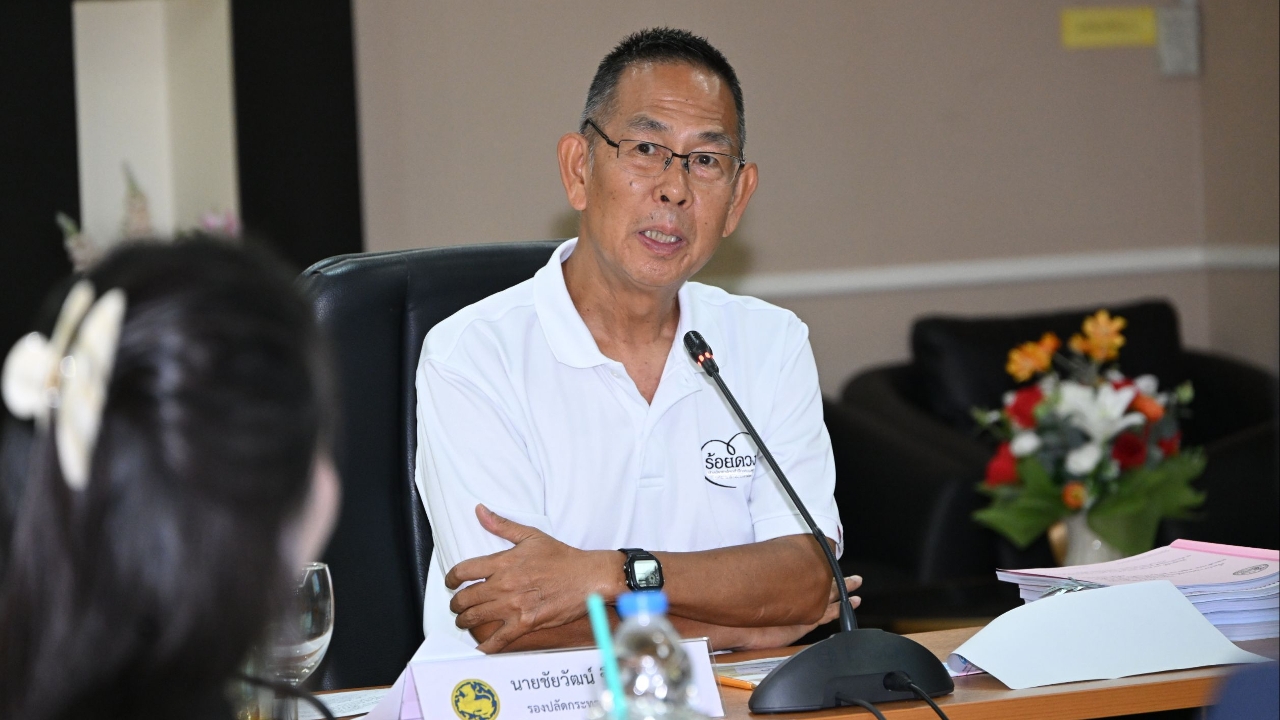
At 10:00 a.m. on 12 Jun 2026 GMT+7, Mr. Assisit Sampantharat, Permanent Secretary of the Ministry of Interior, assigned Mr. Chaiwat Chuenkosum, Deputy Permanent Secretary and Head of the Disaster Management and Urban Development Task Group, to chair the 2/2026 meeting of the Committee on Requests for Name Changes of Provinces, Districts, Subdistricts, Villages, or Other Official Places. The committee included representatives from relevant agencies such as the Department of Provincial Administration, the Fine Arts Department, the Royal Thai Survey Department, and the Ministry of Education. The meeting was held at the Inspection and Complaints Office, 5th Floor, Damrongrachanuphap Building, Ministry of Interior.
Today's meeting reviewed requests to change the names of provinces, districts, subdistricts, villages, or official places according to established criteria, ensuring compliance with laws and specific regulations for each location. A total of six places were considered: one village name change proposed by the Department of Provincial Administration, one subdistrict municipality name change proposed by the Department of Local Administration Promotion, and four temple name changes proposed by the National Office of Buddhism.
Regarding the village name change, one village—Ban Pa Khi Tiew in Mae Wang District, Chiang Mai Province—will be renamed "Ban Pa Tiew." Originally, locals referred to it as "Ban Don Pao Pa Khi Tiew." As the population grew, the village was divided, and the name Ban Pa Khi Tiew, referring to the local "khi tiew" tree species, was used. To create a more pleasant and auspicious name that better reflects the community's identity, the word "khi" was removed. Officially, the village is now called "Ban Pa Tiew" or simply "Ban Tiew."
For the subdistrict municipality, Ban Sri Phana Municipality in Seka District, Bueng Kan Province, will be renamed "Seka Municipality." The name "Se" means river or water source, reflecting the area's abundance of water resources. "Ka" refers to a type of crow with distinctive all-black feathers, symbolizing the area's richness. The new name signifies a fertile land with ample water, making it a suitable and prosperous place for residents to live.
The National Office of Buddhism has requested name changes for four temples as follows:
1. Wat Thep Prathan in Chanthaburi Province will be renamed "Wat Thep Prathan Athiporn." This is because the temple constructed the Phra Buddha Metta statue, known as Somdet Ong Pathom, as a devotional tribute. The base of the statue bears the name Wat Thep Prathan (Athiporn), leading the public to commonly recognize the temple by this fuller name, which means "the temple where divine beings bestow great blessings."
2. Wat Nam Phueng in Phitsanulok Province will be renamed "Wat Nam Muang Nusorn Wanaram." Originally, it was believed that the temple was named after its proximity to "Khlong Nam Phueng" (Honey Water Canal). However, local residents from Nam Muang Village commonly referred to it as "Wat Nam Muang," matching the village name. Therefore, it was agreed to change the temple's name to align with the village name.
3. Wat Pa Don Khaen in Roi Et Province will be renamed "Wat Pa Sri Mongkhon." Located in Ban Don Khaen, this historic temple was founded by Luang Pu Khammee Paphassaro, who established the meditation retreat called "Pa Sri Mongkhon" due to its auspicious qualities for the community. After a public hearing and consensus, the temple was officially named Wat Pa Sri Mongkhon.
4. Wat Sang Ruang in Sisaket Province will be renamed "Wat Phra That Ruang Rong." Situated in Ban Sang Ruang, in 1982 (B.E. 2525), Phra Kru Wiboon Thamphan initiated the construction of a stupa to enshrine a Buddha relic. The temple also serves as a meditation center for local Buddhists. Upon completion, it was named "Phra That Ruang Rong."
The Ministry of Interior's Committee on Name Changes for Provinces, Districts, Subdistricts, Villages, or Other Official Places is a legally empowered body responsible for evaluating and approving name change proposals. Their review focuses on evidence and local lifestyle consistency with the proposed changes, as well as the area's historical background. The process includes public consultations from the village level up to the committee. Following the Cabinet resolution on 6 April 2026, the committee appointed by the previous Cabinet will continue its duties without requiring a new Prime Minister’s Office order or other governmental appointments.