

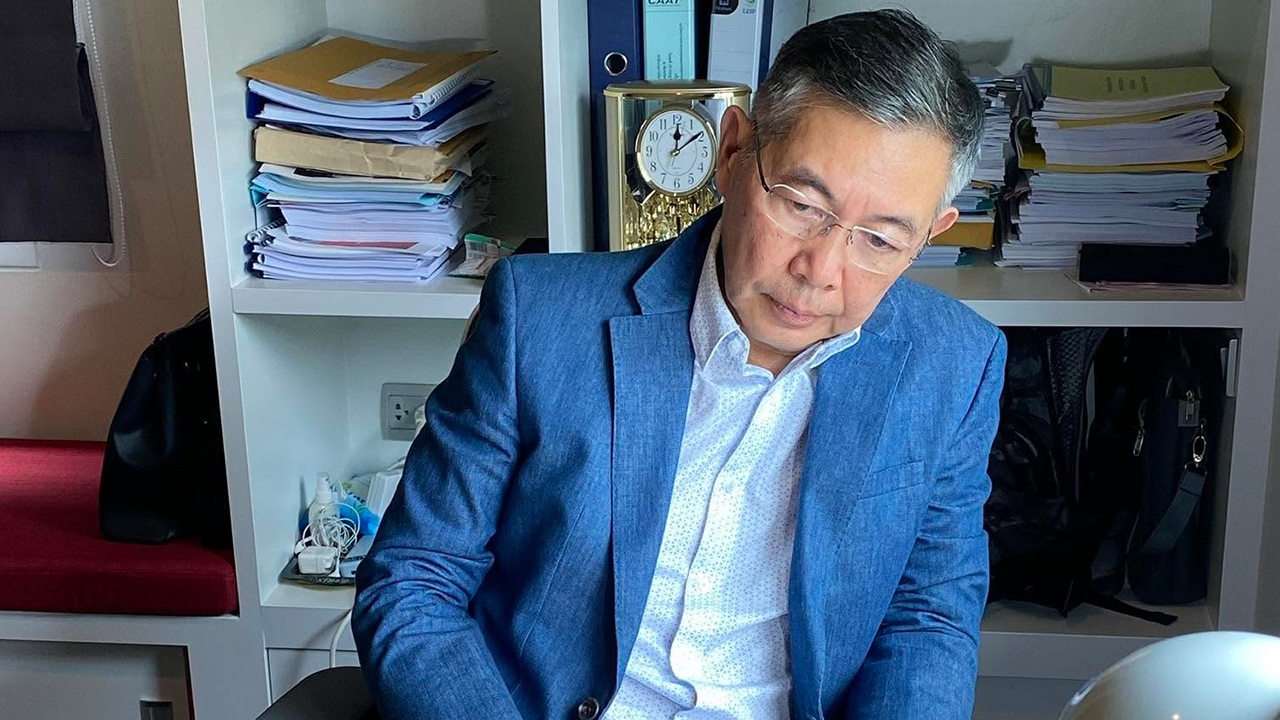
The lawyer handling the Khao Kradong case confronts the issue directly, defending the rights of villagers occupying 5,000 rai and strongly condemning those who selectively interpret the law in an attempt to use the court’s name as a weapon to silence the people.
On 13 June 2026, Mr. Chanin Kaenhiran, the lawyer responsible for the Khao Kradong case, posted on his personal Facebook page to clarify the heated debate over the land in Khao Kradong. He stated that certain groups are still trying to repeat the issue to mislead society into believing that the Supreme Court's ruling is final, and that everyone on the 5,083 rai has become trespassers, leading the Department of Lands to revoke all land titles immediately. He said this approach selectively distorts the law, causing serious misunderstandings in society.
Mr. Chanin explained that a judgment in one case cannot be used as a "rubber stamp" to silence all people in the area, especially those who were never parties to that case. The law still protects and grants outsiders the right to prove superior claims, including presenting facts and evidence different from the original case. Although ownership rulings may bar outsiders in some situations, this does not mean the public loses the right to defend themselves or explain their innocence.
"If everything were truly settled as some try to suggest, then why does the judiciary continue to accept cases filed by the State Railway of Thailand against individual villagers in Buriram provincial court, and why does the court still allow the presentation of evidence?" Mr. Chanin questioned.
Additionally, the Khao Kradong lawyer raised questions about the administrative court’s order, asking why the court did not immediately instruct the Department of Lands to revoke all land titles but instead ordered actions under Section 61 of the Land Code. This process requires setting up a committee to inspect, investigate, listen to stakeholders, and consider facts parcel by parcel, rather than ordering a blanket revocation. Therefore, saying "the Department of Lands has the authority to revoke" does not mean "they must revoke immediately without hearing anyone." If officials rush to revoke without verifying boundaries, ignoring the people, and bypassing Section 61 procedures, that would be an abuse of power causing severe damage to the legal system.
At the end, Mr. Chanin criticized those who harshly criticize the case, saying it is regrettable that they do not know the facts, do not understand what constitutes a superior right, have never seen the new case files, or are unaware of the history of land title issuance per parcel. Yet they boastfully offer opinions to influence society, acting like vigilante judges condemning the entire area as traitors, despite having no involvement or impact. He emphasized that seeking justice should not rely on loud media voices over evidence to stir hatred. He warned not to use "respecting the final court ruling" as an excuse to deny the rights of those still legally allowed to contest the case. This case must be resolved based on facts in court, not by satisfying outsiders unfamiliar with the case files.