

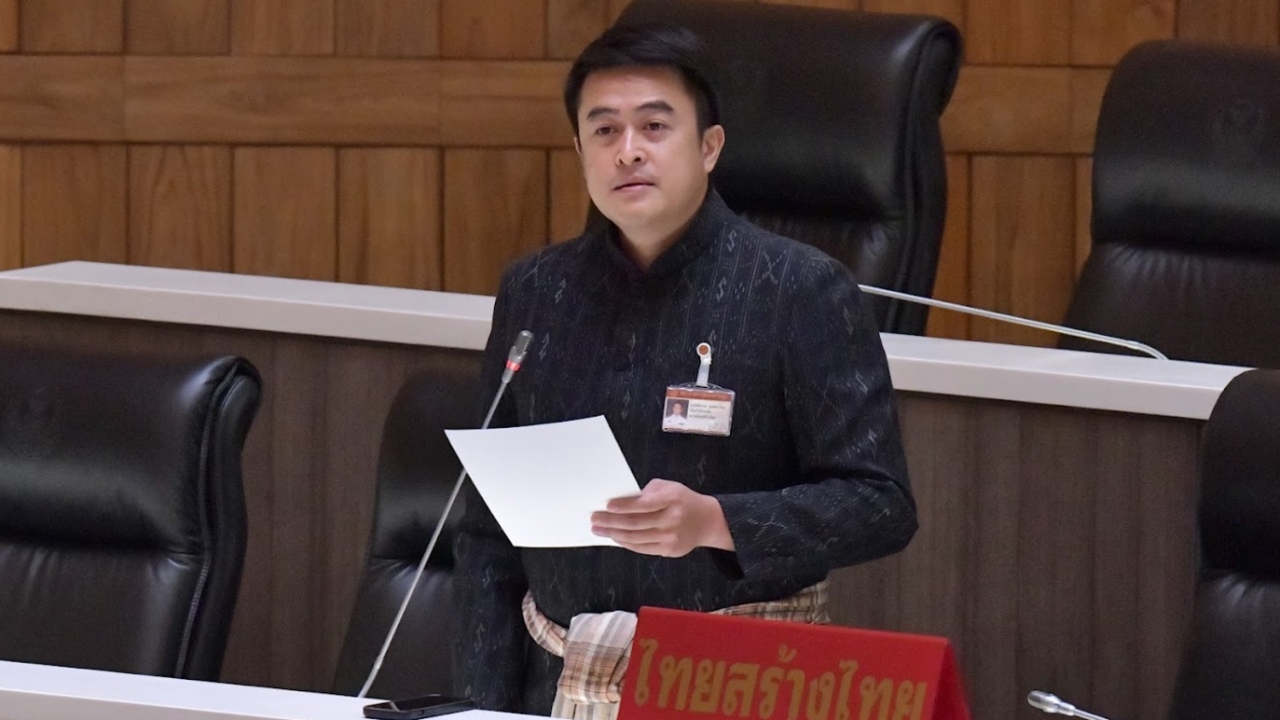
Chatchawan, MP for Roi Et from the Thai Sang Thai Party, strongly criticized the first meeting of the Rice Policy and Management Committee (RPM) for lacking the agenda on the “1,000 baht per rai” support. He questioned the government's earlier claims that farmers would become very wealthy, yet they have been left disappointed, worsening the La Niña crisis. He urged the government to urgently reconsider and not remain idle.
On 13 June 2026, Mr. Chatchawan Paetya Thai, MP for Roi Et District 7 from the Thai Sang Thai Party (TST), revealed after monitoring the first meeting of the Rice Policy and Management Committee (RPM) under the new government that he was deeply disappointed. The meeting did not include the agenda for cost-reduction or compensation measures—the “1,000 baht per rai” program for the 2026/27 production year—for consideration, nor did it provide any clear explanation to farmers. Only the approval of leftover budget payments from the previous year was granted, which overlooked the hardships faced by tens of millions of farming households eagerly awaiting support, leaving them disappointed.
Mr. Chatchawan said the RPM’s neglect this time further worsens the crisis for farmers, who this year face production costs soaring by over 50%. This is due to the Middle East conflict pushing diesel prices sharply higher, fertilizer prices rising from 700-800 baht per sack to 1,500 baht, and seed prices nearly doubling. The government’s continued claim that the first meeting is merely for setting work frameworks, without short-term measures to support farmers, is unreasonable given the current crisis.
He added that farmers are also severely facing a shortage of seeds for the new rice planting season, as seed production fields of quality rice varieties were heavily damaged by the effects of the La Niña phenomenon. This climate distortion caused prolonged dry spells in many key planting areas, leading to seedling and breeding fields drying out and dying. The quantity of quality rice seeds harvested has sharply declined, representing a major structural problem causing widespread hardship from the very start of the production season.
Mr. Chatchawan outlined three major negative consequences from the seed shortage caused by the dry spells: 1. A severe increase in counterfeit and substandard rice seeds in the market, as opportunistic traders hike prices, becoming hidden costs that worsen farmers' burdens; 2. An escalation of farmers’ existing debt crisis, threatening food security; and 3. Long-term impacts on Thailand’s rice exports, as the seed shortage combined with drought forces farmers to delay rice transplanting seasons further than usual.
He emphasized that the government and the RPM must urgently review and clearly explain how and how much they will assist farmers so they can prepare accordingly. The failure of proactive measures to support farmers is critical, as rice seeds are the most vital initial cost in rice cultivation. If the government continues to remain idle, allowing farmers to face fate without support, with the “1,000 baht per rai” program rejected this year and severe seed shortages worsening, Thailand may face a genuine grassroots economic crisis by year-end. He vowed to continue pressing this issue strongly on behalf of Thai farmers.
“Previously, during the election campaign, the government’s lead party clearly promised to make farmers wealthy, with jasmine rice priced at 18,000 baht per ton, white rice at 12,000 baht, and all agricultural products rising in price. But now, the results are completely opposite. Even basic relief measures to sustain farmers’ livelihoods, like the “1,000 baht per rai” program, have yet to be implemented,” he concluded.