

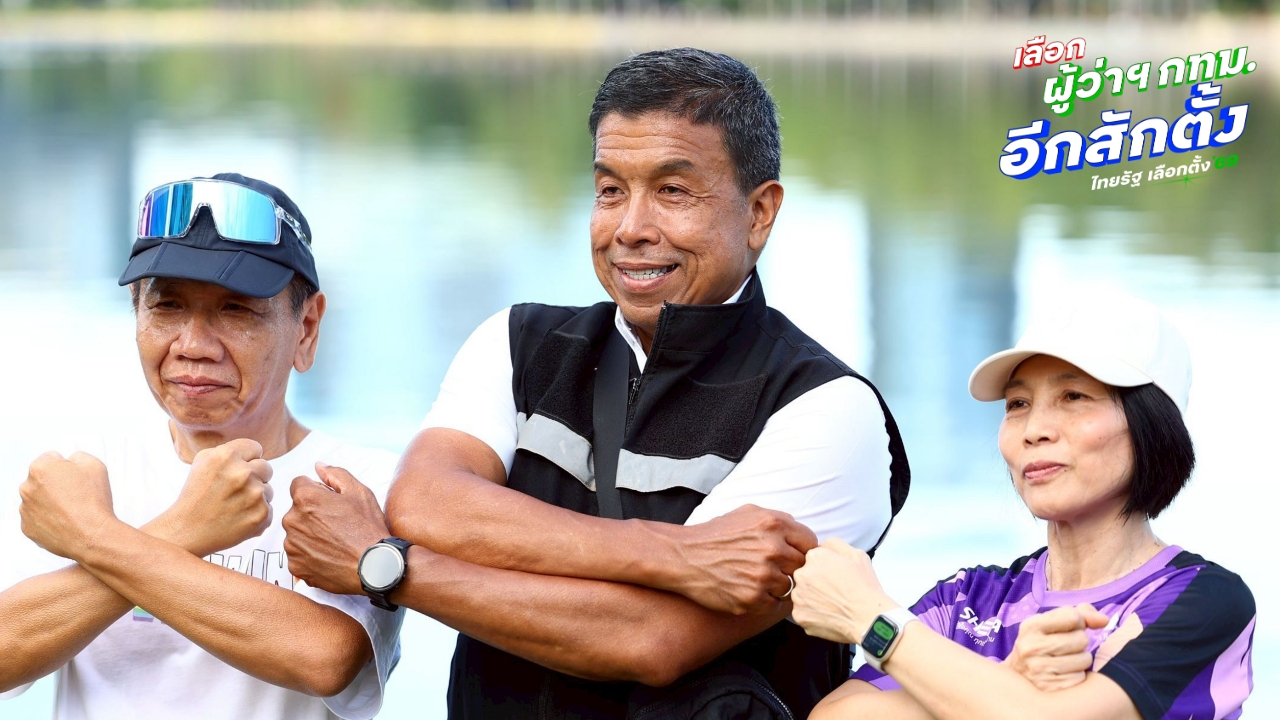
Suan Dusit Poll has released the results of the third survey for the 2026 Bangkok governor election, showing Chadchart significantly ahead of competitors, followed by Joe Chaiwat, with many voters still undecided. At the same time, independent candidates are the leading choice for Bangkok councilors.
On 14 June 2026, Suan Dusit Poll of Suan Dusit University published a survey of Bangkok residents eligible to vote regarding the "18th Bangkok Governor Election (third round)." The sample included 2,029 respondents surveyed online and in the field between 9-12 June 2026. The summary of results is as follows.
Who do Bangkok residents want as the next Governor of Bangkok?
Which party do Bangkok residents intend to choose for the Bangkok Metropolitan Council (BMC)?

Dr. Pornpan Buathong, Chairperson of Suan Dusit Poll, stated: The results from the past three polls reflect that Bangkok residents continue to focus on individual candidates. The original support bases of the former Move Forward Party and the Prachachon Party have not fully shifted to Mr. Chaiwat, indicating that party popularity does not automatically translate into support for the candidate. Acceptance of the individual candidate remains a key factor in voters’ decisions in Bangkok.
Meanwhile, Dr. Ngampravan Esmanuek, Dean of the School of Law and Politics at Suan Dusit University, explained that the survey results show Bangkok residents clearly prioritize "performance and individual qualities" over party politics. Mr. Chadchart enjoys strong support of 60.08%, significantly ahead of the second-ranked candidate. This indicates sustained confidence in his city administration. More interesting than the numbers is the shift in political bases reflecting a trend toward "performance-based politics" rather than allegiance to ideology or party alone. Voters from various political groups remain ready to support candidates who demonstrate actual achievements.
At the same time, the Prachachon Party maintains strength as an alternative force for urban voters, especially among younger people and those seeking structural change. However, the continued popularity of independent candidates for both governor and council positions signals that Bangkok residents place greater weight on leadership quality and problem-solving ability than on party brand. In political science terms, this poll suggests Bangkok politics is moving toward an era where citizens judge politicians by tangible results rather than emotional appeal, which may shape the future behavior of Thai voters.
Big data insights from Wisesight: What does social media reveal about the Bangkok governor race?
To provide a contextual picture on computer and smartphone screens before election day, Wisesight (Thailand) Co., Ltd. collected related data via the Wisesight Bangkok Election tool from 1 May to 7 June 2026. The findings reveal interesting aspects of social media trends that help complete the profile of urban voters’ preferences as follows:
1. Main platforms driving election trends
Facebook: The primary platform for political news consumption and exchange, with 2,584 posts mostly from media and agencies distributing policies.
TikTok: The most powerful platform for interaction, achieving over 1.2 million engagements from only 530 posts, focusing on viral clips of candidates’ field visits.
X (Twitter): The main space for in-depth analytical threads and policy debates, with 613 posts.
2. Ranking candidates by highest engagement on screens
1st: Chadchart Sittipunt (5.34 million engagements) dominates online space with "real-life content" shared by netizens, such as clips of exercise runs and flood inspections, attracting diverse age groups on Facebook and TikTok.
2nd: Phasapong Chaiwirinyavanich (214K engagements), a dark horse independent candidate, averaging 544 engagements per post, ranking second after Chadchart, growing among voters not tied to major parties.
3rd: Dr. Mallika Bunmitrakul Mahasuk (197K engagements), holding 3.2% share, highlighting environmental policies and use of AI to tackle PM 2.5 pollution.
4th: Dr. Joe Chaiwat Sataworawijit (165K engagements), with 2.7% share, gaining momentum in late May to early June during intense debates. Overall sentiment score is -13, indicating high scrutiny and questioning from society.
5th: Anucha Burapachaisri (115K engagements), emphasizing national-level management image and basic urban policies such as sidewalks and cleanliness.
Summary: From poll numbers and screens to the actual ballot box
Although Suan Dusit Poll clearly shows Mr. Chadchart Sittipunt’s popularity remains dominant, and Wisesight’s engagement statistics reinforce the massive online attention, all eligible voters must realize that online mentions do not always equate to actual votes cast in the ballot box.
Ultimately, in the 2026 Bangkok governor election, the true outcome will not be determined by who goes viral or dominates media space the most, but by whether the city's people collectively transform their "social media echoes" into "one vote in the booth" to elect leaders who will effectively develop and resolve Bangkok’s accumulated problems in the future.