

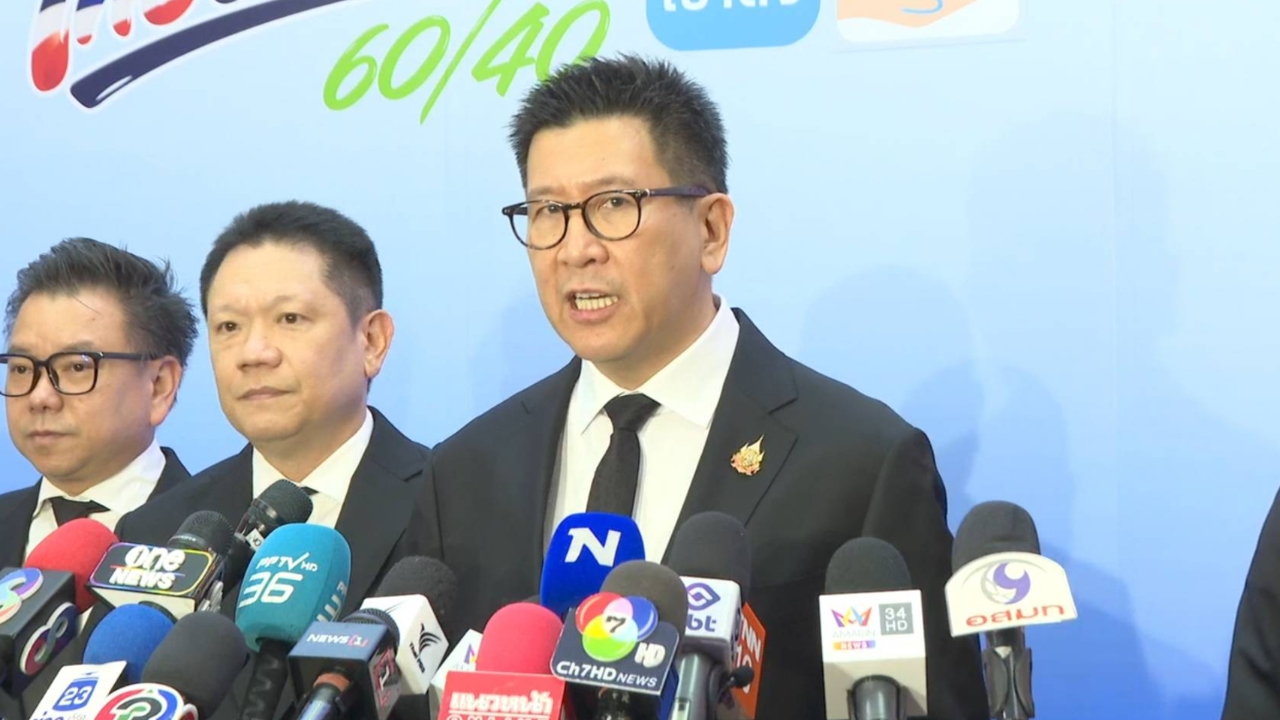
Deputy Prime Minister and Finance Minister Akniti Nitithanprapas plans to review Thailand's GDP figures, noting positive signals if the Middle East war ends. He affirmed the government will continue supporting small businesses in combating inflation and advancing the energy transition plan backed by a 200 billion baht loan.
On 15 June 2026 at the Government House, Deputy Prime Minister and Finance Minister Akniti Nitithanprapas commented on the economic situation, saying that if the war ends, it will be a highly positive sign for the global and Thai economies as the world will enter a recovery phase. This will help reduce the risk of a global economic crisis that began with energy price volatility. Although energy prices may not fall to pre-war levels, the situation will be alleviated.
The government will revise the GDP forecast to align with the changed circumstances and the new positive factors, but this must be done cautiously given the high global volatility.
Akniti added that the situation has shifted from an energy crisis to a cost crisis, which has been passed on to product prices, impacting grassroots citizens and small vendors through rising inflation. The government is focusing on support via the Thai Help Thai Plus program, which has seen participating stores continuously increase sales. This program not only reduces costs and improves access to funding but also teaches entrepreneurs to use AI to analyze sales for long-term sustainability.
Regarding the plan to use a 200 billion baht loan under the Energy Transition Emergency Decree, Akniti emphasized the necessity of continuing this initiative because global oil production facilities have been damaged by the war, keeping oil prices high for at least another 1-2 years. If Thailand does not quickly adapt and reduce its heavy reliance on imported oil and natural gas, it faces significant risks should another crisis occur in the future.
“We aim to help both people and the transition itself, such as promoting solar panel installations, which address short-term issues by lowering household electricity expenses and long-term issues by reducing the country's dependence on imported energy,” he said.
On progress regarding the review of the State Welfare Card criteria, Akniti explained that the Permanent Secretary of the Finance Ministry is currently verifying data and figures thoroughly, so there will be no proposal presented to the Cabinet meeting tomorrow.