

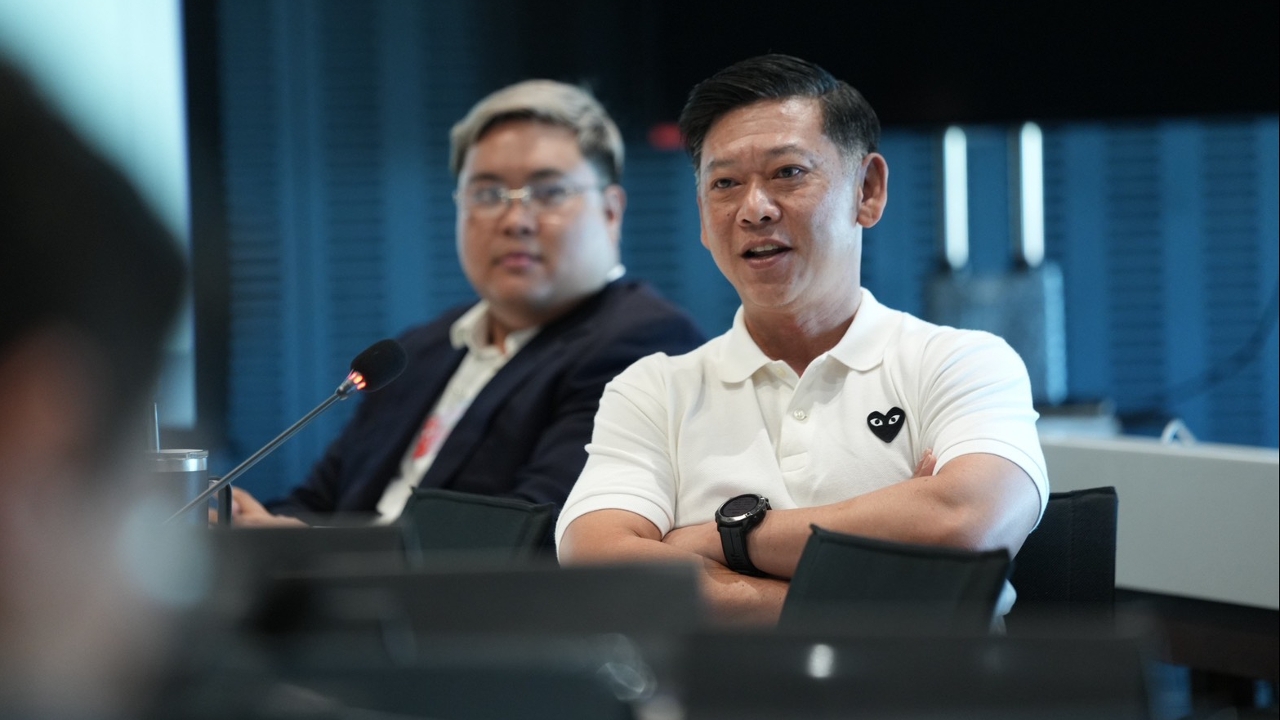
SME restaurant operators complained during the shadow Cabinet meeting that the "Thai Chua Thai Plus" program has caused their sales to decline as consumers flock to small retailers. They appealed to the Prime Minister for compassion and requested to be allowed to join the program, hoping it will help sustain their businesses.
On 15 Jun 2026 GMT+7, after the shadow Cabinet meeting, which considered three agendas: the difficulties faced by SME restaurant operators, the issue of Thai shrimp exports blocked by Malaysia, and progress on the Th-AI passport project. The meeting was chaired by Mr. Natthapong Ruangpanyawut, leader of the People’s Party.
Mr. Warunthorn Daengyai, a representative of restaurant operators, said that SME restaurant businesses have faced ongoing economic difficulties over the past 2-3 years, leading to continuous sales declines. Recently, tensions in the Middle East and the closure of the Strait of Hormuz caused oil prices to rise, increasing business costs both directly and indirectly. This led to significant increases in raw material and transportation costs. Restaurants have faced falling sales but rising costs, compounded by reduced consumer purchasing power amid the economic situation, leaving many restaurants vulnerable before being further impacted by the Thai Chua Thai Plus measures.
The program’s criteria allow only certain types of shops to participate, mainly based on registration type and sales volume. Many properly registered and tax-compliant restaurants were excluded, even though they are not large businesses. For example, the sales threshold of 1.8 million baht per year, or about 5,000 baht per day, does not accurately reflect true business size, as many small restaurants exceed this sales level. Nearly 30 million people participating in the program mainly spend their benefits at eligible shops, diverting money to other retail groups. Meanwhile, restaurants excluded from the program have clearly lost customers and sales.
Mr. Warunthorn said his business has over 40-50 branches nationwide with about 300-400 employees, reflecting that many restaurants employ significant staff and operate legally but are still excluded from the program. He urged the government to expand eligibility to SME restaurants with annual sales up to 100 million baht to join Thai Chua Thai Plus, to help support businesses affected by the economy, rising energy prices, and increasing raw material costs.
Mr. Isariya Phairiphaithit, an MP from the People’s Party, said the shadow Cabinet found the Thai Chua Thai Plus program’s rule allowing only sole proprietorship restaurants to participate, excluding legally registered corporate restaurants, unfair to law-abiding operators. Many small restaurants register as partnerships or companies, pay taxes, and operate legally but are classified as large businesses and excluded. Meanwhile, some unregistered shops with higher sales can join, creating inequality and effectively punishing compliant operators.
The shadow Cabinet proposed the government urgently revise the program’s criteria during the remaining period, as the program is only in its first month with about three months left before it ends. They suggested allowing small corporate entities or small-sized SMEs already registered with the Revenue Department and the Department of Business Development to participate.
Mr. Isariya noted the government targets 30 million users for the program. Recent data shows about 26 million have registered, leaving around 4 million unused rights worth roughly 16 billion baht. The government could use this remaining budget to support small legal corporate operators and encourage other businesses to enter the tax system in the future.
Mr. Natthapong concluded that restaurant and SME operators face multiple challenges, including the energy price crisis, economic conditions reducing consumer purchasing power, and competition on various platforms, with many small operators feeling disadvantaged. The government plans to link the Thai Chua Thai Plus program with various platforms. During the shadow Cabinet meeting, operators clearly raised these concerns. The People’s Party does not oppose the Thai Chua Thai Plus program but cautions against rough implementation as highlighted by Mr. Isariya.