

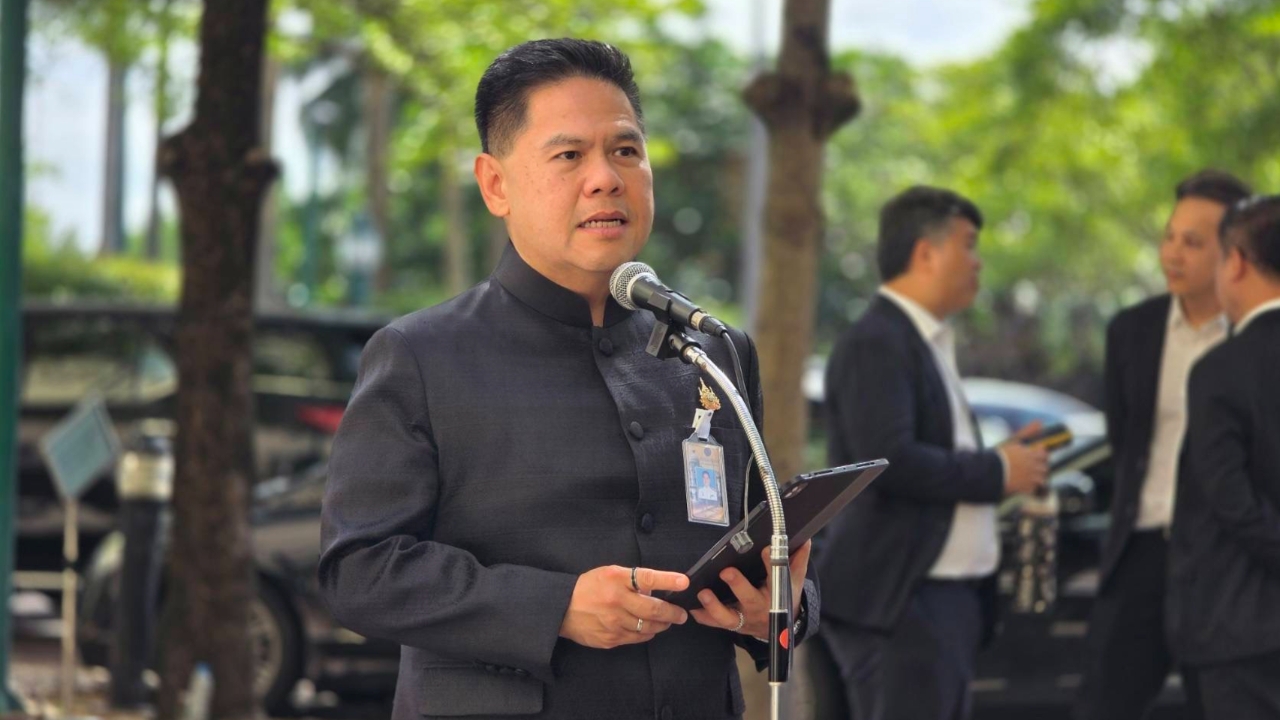
Warawut, Minister of Industry, is confident that the Thai Chua Thai Plus initiative will drive continuous growth in Thailand's industrial sector in the second half of the year. It supports electric vehicles, AI, and data centers to propel the economy through the transition era, overcoming the Middle East crisis.
On 16 June 2026 at the Government House, Warawut Silpa-archa, Minister of Industry, stated that although the situation in the Middle East remains a risk factor for the global economy—affecting energy prices, transportation costs, and international supply chains—the Ministry of Industry remains confident that Thailand's industrial sector will continue to expand in the second half of 2026. The Ministry expects the Industrial Production Index (MPI) and industrial GDP to grow by 1.5-2.0% during this period, with an average annual growth forecast of 1.0-2.0%, supported by investments in new industries, domestic consumption, and government economic stimulus measures.
Specifically, the domestic economic stimulus measure "Thai Chua Thai Plus," running from 1 June to 30 September 2026, is boosting spending and domestic consumption. This has increased demand for consumer goods, especially food and beverages and processed agricultural products, which are expected to continue growing. This has led to higher production capacity in the manufacturing sector, enhancing economic circulation and significantly supporting industrial growth in the second half of the year. Additionally, global demand for food products remains high.
"This energy crisis may be a key turning point accelerating the Thai manufacturing sector's shift toward modern technology and clean energy. Industries expected to grow in the second half include electric vehicles (xEV), advanced electronics, digital technology, and data centers benefiting from global AI growth. Sustainable aviation fuel (SAF) and the steel industry also have growth potential due to the green economy trend, infrastructure investment, and policies supporting the transition to clean energy, which will enhance Thailand's long-term competitiveness," he explained.
The global energy crisis is not only a challenge but also a crucial driver for the Thai industrial sector to adapt to the new economy. This aligns with government policies and the One Mind strategy, which emphasizes improving solutions for citizens, streamlining laws and licensing procedures, promoting future industries, and supporting green industries and clean energy. Thailand has the potential to build confidence in the industrial sector and facilitate investment.
The Ministry of Industry continues to closely monitor the situation in the Middle East, as the petrochemical, plastics, and chemical fertilizer industries remain sensitive to oil and natural gas prices, which pressure production costs in the short term. However, this also presents an important opportunity for Thai industries to accelerate the transition to clean energy, advanced technology, and the green economy, enabling sustainable growth despite challenges.