

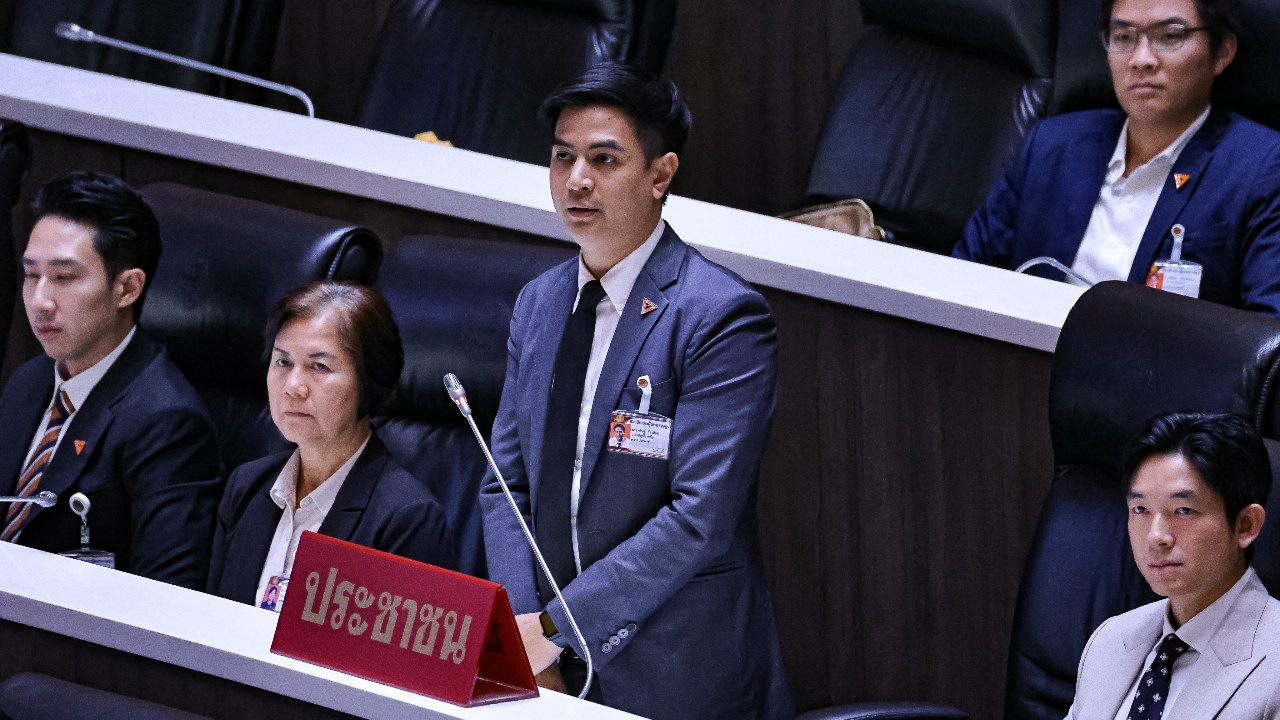
Prit Watcharasindhu intensifies scrutiny on Senate election collusion with a second clip, questioning the Election Commission (EC) about what was seen on the voting slips. He states that he is still awaiting an explanation for the events shown in the clip and points out footage of Mongkol Surasajja submitting a document to EC member Thitiket. He urges the Senate chairman to answer whether there were exchanges of money, positions, or power related to the collusion slips.
On 16 June 2026, Mr. Prit Watcharasindhu, a party-list MP for the Pachan Party and opposition whip, posted on Facebook under the title “In-depth on Senate Election Collusion Clip (Part 2): Since the EC has not responded, let's see if Senate Chairman Mongkol Surasajja will answer.” Last Saturday, I released evidence footage showing one of the seven Election Commissioners (EC) collecting voting slips and cautioning candidates about dishonest conduct during the national Senate election. I am aware (as I previously stated) that the EC explained that a candidate studying other candidates' qualifications and noting preferred candidate numbers on paper to avoid forgetting is not inherently wrong. However, this explanation does not clarify my questions: 1. From the clip: What did the EC see on the slips or what behavior raised suspicion of dishonesty? If the documents and behavior were not problematic, why did the EC collect the papers and caution the candidates?
2. On election day: How did the EC proceed after the event in the clip? Did the seven-member EC immediately meet to examine the evidence? If not, why not? If so, why did they not exercise authority to halt, correct, or postpone the election? 3. After election day: Did the EC continue reviewing evidence to analyze along with other proofs (such as financial trails)? Is all evidence and examination results included in the case file the seven EC members are reviewing? After 2-3 days, I have heard no explanation from the EC, especially from EC member Thitiket Nuchanat, who appears in the clip. While we await Thitiket’s clarification,
footage shows Mongkol submitting a document to Thitiket.
“I want to raise questions about another person believed to appear in the same clip, someone the media can access more easily: Senate member Mongkol Surasajja, the current Senate chairman. By observing the paper taped behind the chair and comparing the physique of candidates with the numbers shown in the clip to the official Senate candidate list, I understand that all candidates seen are from Group 1, specifically those selected internally that morning. Looking at the candidate list in numeric order, the candidate seated to the right of number 82 is likely number 84, named Mongkol Surasajja (unfortunately, the paper showing number 84 clearly is obscured by the candidate sitting in the next row). Reviewing the clip at 19:02:28 (timestamp in the upper right corner), candidate number 84 is seen handing a document to EC member Thitiket, who is collecting slips. Comparing the physique of candidate number 84 with that of the Senate chairman (see image in comments), and similarly comparing other candidates in the clip (except two who seem to have swapped seats), I believe the person in the footage is Senate member Mongkol Surasajja, the current Senate chairman,” said Prit.
He urges the Senate chairman to answer whether there were exchanges involving money, positions, or power related to collusion slips.
Prit emphasized he has the following initial questions for the Senate chairman: 1. Will you deny that you are the person in the clip? 2. Is the document you handed to EC member Thitiket a candidate number slip? 3. If yes, who prepared that slip? Did you write all the numbers yourself based on your assessment of each candidate’s suitability, or did someone prepare or instruct you to write the slip before election day? 4. Are you aware if other candidates had slips with the same number sets as yours? 5. Can you confirm you have never been part of a group of candidates organizing slips and coordinating voting together with agreements to exchange money, positions, or other benefits?
As a fellow parliamentarian, I hope you will provide clear answers to these questions to bring clarity to society.