

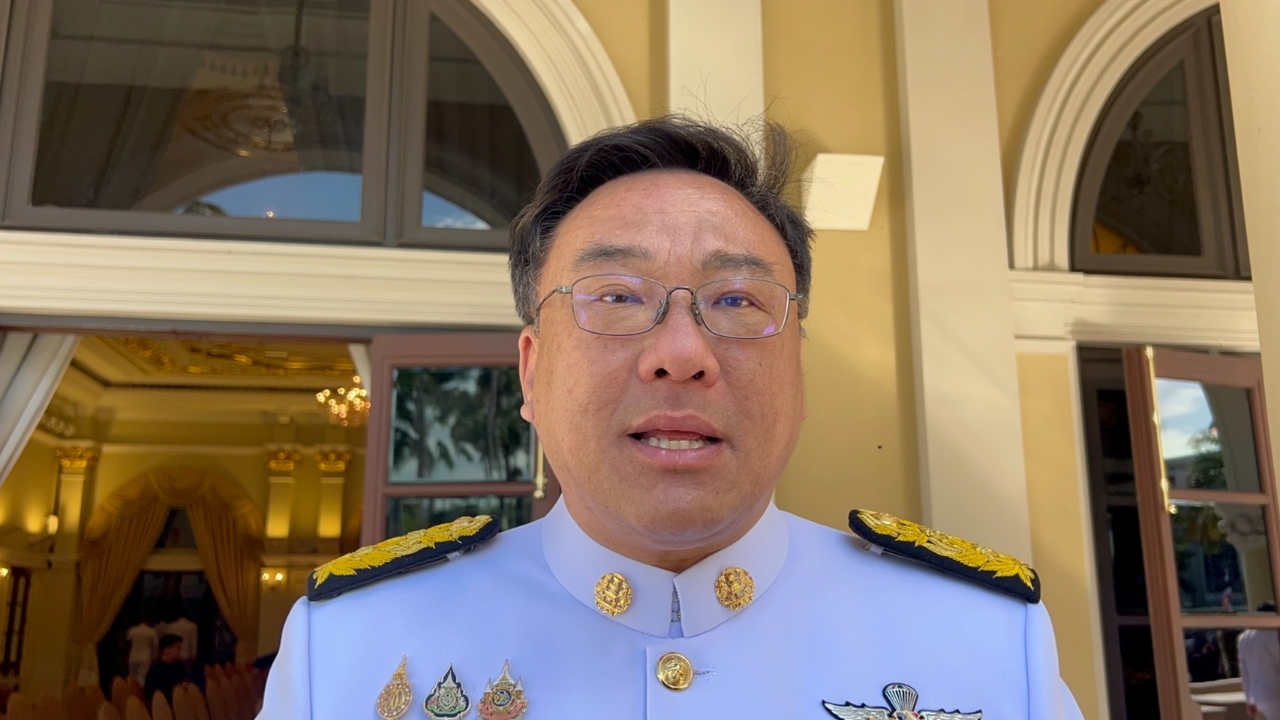
Julaphan revealed Pheu Thai's decision to advance the submission of a constitutional amendment draft, adjusted to ensure all parties feel comfortable. He acknowledged that amending the constitution is not easy and expressed no concern over collecting MPs' signatures.
On 17 June 2026, Julaphan Amornwiwat, Minister of Labour and leader of the Pheu Thai Party, spoke about today's party resolution to proceed with constitutional amendments after other parties withdrew their support for the previous draft. He said that the party has been campaigning for constitutional reform to establish a Constituent Assembly (CA) that ensures the highest level of democracy. The party had already prepared a nearly complete draft. However, due to concerns from several parties, they stepped back to consult and find ways to gain the greatest cooperation possible. Amending the constitution is difficult as it requires support from both the Senate and the full parliament. Cooperation must be secured from the start, so they have revisited and revised the draft. Details will be explained to the public again. The revised draft aims to reassure all parties and was presented to the Pheu Thai MPs yesterday, receiving unanimous approval. The party will jointly sign to submit it to the parliamentary president, who is expected to schedule it for consideration early next month. Preparations are underway to meet this timeline.
Regarding whether Bhumjaithai Party will co-sign the revised draft, Julaphan said they are not worried about the signature collection mechanism, which is merely a procedural requirement to complete the proposal. They are confident the necessary signatures will be collected. The crucial factor is the voting process, which requires more than half of the parliamentary votes. If any party is absent, the risk of failure increases significantly. Without sufficient Senate approval, passing the first reading will be difficult. This aspect is given greater importance than the signature collection, which Julaphan believes will not be difficult.
When asked about the differences between the revised draft and the previous version, Julaphan said it is better to wait for the official explanation to the public. However, the general structure remains the same, with representatives from provinces and a parliamentary selection mechanism. There is also a portion reserved for academics and professionals from various professional councils. The party still holds this structure as important and expects to present it soon.