

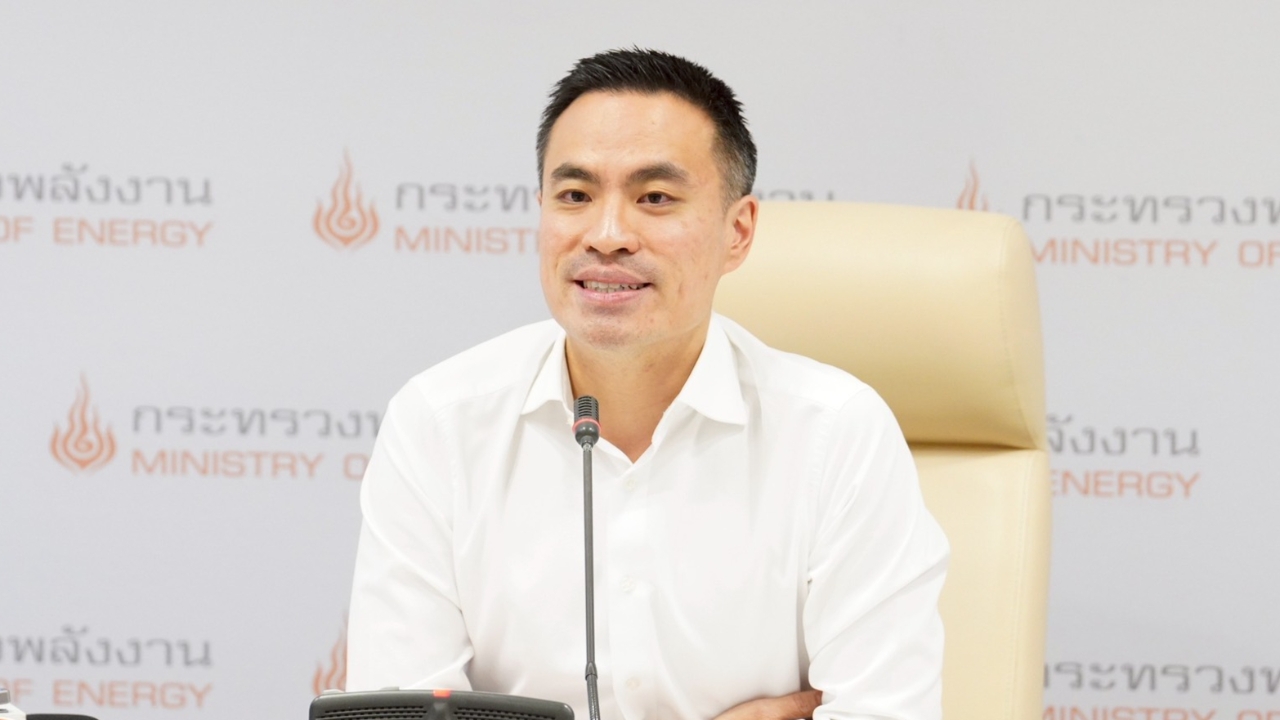
Energy Minister Aknat Promphan plans to seek Cabinet approval to extract profits from the Electricity Generating Authority of Thailand (EGAT) to subsidize electricity for consumers using up to the first 200 units. He affirmed that this will not affect investment plans and revealed intentions to include Data Centers as a new electricity user category, type 9, while continuing to review the Adder contracts further.
17 Jun 2026 GMT+7 Mr. Aknat Promphan, Minister of Energy, revealed that the measure to assist electricity users by compensating for electricity costs for those consuming up to the first 200 units, will not use the central budget, but he will propose the Cabinet approve using revenue or profits from the Electricity Generating Authority of Thailand (EGAT), in amounts that do not affect investment plans, to temporarily cover the subsidies. This will be separate from the fuel adjustment charge (AF) that EGAT currently bears, and later other income sources, such as revenue from charging the Data Center group, will be used to reimburse EGAT.
For users consuming 400 units or more, there will be no increase in progressive pricing as some fear; current rates will remain. However, the government will review plans to raise rates for those using over 400 units, focusing instead on reducing electricity production structural costs so as not to burden households with multiple members or those increasing usage during summer. At the same time, solar power adoption among the public will be promoted. A project to purchase excess electricity from public solar installations totaling 500 megawatts at a rate of 2.20 baht per unit will be launched by June. Support packages such as loans, down payments, and interest reductions will be provided to encourage installations.
"I will revise the electricity user group policy and plan to present it to the National Energy Policy Committee (NEPC) this June to add a new electricity user category, type 9: Data Centers. This will establish appropriate criteria for electricity and water use aligned with economic benefits. The Data Center group will share the burden of electricity costs for other groups and cover costs from increased production using imported liquefied natural gas (LNG), ensuring they do not compete with other users or shift costs onto the general public. This classification will prevent Data Centers from becoming a burden on household users while also helping reduce overall electricity costs for everyone."
Regarding the review of Adder contracts, or additional purchase price agreements, Mr. Aknat said that in the past, automatic contract renewals granted to private power producers led to excessively high electricity prices. Currently, a joint committee with the Attorney General's Office is reviewing and seeking to cancel these automatic renewals to switch to a Feed-in Tariff (FIT) system that reflects actual costs (for example, solar power previously purchased at 3 baht per unit will have the FIT rate reduced to 2 baht per unit).
"I affirm that I am not afraid of lawsuits over the Adder contract review because I have faced many lawsuits before. All current actions are reasonable, appropriate, and conducted lawfully. If operators agree to reduce prices significantly, electricity purchases may continue; if not, the Adders must be canceled."
Additionally, the Ministry of Energy is improving the efficiency of public and street lighting by switching to LED bulbs to reduce system losses. Currently, these losses are passed on to consumers, adding 10-20 satang per unit to electricity costs. The ministry is also addressing the availability charge (AP) by correcting past overestimated electricity demand forecasts that led to contracts with private firms for standby power production. Although this power was not delivered, the public has borne the cost.