

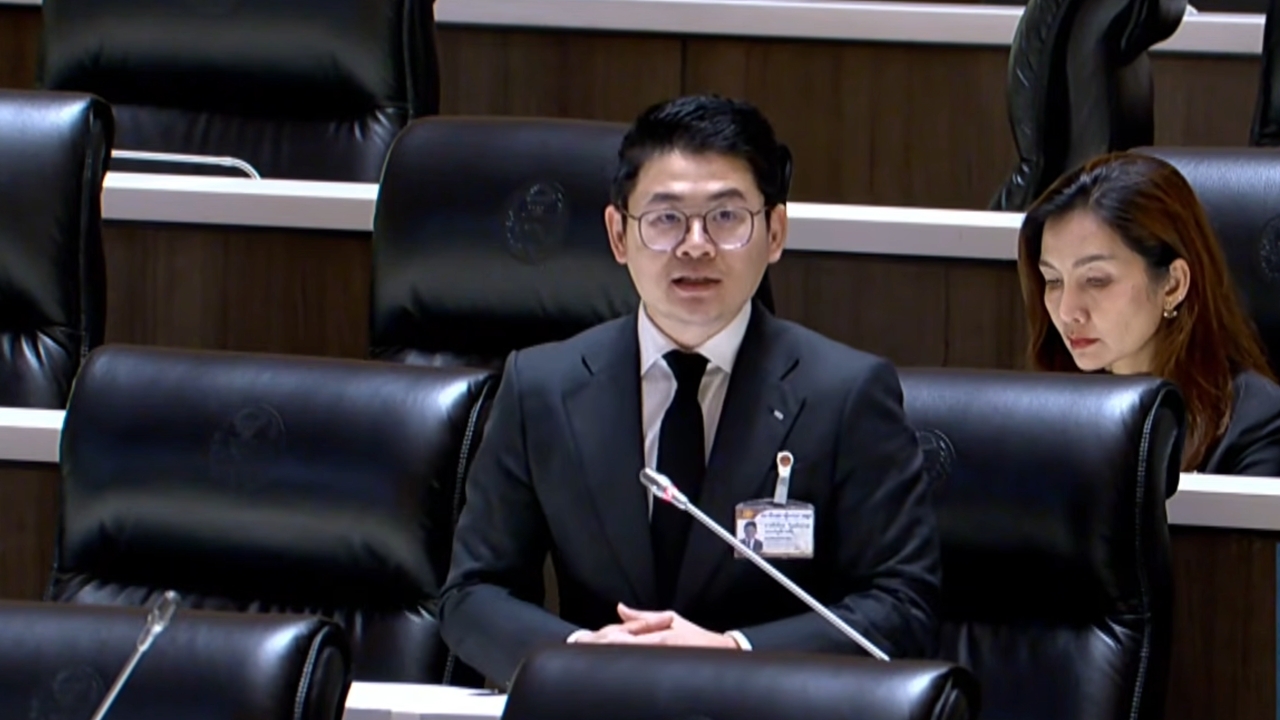
Sitthipol criticized the government for underestimating the crisis caused by Malaysia's ban on Thai shrimp, urging rapid measures to assist farmers before the critical 15-day period. Meanwhile, the Deputy Minister of Agriculture affirmed ongoing negotiations with Malaysia show promising signs, aiming for resolution before the Prime Minister's visit to Malaysia.
On 18 June 2026, during a parliamentary session, MP Sitthipol Wiboonthanakul, party-list MP from the People’s Party, posed a verbal question to Agriculture and Cooperatives Minister Suriya Jungroongruangkit about strategies to address the impact of Malaysia's restrictions on shrimp imports from Thailand. The minister assigned Deputy Minister Watcharapol Kaokham to respond on his behalf.
Sitthipol began by stating that Malaysia has suspended shrimp imports from Thailand since 1 June 2026, marking a dangerous period for shrimp farmers and operators. The time shrimp can be kept in cages is limited; if farmers cannot find markets, shrimp risk disease or death, leading to losses and increased costs for feed and electricity. Selling immediately risks market oversupply, depressing prices nationally. This is especially severe during the peak shrimp season. Without intervention, oversupply will cause prices to fall, ultimately harming over 200,000 shrimp-farming families across 34 provinces.
He questioned how the government assesses the damage, noting a significant discrepancy between official and farmer-reported figures. The government estimates damage at 300–400 tons per month, about 4,000 tons annually, valued at roughly 400 million baht. Farmers report impacts of 4 billion baht annually or 100 tons daily. He asked whether the government has inspected affected farms to confirm the number of impacted farmers and whether export figures to Malaysia align. If the government underestimates damage so greatly, it cannot provide adequate assistance measures.
Deputy Minister Watcharapol explained that the Department of Fisheries bases its estimates on official exporter data, making their figures reliable. However, there may be discrepancies compared to field reports or the Ministry of Commerce’s data. The total shrimp affected directly by Malaysia’s measures amounts to 740 tons, mostly white shrimp about 669 tons and black tiger shrimp about 70 tons, valued at approximately 122 million baht.
Thailand exports marine shrimp and products to Malaysia, accounting for 4% of exports and 1% of the global marine shrimp export market. Although Malaysia's import suspension directly impacts this large market, Thailand still has major export markets such as China, the United States, and several others.
"Malaysia wants Thailand to explain its shrimp disease control measures and related actions. Thailand responded to Malaysia's Department of Fisheries on 6 June 2026 with these measures. On 9 June 2026, the Agriculture Minister sent a letter directly to Malaysia's Agriculture Minister requesting a meeting and negotiations. Malaysia replied on 11 June 2026 stating their minister was abroad but had urgently instructed relevant agencies to negotiate and resolve the issue promptly," said Watcharapol.
He added that continuous coordination has taken place between the Malaysian and Thai Departments of Fisheries. Thus, the Department of Fisheries and Ministry of Agriculture have been actively discussing and negotiating but are awaiting Malaysia’s further response.
Sitthipol continued by noting a possible factual mismatch: the Ministry of Commerce often cites figures from the Ministry of Agriculture, and aid measures follow those numbers. While official exporter data provides formal figures, the minister must also consult farmers directly to better target assistance.
He emphasized that, after about half a month, the actual impact is at least 740 tons, not 400. Therefore, the government has underestimated damage, prompting public concern as shrimp prices fall and the fishing industry chain suffers. This affects not only the south but also the central region and nationwide. Regarding negotiations with Malaysia, Sitthipol agreed officials are coordinating well on shrimp and fish health inspections but stressed that ministerial-level coordination is crucial.
Sitthipol asked what measures the government has to support farmers during this critical 15-day period. Assistance must be immediate and sufficient, whether through cost support, price subsidies, or finding alternative markets. Without action now, the entire fishing industry risks severe impact.
He also questioned how the government plans to handle impacts if affected volume exceeds 400 tons and reaches 740 tons. He inquired about the recent Ministry of Agriculture measure called “sea bass for shrimp exchange,” its meaning, cost-effectiveness, and safety considerations.

Deputy Minister Watcharapol responded that the Department of Fisheries has regularly met with farmers. The most urgent action is reducing production costs by introducing innovations and technology. Feed and electricity are major costs, with electricity being particularly high. The department has projects such as solar floating panels and aerators to quickly reduce electricity costs for farmers.
Regarding the Ministry of Commerce, the Department of Fisheries met with them and other agencies on 5 June 2026. The ministry's emergency measure is promoting domestic shrimp consumption. According to the ministry, plans include business matching with other foreign markets and a major event scheduled for 2–3 July 2026.
Watcharapol added that negotiations with Malaysia show positive signs. The Prime Minister plans to visit Malaysia soon, and Malaysia’s Agriculture Minister has already responded positively, aiming to resolve the issue before the Prime Minister’s official visit in early July 2026.
Sitthipol then noted that many Department of Fisheries measures are standard practices, such as installing solar panels to reduce costs, which do not provide urgent help within 7–15 days. Similarly, improving efficiency by cultivating microorganisms is ongoing but does not yield immediate results.
He added that if alternative export markets cannot be found quickly and the Ministry of Commerce's business matching is only in early July, exports would at best resume in August. This means finding international markets for the immediate crisis is almost impossible, leaving only domestic measures, which realistically take effect only by late August.
He described this as the public's hardship and questioned what government measures are planned for the next 7–15 days, noting none exist currently. If measures are delayed until shrimp flood the market and prices fall, the entire country’s farmers will suffer. He asked what immediate measures the Ministry of Agriculture has, when the 20-baht-per-kilogram price support will be implemented, and urged ministers to verify actual farmgate prices, especially in the south where prices have already dropped.
He said current measures by both ministries are long-term and based on the 400-ton estimate, while actual shrimp volumes exceed 740 tons. If volumes rise further by month-end, who will be responsible for the excess? The problem is bigger than the government’s estimate, and planned measures may be insufficient, delayed, or merely routine actions rebranded as solutions, which is not true.
Watcharapol said that previously a shrimp committee existed but lapsed with the government term. Now, efforts are underway to urgently re-establish the committee. Candidate lists should be finalized today, and once officially appointed, the committee can meet by next Monday. It will include representatives from the Ministry of Agriculture, Ministry of Commerce, private sector, and farmers, to set price support measures as an immediate action.
Regarding the “sea bass for shrimp” measure, the Ministry of Agriculture has strictly inspected sea bass imports from Malaysia, requiring multiple steps due to detecting contaminants. This stringent testing takes several days, causing dissatisfaction in Malaysia.
Watcharapol clarified that this is not a retaliatory measure. Malaysia wants Thailand to strictly inspect shrimp, and Malaysia will do the same. The sea bass exchange is a separate issue. Malaysia’s inquiries focus solely on shrimp. The Agriculture Minister has proposed in official letters that any negotiations should be conducted under a mutually beneficial framework. The Department of Fisheries and Ministry of Commerce will follow this policy.
Another urgent measure is the Department of Fisheries coordinating with cold storage facilities to purchase shrimp, with positive responses from various associations totaling thousands of tons. Regarding support and cost reduction measures mentioned by Sitthipol, while ongoing, recent planning and implementation have increased significantly as the department directly oversees these efforts.
Before ending, Sitthipol urged the minister to focus on two main issues: he welcomed the promise to form a shrimp committee sooner to enable quicker measures and called on the minister to lead field inspections. Adequate measures must be developed based on real impact assessments to effectively and timely assist farmers during the critical upcoming 15-day period.