

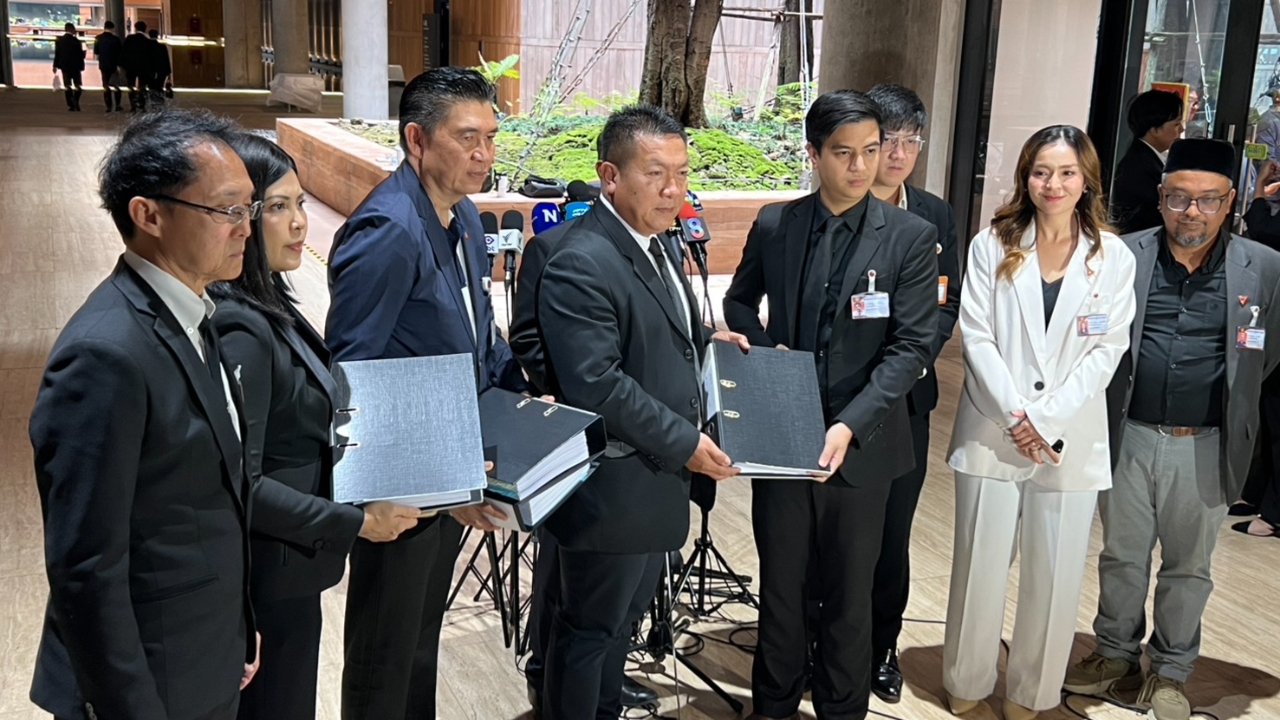
A group of reserve senators brought evidence in the senatorial vote rigging case to Parit Watcharasindhu for investigation after conflicting decisions from two investigation committees. They urged the Election Commission to release video footage in its possession to dispel doubts and clear allegations of wrongdoing.
On 18 June 2026, at the hall outside the parliamentary press room, a group of reserve senators submitted documents and evidence related to the senatorial vote rigging case to Parit Watcharasindhu, a party-list MP from the People's Party and Opposition Whip, for further review.
Parit said he appreciated the civil society group, including former election commissioners and senatorial candidates, who provided additional documents and evidence. As a member of the Independent Organizations Committee investigating the matter, he will use this information for further examination. He noted the timing is critical because under the law, the seven-member Election Commission must decide on actions against at least 229 accused individuals—whether to refer the case to court or dismiss the complaint—within 90 days from the first review on Monday, 15 June 2026. Currently, over 80 days remain to consider the matter. The Independent Organizations Committee has reviewed this agenda with Election Commission representatives explaining both the senatorial vote rigging and 2026 election issues. Regarding the vote rigging, the Election Commission is reviewing two investigation results that contradict each other: one subcommittee recommended prosecuting 229 individuals, while subcommittee 36 recommended dismissal of the complaint.
The main focus of the committee’s review today was to compare the performance of the two investigation teams to assess their thoroughness in considering evidence. They believe the evidence reviewed by these opposing subcommittees will determine which is more credible. They invite society and the public to help scrutinize this issue, as comparing the standards of both subcommittees should indicate which evidence is more substantial.
Parit added that the Election Commission's duty is to continue investigating all complaints diligently and fairly in the senatorial vote rigging case. Investigating the video footage is within their rights. However, he noted that the video he received came from the complainant. Legally, the Election Commission is responsible for recording video at district, provincial, and national election levels, but it is unclear which agency provided the video. He only knows that the agency responsible for recording is the Election Commission.
Parit further said that in the past, when public doubts arose, the Election Commission released some video clips to inform the public clearly. He therefore asked, if the Election Commission already holds video footage of the events amid public suspicion, releasing parts of the video to address these doubts would be lawful, promote transparency, and provide clearer answers to the allegations.