

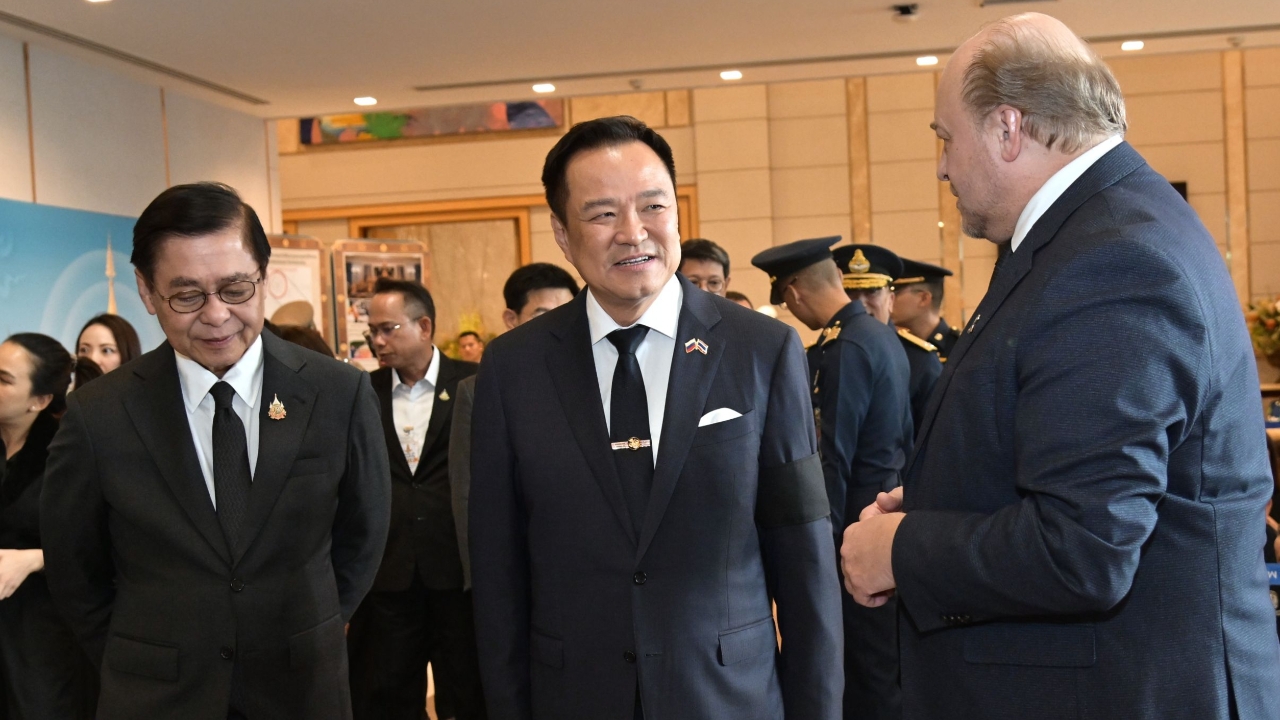
The Prime Minister explained taking control of the EEC from Phiphat to personally oversee it, stating it is time to market and attract investors. He confirmed there is no internal conflict and denied any connection to the 3-airport rail project.
On 19 June 2026 GMT+7, Prime Minister and Minister of Interior Anutin Charnvirakul spoke about signing to reclaim supervisory authority over the Eastern Economic Corridor (EEC) management himself. He said Thailand has completed its infrastructure development phase and is now entering a crucial period focused on building confidence among both domestic and international investors to attract maximum investment. He added that Thailand aims to become a production base for global investors. Currently, Thailand's infrastructure—including airports and ports—is quite complete, especially Laem Chabang Port, which is undergoing capacity expansion.
The Prime Minister added that Thailand's water, air, and land transport systems are now relatively complete and already linked to high-speed rail and double-track rail projects. Therefore, after completing infrastructure development, the next step is marketing to attract investors, with no other issues involved. Regarding the EEC, Deputy Prime Minister and Minister of Transport Phiphat Ratchakitprakarn is ready to hand back supervisory responsibilities at any time.
When asked if Phiphat voluntarily returned control of the EEC, the Prime Minister said they have continuously discussed that after completing infrastructure improvements and entering the marketing phase, they would share responsibility. Initially, Deputy Prime Minister and Finance Minister Akniti Nitithanprapas was to oversee it, but since the Prime Minister travels frequently and meets many investors and private sector representatives both domestically and abroad, he decided to take direct control for smoother, faster project advancement regarding regulations. When asked if this indicates internal conflict, the Prime Minister firmly denied it.
Regarding rumors linking this EEC takeover to amending the 3-airport rail contract, the Prime Minister said they are unrelated matters. He emphasized that the 3-airport rail contract must be considered according to its terms and fairness given to all parties. Amending contracts is not simple; those who signed contracts with the government and face issues like land handover delays or crises cannot expect the government to provide additional funds if they request contract changes.
Therefore, contract amendments are not feasible. All terms set forth in contracts must be followed as much as possible because amending any project contract does not end at the revision itself. Fairness must be maintained for unsuccessful bidders who might have offered different prices had they known contract changes were possible.
Thus, this matter will not be resolved quickly. The best approach is to adhere to the contract terms. When submitting bids and before signing contracts, all conditions must be acknowledged and approved to ensure compliance with the stipulated regulations.