

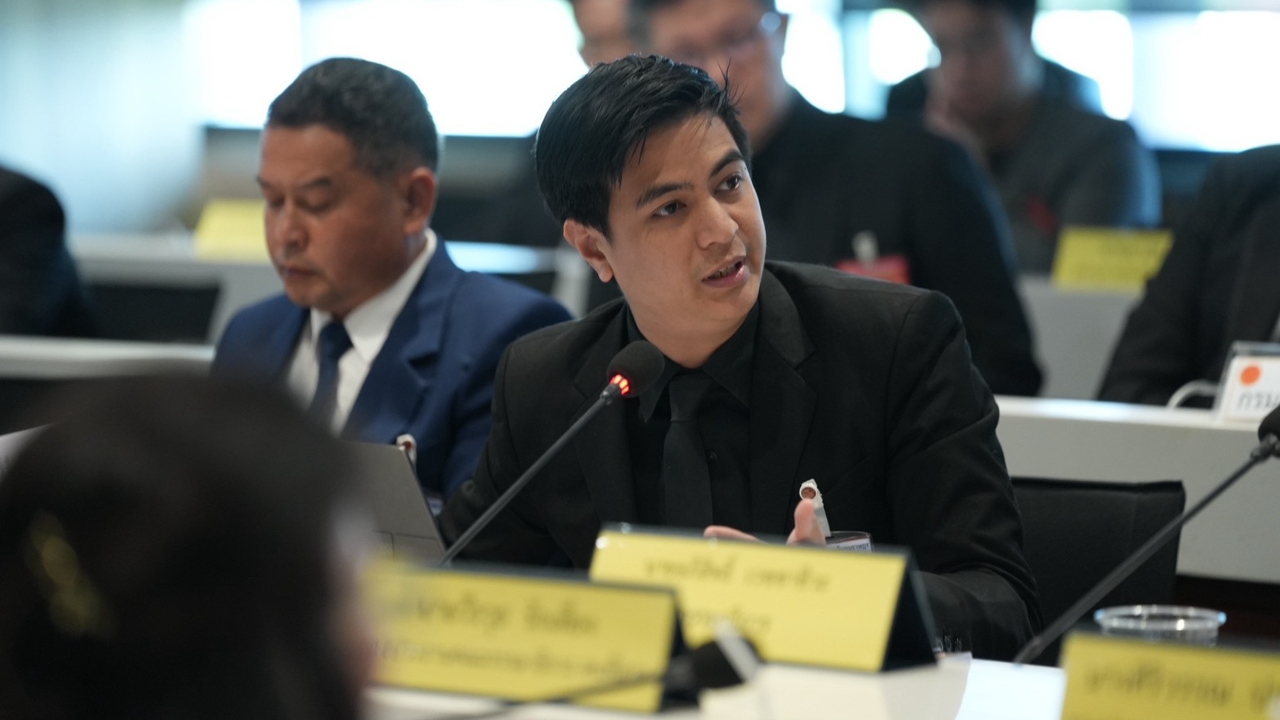
Parit summarizes nine key issues in the Senate vote-rigging case that the Election Commission (EC) has yet to answer or explain. He confirms that the Independent Organizations Committee will send another letter to the EC requesting responses to these important questions and information.
On 19 Jun 2026 GMT+7, Mr. Parit Vacharasinthu, a party-list MP from the Prachachon Party, revealed details from a meeting on the "Senate vote-rigging case" with the Independent Organizations Committee and representatives from the Election Commission (EC) on 18 Jun 2026 GMT+7. The meeting aimed to review and recommend improvements to the EC's handling of the case. He summarized nine key points as follows.
1. The main issue examined was the conflicting decisions between two panels: the 26th investigative committee recommending that the EC prosecute 229 accused individuals in court, and the 36th subcommittee for dispute resolution recommending that the EC dismiss all charges against those 229 individuals, preventing the case from going to court.
2. Regarding the 26th investigative committee, which decided to prosecute the 229 accused in the Senate vote-rigging case, the EC representatives explained that
- Composition: The committee included representatives from the EC staff and the Department of Special Investigation (DSI).
- Review period: The committee took 120 days, meeting daily or almost daily during this time.
- Review details: The evidence included approximately 90,000 pages of documents, about 1,000 pages of committee opinions, and hundreds of witness interviews.
3. Concerning the 36th subcommittee for dispute resolution, which recommended dismissal of charges against all 229 accused, the EC representatives explained that
- Composition: The subcommittee comprised seven members, each appointed by different EC commissioners.
- Review period: The EC representatives stated they did not have information on this.
- Review details: The EC representatives also said they lacked information on this matter.
4. Suspicious aspects about establishing the 36th subcommittee require deeper investigation because
- It was confirmed that normally the EC has 35 subcommittees, and cases are assigned randomly or rotationally among them to prevent manipulation of case assignments. However, for the Senate vote-rigging case, the EC formed the 36th subcommittee as a special case. The committee will request the EC's records of all previous cases where a special subcommittee was created since the 2017 constitution came into effect.
- It was confirmed that the seven members of the 36th subcommittee included not only members from the usual 35 subcommittees but also "outsiders" who were not part of any of the 35 subcommittees but were specially brought into the 36th subcommittee. The EC representatives could not recall how many outsiders were among the seven members.
5. Besides the opinions of the 26th investigative committee and the 36th subcommittee, it was reported that the EC commissioners reviewing the case also have the opinion of the "EC Secretary-General." The EC clarified that this is not the opinion of EC Secretary-General Saeng Boonmee but rather the opinion of the "Deputy Secretary-General responsible for the case."
In other words, for each accused individual, the EC commissioners have three opinions: (1) the 26th investigative committee’s view on prosecution or dismissal, (2) the Secretary-General’s view on prosecution or dismissal, and (3) the 36th subcommittee’s view on prosecution or dismissal.
6. Regarding evidence in the 26th investigative committee’s case file currently under EC review, EC representatives declined to specify the types of evidence, such as statistical analysis of voting, vote-buying lists, appointment records, or travel expense receipts, but insisted that the evidence is diverse.
7. Regarding video clips published showing the conduct of Mr. Thitithet Nuchanat, an EC commissioner, and the collection of documents from Mr. Mongkol Surasajja, later the Senate President,
- The EC representatives declined to answer whether the evidence related to those clips is included in the case file under EC review.
- The EC only stated that evidence or issues in those clips exist in case files where complaints about EC conduct were made, but they did not confirm whether these are part of the evidence currently under consideration in the Senate vote-rigging case.
8. On the publication of video clips from the Senate vote day, EC representatives confirmed that under the Organic Act on the Election of Senators, the EC has the authority to record videos of the Senate vote at all levels. They added that past misunderstandings have led the EC to release some clips to clarify matters publicly.
Therefore, since the EC holds all videos from the Senate vote, it can choose to release all or part of these clips to address public questions about what happened on that day.
9. Going forward, the EC must decide within 90 days after the first hearing, which will be in September 2026, whether to prosecute or dismiss charges against individuals. However, there is concern that if charges are dismissed, the only public document the EC will release is a brief "decision" explaining the reasons for dismissal, which may only be a short 3-4 paragraph statement citing "insufficient evidence" without detailed disclosure of investigation results or case facts.
The committee will send another letter to the EC requesting answers and documents on several unresolved issues that have not yet been clarified.