

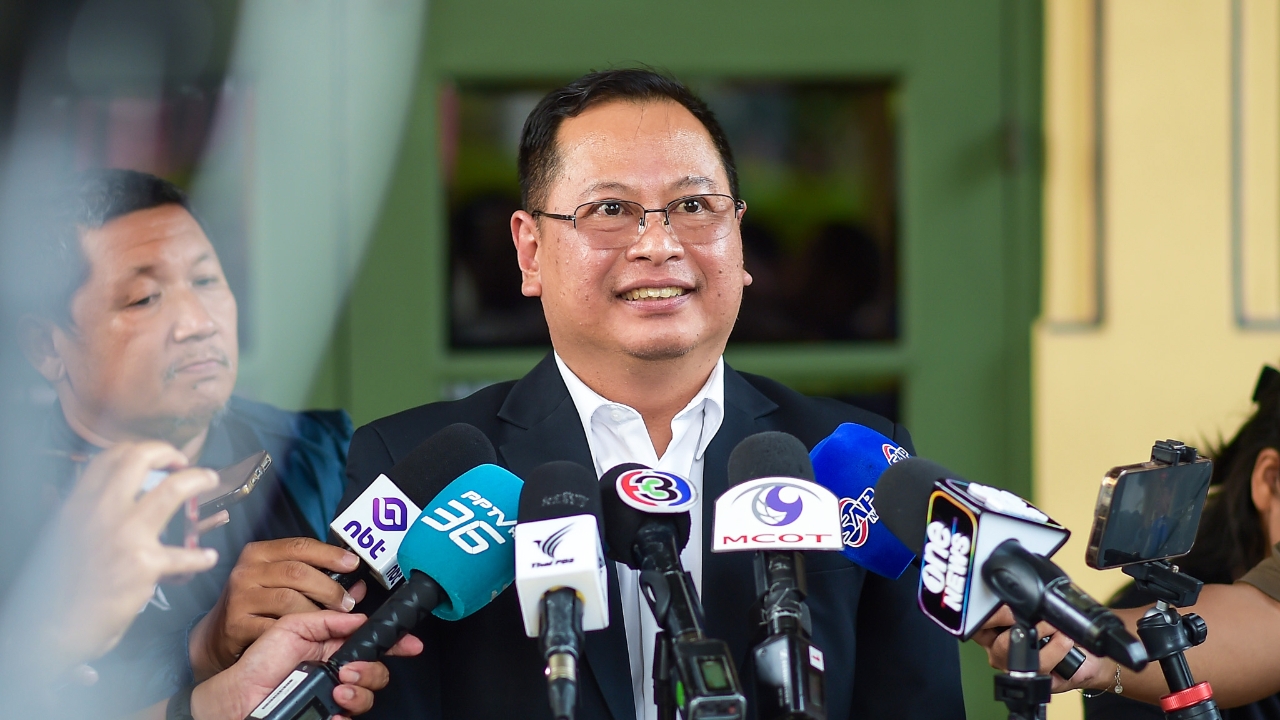
Deputy Prime Minister Pakorn is spearheading the revision of over 7,000 secondary laws as quick wins to reduce investment barriers, aiming to complete the work within two months before submitting it to the Joint Public-Private Sector Committee and the Cabinet.
At 2:30 p.m. on 19 June 2026 at the Government House, Deputy Prime Minister Pakorn Nilprapunt spoke about the upcoming meeting of the Joint Public-Private Sector Committee (JPPCC) on 22 June and his legal responsibilities. He said he was recently assigned this role, with some additions, including incorporating the Tourism Industry Council of Thailand into the JPPCC to ensure comprehensive representation. He has coordinated with the three main private sector bodies—the Federation of Thai Industries, the Thai Chamber of Commerce, and the Thai Bankers' Association—to identify laws and regulations that hinder business operations and to discuss how to address these issues. They have already submitted preliminary proposals, which will continue to be developed using the same working group to avoid duplication and ensure alignment.
When asked if many laws obstruct investment, Pakorn said that while the primary laws (Acts) causing difficulties are relatively few, the secondary laws—specifically over 7,600 ministerial regulations—are more problematic. Each regulation contains detailed rules and procedures that must be followed under various laws. Therefore, the initial focus will be on revising these secondary laws as quick wins. He has discussed this with the Joint Public-Private Sector Committee and established a joint committee with the Office of the Public Sector Development Commission (OPDC) acting as secretary. They will analyze all submitted issues to identify which require urgent amendment first. This process is expected to take about two months, after which they will present their proposals to the JPPCC or Cabinet. He emphasized that there is no need for excessive caution in this legal reform and that they are committed to the work.