

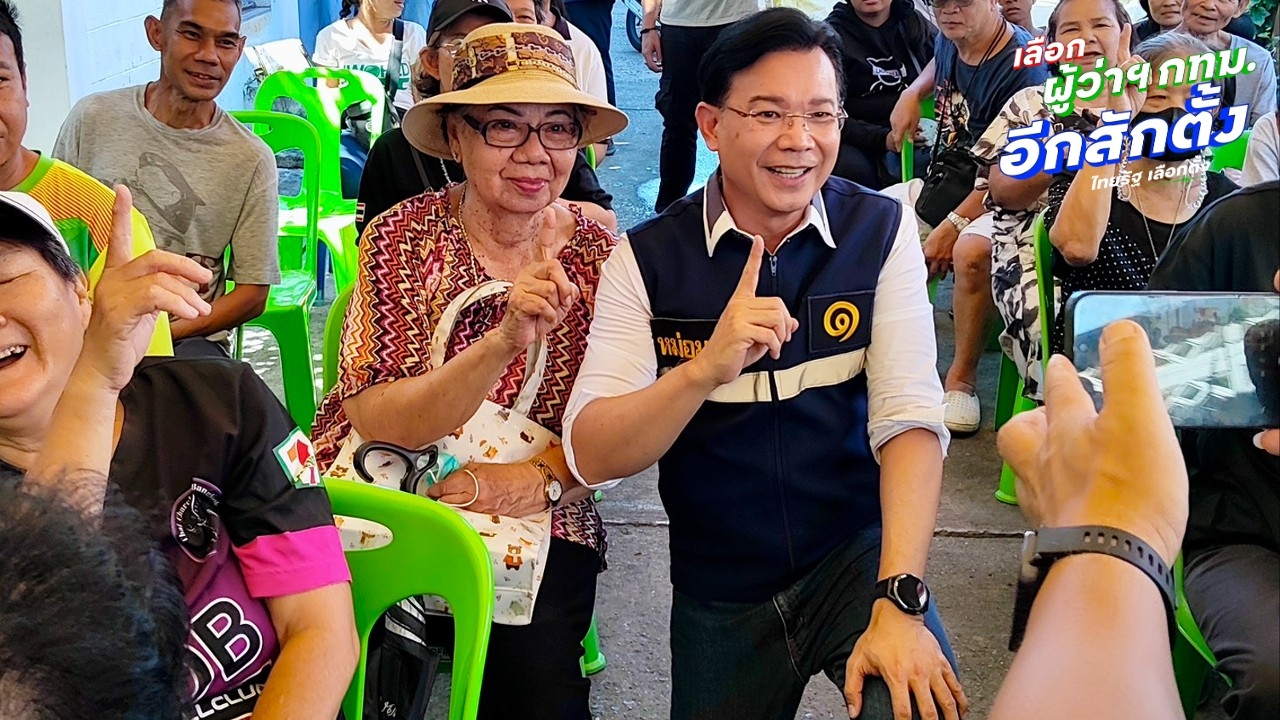
"Mom Korn" enters the final campaign phase seeking votes from residents of Isarapap 27 and Pho Sam Ton Market, highlighting the "Volunteer Community" policy for comprehensive care of young children, elderly, and bedridden patients.
At 9:00 a.m. on 21 June 2026, Mom Luang Korakasiwat Kasemsri, candidate number 1 for Bangkok governor, visited Bangkok Yai district to meet residents. He began campaigning at Soi Isarapap 27, passed through Pho Sam Ton Market and surrounding communities, distributing policy brochures and listening to citizens' concerns along the route before joining a community meeting to discuss and present his policies.
Mom Luang Korakasiwat stated that many communities in Bangkok are transitioning into aging societies. At the same time, many families face the burden of caring for young children, elderly, and bedridden patients, all requiring close support from government and community.
To improve citizens' quality of life, Mom Korn promotes the policy "Volunteer Community: Bangkok, a City of Mutual Support," aiming to build a collaborative network among Bangkok Metropolitan Administration, volunteers, and community members to provide comprehensive and sustainable care for vulnerable groups.
The key policies include:
1. Establish volunteer community networks in every area to encourage collaboration among residents, public health volunteers, and community partners to continuously survey, care for, and monitor the quality of life of young children, elderly, and bedridden patients, using community data as a crucial tool for planning and addressing issues tailored to each area's needs.
2. Develop a mutual care system for young children and the elderly by supporting creative activities for both groups within communities, creating shared learning and activity spaces across generations to promote family bonds and reduce elderly isolation.
3. Upgrade care for bedridden patients and community health services by promoting a proactive care system that integrates the work of Bangkok health service centers, hospitals, and community volunteer networks, ensuring patients have easy and rapid access to treatment, rehabilitation, and necessary medical equipment.
Additionally, Bangkok will develop a home visit and health monitoring system using digital technology to improve patient care efficiency and reduce the burden on family caregivers. A strong community is one where everyone looks after each other; young children deserve quality growth opportunities, elderly must be valued and cared for, and bedridden patients must not be neglected. We must build a healthcare system accessible to every household, harnessing community power as the core to enhance Bangkok residents’ quality of life.