

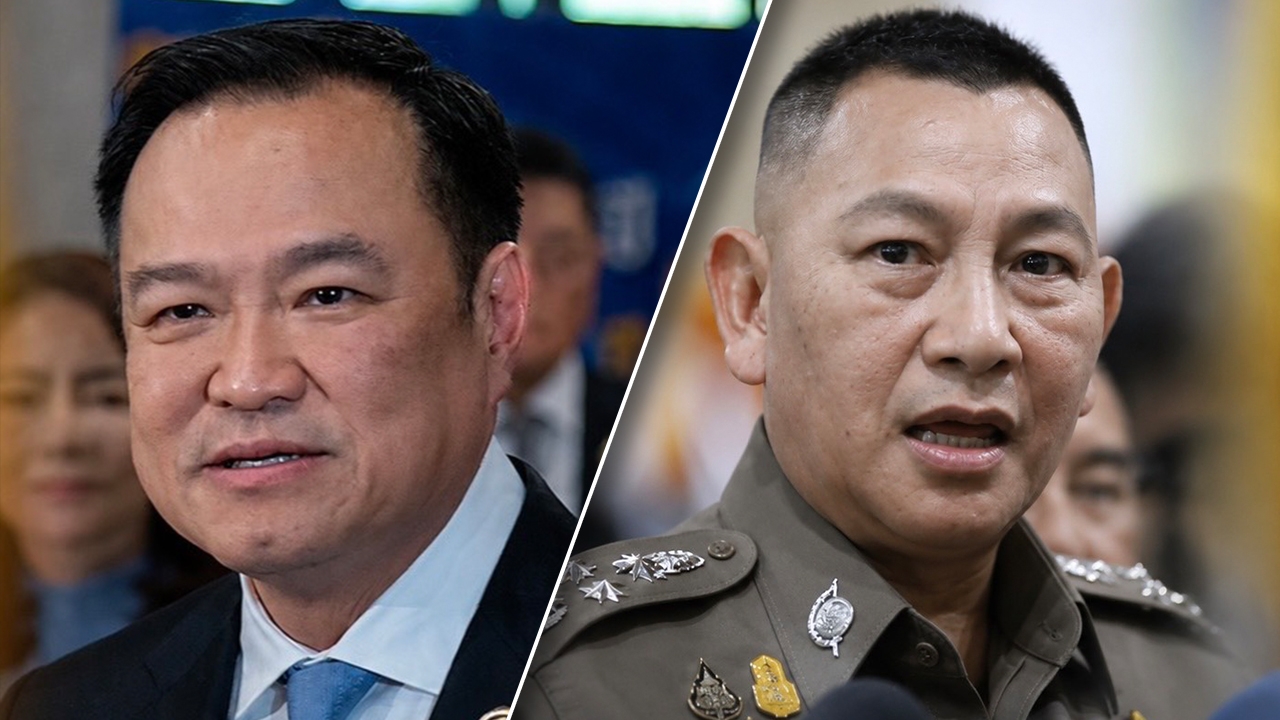
The National Police Policy Board has conceived the idea of “Reset Phuket” to back the Prime Minister and the Royal Thai Police Chief in advancing efforts to restore public trust. It stresses that the time has come to revive global confidence, emphasizing that Phuket represents the face of Thailand, and proposes seven urgent policy recommendations to address this.
On 21 Jun 2026 GMT+7, Assistant Professor Noppadol Kannika, a member of the National Police Policy Board and a public representative expert, spoke about approaches and suggestions for resetting Phuket. He stated that tourists may visit Phuket for its beautiful beaches, but whether they return depends on their confidence. Phuket is no longer just a province in Thailand; it connects Thailand to the world. It serves as a gateway welcoming tourists, investors, retirees, entrepreneurs, and people from many countries. Therefore, everything that happens in Phuket affects not only locals or Thai citizens but also impacts Thailand’s international image, credibility, and the trust the global community places in the country.
Assistant Professor Noppadol further stated that, based on listening and closely monitoring in-depth information about Phuket’s situation, the problems are not solely about crime or tourism issues. Rather, they are "multidimensional systemic problems" linked among foreign capital, nominees, real estate, licensing, zoning laws, engineering departments, lawyers, accountants, influential persons, migrant workers, law enforcement, and public trust. The main concerns include complaints about using Thai nationals as nominees in real estate businesses, breaches of purchase agreements, incomplete construction, failure to return benefits as per contracts, moving money out of Thailand’s economy, and exploiting gaps in some government agencies or private professions to make improper acts appear legitimate.
Phuket is the face of Thailand.
Assistant Professor Noppadol added that if these issues are left unaddressed, they will affect not only foreign buyers or some operators but will directly impact Thailand’s reputation, credibility, competitiveness, and overall economy. Phuket is a crucial window through which the world views the country. When confidence in Phuket is damaged, confidence in Thailand’s tourism, investment, rule of law, and competitiveness will also be questioned. The Prime Minister and Minister of Interior, Anutin Charnvirakul’s visit to Phuket at a time when society is watching closely the problems there sends a significant policy signal that the government takes seriously the restoration of trust among citizens, investors, and tourists worldwide. Because Phuket is not only an important tourist city but also one of Thailand’s faces to the global community, listening to problems from all sectors, personally verifying facts, and assigning policies for all agencies to collaboratively solve issues integratively reflects a people-centered administration approach aiming to balance economic growth, law enforcement, and long-term national interests.
Success is measured by safety.
Regarding the Royal Thai Police, it is notable and worth mentioning that under the leadership of Police General Kittirat Phanphet, the National Police Commissioner, strategic adjustments in personnel management and law enforcement in Phuket have been continuously made to align with government policies and the administrative approach of local authorities. The decision to restructure management and signal all levels to prioritize solving systemic problems—whether transnational crime, illegal businesses, influential figures, or issues affecting public and tourist confidence—shows efforts to raise police standards to meet the challenges of a global tourist city. Ultimately, success will not be measured merely by case numbers or arrests but by the level of safety, justice, and the confidence that citizens and the international community have in Thailand over the long term.
Call for urgent restoration of confidence.
As a member of the National Police Policy Board, an expert public representative, and a professional working in data, policy, and strategy, I believe solving Phuket’s problems cannot be limited to individual cases but must be elevated to an "urgent integrated Phuket confidence restoration operation." Today’s issues in Phuket are not just local problems but reflect new challenges many countries face worldwide, such as cross-border capital movement, the use of proxies to conceal businesses, money laundering via real estate, transnational crime, labor migration, and exploiting legal loopholes for gain. If Thailand can design an efficient, transparent, and fair management system, Phuket will not only be a problem area solved but will become a global model for tourism city management that many countries can study and adapt in the future.
Recommendations to address seven urgent issues.
Assistant Professor Noppadol also proposed seven urgent policy recommendations as follows:
1. Establish a Phuket Special Operations Center to integrate police, local administration, immigration, the Department of Business Development, the Revenue Department, land authorities, local government, and labor agencies.
2. Audit corporate structures at risk of using nominees by examining shareholder data, financial flows, financial statements, construction permits, and ultimate beneficiaries.
3. Investigate real estate projects with complaints, especially those involving incomplete construction, contract breaches, failure to refund money or benefits as agreed, and use of Thai nationals merely as legal representatives.
4. Seriously review construction permits and local licensing systems, focusing on vulnerable points within engineering departments, municipalities, districts, and related agencies responsible for project approvals.
5. Regulate migrant labor and foreign operators by clearly distinguishing between legally employed individuals, covert business operators, and those linked to crime or influential groups, with coordination among police, immigration, and the Ministry of Labor.
6. Upgrade tourist police and local police to a “Tourist Trust Police” system that not only ensures safety but also restores trust among tourists, investors, and local residents.

7. Use data science and methodology to create a Phuket risk index by connecting complaint cases, corporate entities, permits, financial statements, migrant workers, crime, and public feedback to enable precise, transparent, and verifiable law enforcement.
Need to restore confidence.
"I have studied Data Science and Methodology at the University of Michigan, and strategy, policy, and security at Georgetown University in Washington, D.C., including collaborative studies with the Joint Chiefs of Staff officers. This academic exchange clarified that problems like Phuket’s require solutions based on data, strategy, and multi-agency cooperation, not just discretionary decisions. What Phuket needs today is not merely suppression but confidence restoration—not only the confidence of Phuket’s people, not only that of Thais, but the confidence the global community has in Thailand."
The ultimate goal is not to make Phuket intimidating for good people but to ensure it is not a safe haven for corrupt individuals, fraudsters, illegal nominees, shadowy capital groups of all nationalities, influential networks, government officials, or covert politicians. If Thailand can reset its governance system, restore the rule of law, enhance transparency, and establish new standards for managing global tourist cities successfully, Phuket will not only be a world-class tourist destination but will become a “strategic global trust zone” where tourists feel secure, investors have confidence, and residents take pride.