

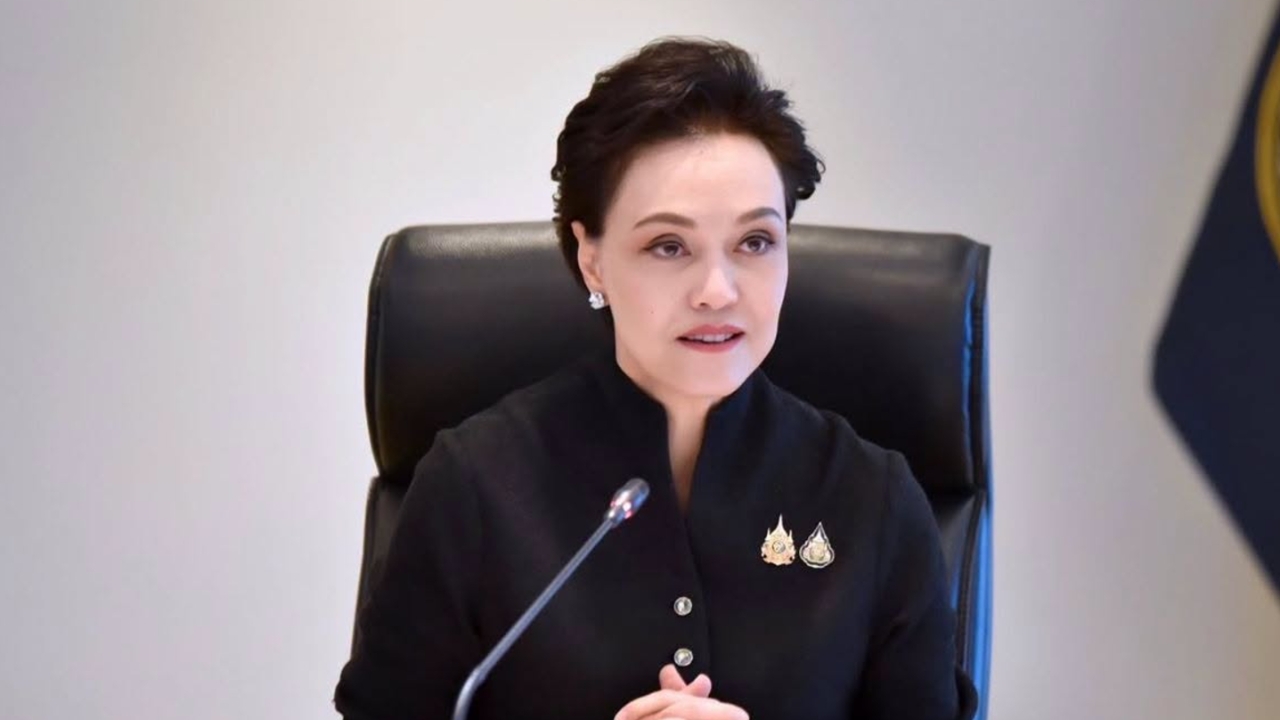
Supachai led talks with representatives from three fertilizer associations, stressing that 'Team Thailand' continues to monitor fertilizer shipments into the country and closely track the situation. The government is advancing the 'Thailand Helps Thailand: Reducing Production Costs, Green Flag Economical Plus' program, confident that fertilizer shortages will not occur.
22 June 2026 GMT+7 Ms. Supachai Suthumpun, Deputy Prime Minister and Minister of Commerce, revealed after a meeting with representatives of three national fertilizer associations, namely the Thai Fertilizer and Agricultural Business Trade Association, the Thai Fertilizer Producers Trade Association, and the Thai Agricultural Business Association, at the Government House that although the situation in the Middle East remains uncertain, the government, as 'Team Thailand,' is closely monitoring developments to prevent fertilizer shortages and maintain prices consistent with true costs.
Recently, five fertilizer cargo ships were affected by the closure of the Strait of Hormuz. Team Thailand coordinated assistance that enabled the release of two ships, while others have adjusted their shipping routes to ensure continued fertilizer imports into Thailand. This has significantly improved the fertilizer situation in both supply volume and price trends. The public and private sectors are jointly managing the situation closely to minimize farmers' impact and ensure sales follow market mechanisms and actual costs. So far, over 1,640 stores have faced legal action for hoarding or overpricing. Farmers who encounter such violations can report them to the Ministry of Commerce for prompt investigation.
. Additionally, short-term assistance measures continue through the 'Thailand Helps Thailand: Reducing Production Costs, Green Flag Economical Plus' project, aimed at lowering fertilizer costs across 40 provinces nationwide. Six provinces have already implemented the program, which will continue through August 2026.

As for medium- and long-term measures, the government plans to advance the 'Half-Half Fertilizer and Seed' project, . This initiative integrates efforts with the Ministry of Agriculture and Cooperatives via the Department of Agriculture, Department of Land Development, and local agricultural cooperatives to analyze fertilizer needs suited to crop types and land conditions. It aims to help farmers use inputs efficiently and reduce production costs. Participating farmers will receive guidance on appropriate fertilizer types and seeds for their area, plus improved access to investment-friendly loans from the Bank for Agriculture and Agricultural Cooperatives (BAAC).
Ms. Supachai added that agricultural product prices have started to improve, especially rice prices, which have risen significantly. Thailand's agricultural exports show continued growth momentum, with April marking the first positive expansion in several years—a positive sign for farmers' incomes.
"The government will work closely with all sectors to manage costs, production, processing, transportation, market development, and exports to increase farmers' incomes while maintaining reasonable production costs and ensuring sustainable livelihoods," she said.

Meanwhile, Mr. Thepwit Tiawsurathkul, advisor to the Thai Fertilizer and Agricultural Business Trade Association, noted that the global urea fertilizer market has significantly improved after Thailand was unable to import urea from Middle Eastern producers for about three months. In June 2026, exports from the Persian Gulf region through the Strait of Hormuz resumed. Moreover, Middle Eastern fertilizer producers, especially in Saudi Arabia, have shifted transport methods, moving goods overland from the Persian Gulf to Red Sea ports before exporting to Thailand, enhancing import continuity and assuring sufficient fertilizer supply for domestic demand.
Global urea prices have started to soften, while NP and NPK fertilizer prices have stabilized, suggesting potential gradual price reductions ahead, benefiting farmers' access to affordable inputs. Domestic prices will adjust gradually to reflect actual costs, similar to oil price trends, though reductions may not be immediate due to existing stockpiles. He confirmed prices will not increase and domestic fertilizer supplies are sufficient to avoid shortages. The Department of Internal Trade continuously monitors stock levels from operators, and Thailand retains alternative sourcing options from key producers like Russia and China, ready to cooperate if import diversification is needed.
General Kong-ek Plengsak, president of the Thai Fertilizer and Agricultural Business Trade Association, stated all fertilizer associations are committed to cooperating with the government to manage the fertilizer situation fairly, helping farmers as much as possible. According to information from the private sector and relevant agencies, Iran is prepared to supply urea fertilizer to Thailand without extra fees or 'kickbacks' for ships bound for Thailand. Similarly, Russia is willing to cooperate in chemical fertilizer trade as a friendly country, enhancing Thailand's fertilizer supply security. They are confident there will be no shortages and prices are likely to decline following global cost trends.
Mr. Witthayakorn Maneenet, Director-General of the Department of Internal Trade, reported that compared to pre-war periods, urea fertilizer prices increased by about 60% at their peak, phosphate fertilizers by 20%, and potassium by only 0.2%. Currently, urea prices show the clearest downward trend. The department monitors fertilizer stocks from operators every 15 days and confirms sufficient supply of all fertilizer types. They work with the Central Committee on Goods and Services Prices (CCGSP) and associations to ensure retail prices fairly reflect actual costs.