

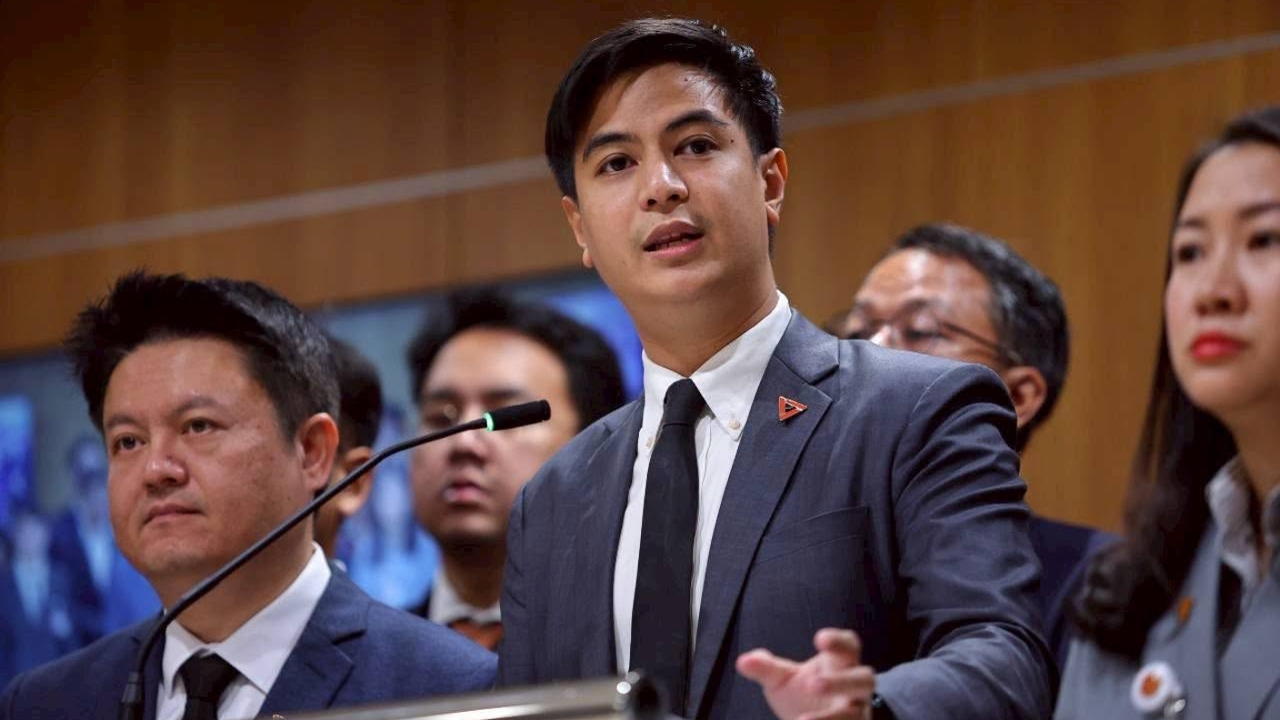
Prits urges the Bhumjaithai Party to sincerely move forward with drafting a new constitution, noting that the design of the Constitution Drafting Assembly (CDA) is monopolized by the 'Blue Regime,' controlling the selection of drafters and final content decisions.
On 22 Jun 2026 GMT+7 at the Parliament building, Prits Watcharasindhu, leader of the opposition whip, spoke about the progress in drafting a new constitution during a Shadow Cabinet meeting. He stated that the People's Party insists the new constitution must come from a 100% directly elected Constitution Drafting Assembly (CDA). Although the Constitutional Court ruling 18/2025 declared that Parliament cannot allow the public to directly elect constitution drafters, and despite their disagreement with this ruling which limits advancing an elected CDA, this spurred the Senate's Political Development Committee and the House Judiciary Committee to meet with the Constitutional Court President to clarify the ruling and reclaim what they see as the people's legitimate right to participate in electing the CDA.
The Constitutional Court President clarified that the public can indeed elect the CDA. The ruling 18/2025 only prohibits the public from directly electing the constitution drafting committee itself. This means the public can directly elect the CDA, which may have the authority to appoint the drafting committee and approve the new constitution draft prepared by that committee.
Prits addressed concerns that some view the discussion outcomes as different from the ruling. He acknowledged this but said it is an elaboration clarifying an ambiguous ruling, making it clearer what aspects of their progress align or conflict with the ruling.
Some claim the views expressed were only those of judges present at the meeting. Prits emphasized that although only the Constitutional Court President and two judges attended, the President stressed that the explanations given were not his personal opinions. During the original ruling, no restrictions on electing constitution drafters were decided. The meeting expanded on the collective views of all Constitutional Court judges before issuing ruling 18/2025.
Regarding some Bhumjaithai MPs citing a similar discussion in 2024 concluding only two referendums were needed, but later the 2025 ruling mandated three, Prits noted this reflects potential misunderstandings. He emphasized that the recent discussion clearly states the new constitution can be ratified with only two referendums. The first referendum would ask two questions. Thus, ruling 18/2025 aligns with the 2024 discussion on holding two referendums.
Prits outlined four points on moving forward with constitution drafting: 1. The People's Party will push for a 100% elected CDA, bringing the Constitutional Court discussion outcomes to tomorrow's party MP meeting to decide if their draft needs revision to achieve this.
2. They invite citizens to sign the people's draft constitution petition, which also proposes a 100% elected CDA. Over 23,000 signatures have been collected so far; 50,000 are needed to submit the draft to Parliament. They hope the people's draft will be considered alongside party drafts in the first reading.
3. All political parties, especially those who have supported an elected CDA and submitted drafts without 100% elected members, are urged to review their drafts and consider joining the push for a fully elected CDA.
4. He addressed Bhumjaithai Party members, noting several MPs have commented on this issue. If the party sincerely supports an elected CDA, they should carefully consider the new Constitutional Court discussion and collaborate with all parties to push for an elected CDA.
“If Bhumjaithai chooses to proceed by rejecting this new information, it raises suspicion that their true intent is to exploit ambiguous rulings as an excuse to exclude public participation in electing the CDA. This would make the constitution drafting process monopolized by the Blue Regime, allowing them to control the selection of drafters and final content of the new constitution,” Prits stated. .Prits said.
When asked how they would respond if Bhumjaithai insists on following ruling 18/2025, Prits said everyone knows the ruling is ambiguous. They sought clarity, and Bhumjaithai MPs were present during the meeting with the Constitutional Court President. If Bhumjaithai genuinely supports an elected CDA as they previously declared, they should respond accordingly. Given this new information, Bhumjaithai should meet with other parties to design an election approach for the CDA. However, over the past two days, at least three Bhumjaithai leaders have successively dismissed the importance of this information. This suggests Bhumjaithai already intends to block an elected CDA, using ambiguous rulings as an excuse to design a CDA monopolized in selection and content decisions.
“From a broader perspective, the Blue Regime wants a political system that allows collusion at all levels. They seek success through two ways: 1. Doing whatever it takes to stall the new constitution drafting process so the 2017 Constitution remains, which facilitates widespread political collusion; 2. If the new constitution drafting proceeds, ensuring it happens under conditions allowing them to monopolize the selection of drafters and content decisions. This is concretely shown in the proposed additional Section 15/1 submitted by the Bhumjaithai Party,” Prits said. Prits added.
Asked about the difference between the public being able to elect the CDA but not directly elect the drafters, Prits said the People's Party opposes the ruling's phrase preventing the public from directly electing constitution drafters. Given this, their focus is on reclaiming the people's rightful participation in electing the CDA as much as possible. The answer they received is that the public can directly elect the CDA, which then can appoint the drafting committee. This increases public participation beyond prior interpretations of the ruling's limits.
When asked if a constitutional court review petition would be necessary if disagreements persist, Prits said it is not necessary to submit such a petition, but they will observe how other parties proceed.