

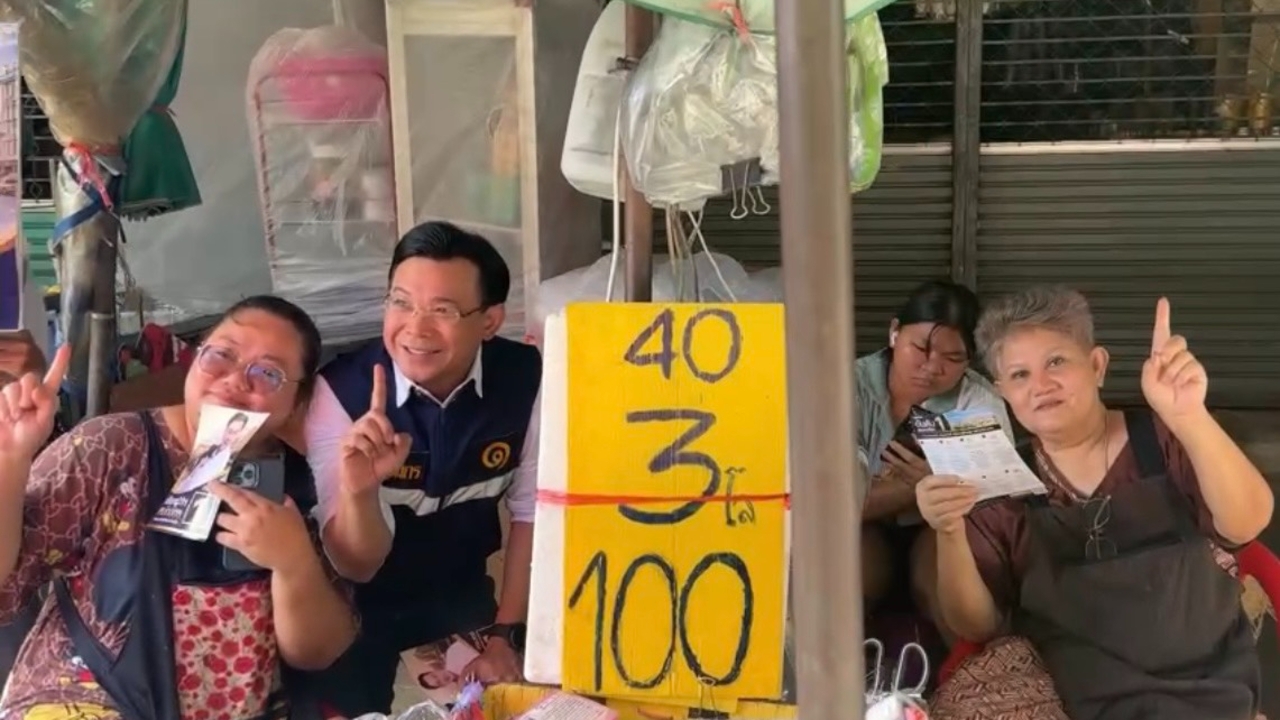
"Mom Korn" visits local communities to hear grassroots feedback, opposing extreme eviction policies, and proposes a new regulation: "time limits but no occupational restrictions."
On 22 June 2026, Mom Luang Korakrit Kasemsri, a candidate for Bangkok governor, met with vendors and residents in the historic central city trade areas at Bobae Market and Mahanak Market to hear concerns about sidewalk regulations that are severely impacting the livelihoods of small traders and the urban poor amid a sluggish economy.
Mom Luang Korakrit stated that while orderly city development is positive, his administration will pursue a policy of "moderation" rather than extreme measures like evictions or forcing vendors into expensive private buildings. Such actions undermine the economic social safety net for the poor. He proposed concrete solutions tailored to the identities of the two markets. For Bobae Market, he aims to revive the textile market using a "time zoning" (night economy) concept. Conversations with clothing vendors and laborers revealed that forced relocation to buildings is financially unviable and they face stiff competition from cheap imported online goods. The solution is to apply a "time-space sharing" concept.
He suggests temporarily opening a nighttime economic zone allowing orderly street stalls along the canal from 10:00 p.m. onward, when Krung Kasem Road traffic eases, providing low-cost income opportunities for the poor. The shared condition is that vendors must clear and clean the area before dawn so Bangkok residents can enjoy unobstructed daytime transit, while the urban poor gain a nighttime livelihood.
At Mahanak Market, a key wholesale fruit distribution center supporting mobile vendors citywide, the main issues are wet waste from spoiled fruit and cleanliness. The proposed solution includes opening a temporary "fast track" parking lane at night to allow pushcart and mobile vendors to load and unload quickly without blocking traffic. A waste fund will employ homeless people, support equipment for collecting organic waste for energy production, and use the revenue to hire poor and homeless workers to clean the streets by spraying water promptly after the market closes at 5:30 a.m.
Mom Luang Korakrit concluded that modern city management should not treat the poor as disposable or neglect discipline. The middle-way approach of "time limits but no occupational restrictions" provides clean, accessible sidewalks during the day while allowing urban poor and small vendors to sustain livelihoods without falling into informal debt. This will keep the grassroots economy circulating and create a vibrant city embracing all groups genuinely.