

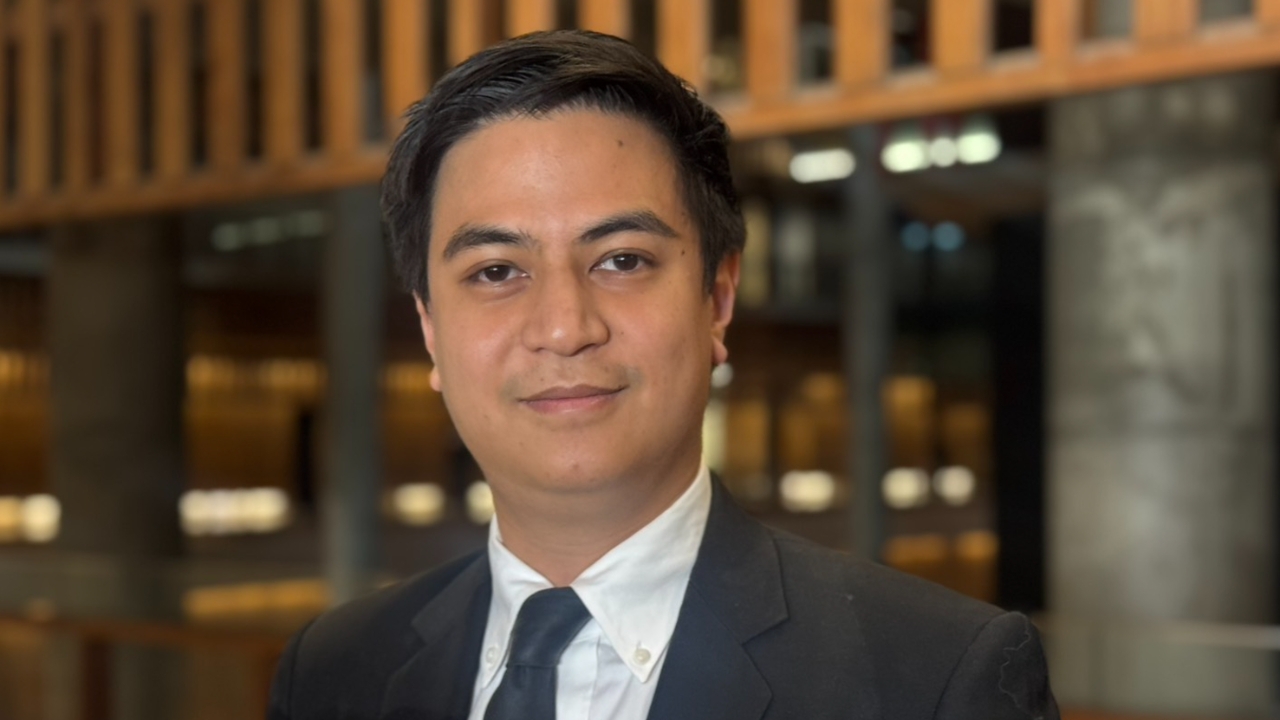
The People’s Party reserves budget scrutiny for TH-AI Passport Phase 2. “Ice Cream Parit” insists nothing can stop the opposition’s oversight, warning that delaying the constitutional amendment draft may prevent completion by 2029.
At 09:20 on 23 June 2026 GMT+7. Mr. Parit Watcharasindhu, party-list Member of Parliament and Deputy Leader of the People’s Party (PPP). He gave an interview at the parliament regarding preparations to debate the 2027 budget bill, asked if any projects would be targeted specifically. He said the debate would cover the overall budgets of each ministry and possibly focus on projects with unusually high spending or concerns over transparency. He noted that although the TH-AI Passport Phase 1 project did not use budget funds but was funded by a fund, the Permanent Secretary confirmed at a budget oversight committee meeting that Phase 2 would be included in the 2027 budget bill, making it one of several projects targeted for scrutiny.
Regarding the 2026 budget transfer bill, he observed that only about 10 billion baht had been transferred, far below the government’s initial target of 80 billion baht. The allegation that the government promised 100 but delivered only 10 is not unfounded. The government declared in its policy statement to parliament in early April it would strive to save unnecessary expenses to reallocate funds to help citizens cope with the energy crisis.
Pointing out irregularities in megaproject TORs under the Ministries of Higher Education and Education.
Mr. Parit added that while he had not seen the full details of the 2026 budget transfer bill, he noted that some projects initiated by the previous government might be included. The current government could review the transfers, such as megaprojects related to Skill Credit Portfolio enhancement: one project under the Ministry of Higher Education, Science, Research and Innovation worth 5.4 billion baht and another under the Ministry of Education worth 1.6 billion baht. These projects were initiated early 2025 under the Bhumjaithai-led administration and included in the 2026 budget, which the opposition had already questioned for appropriateness. Recently, irregularities were found in the terms of reference, especially in the Higher Education Ministry’s project, resembling issues seen in the TH-AI Passport project, with TOR details perceived as restricting competition and possibly favoring certain private firms with prior knowledge of the criteria.
Responding to concerns that delaying constitutional amendments may miss the 2029 deadline.
Regarding talks among the three-party whips to delay consideration of the constitutional amendment draft pending civil society submissions, Mr. Parit said the government whip had agreed to allow civil society drafts to be considered alongside party drafts in the first reading. He had no objection to this. He emphasized that a key new finding from discussions with the Constitutional Court president and judges clarified that ruling 18/2025 does not limit the right to propose a fully elected Constituent Assembly. The People’s Party will discuss internally and reaffirm its push for a 100% directly elected Constituent Assembly, awaiting other parties’ responses on whether they will revise their drafts accordingly.
Asked about concerns that waiting for civil society drafts might delay constitutional amendments beyond 2029, Mr. Parit said the timeline still needed discussion, but principle comes first. Both the People’s Party and government whips agree on submitting civil society and party drafts together in the first reading. If before the parliamentary session ends, this would be early July; if waiting for the next session, it would be August—a difference of about six weeks. Overall, the process of drafting a new constitution must continue with ongoing consultations.
Declares nothing can stop opposition’s oversight.
Mr. Parit also commented on Prime Minister and Interior Minister Anutin Charnvirakul’s statement that the situation involving Mr. Pawut Pongwittayapanu, party-list MP from the People’s Party, is not political harassment. He said whether it is harassment is for the public to judge, but nothing will stop them from performing their duty to oversee the government. Currently, four issues remain under investigation, and the opposition will continue their scrutiny:
1. The Senate collusion case.
2. The opposition and senators’ petition to the parliamentary speaker requesting the Supreme Court to establish a fact-finding committee on the National Anti-Corruption Commission’s alleged misconduct in dismissing the concealed shares case of former Transport Minister Saksayam Chidchob. They are awaiting clarity from the speaker on whether and when this matter will be forwarded or halted.
3. The Ministry of Interior, especially the Permanent Secretary’s timeline for investigating the Director-General of the Department of Provincial Administration, as the minister and permanent secretary have been publicly evasive and unclear.
4. Whether the government will review or cancel the TH-AI Passport project moving forward.