

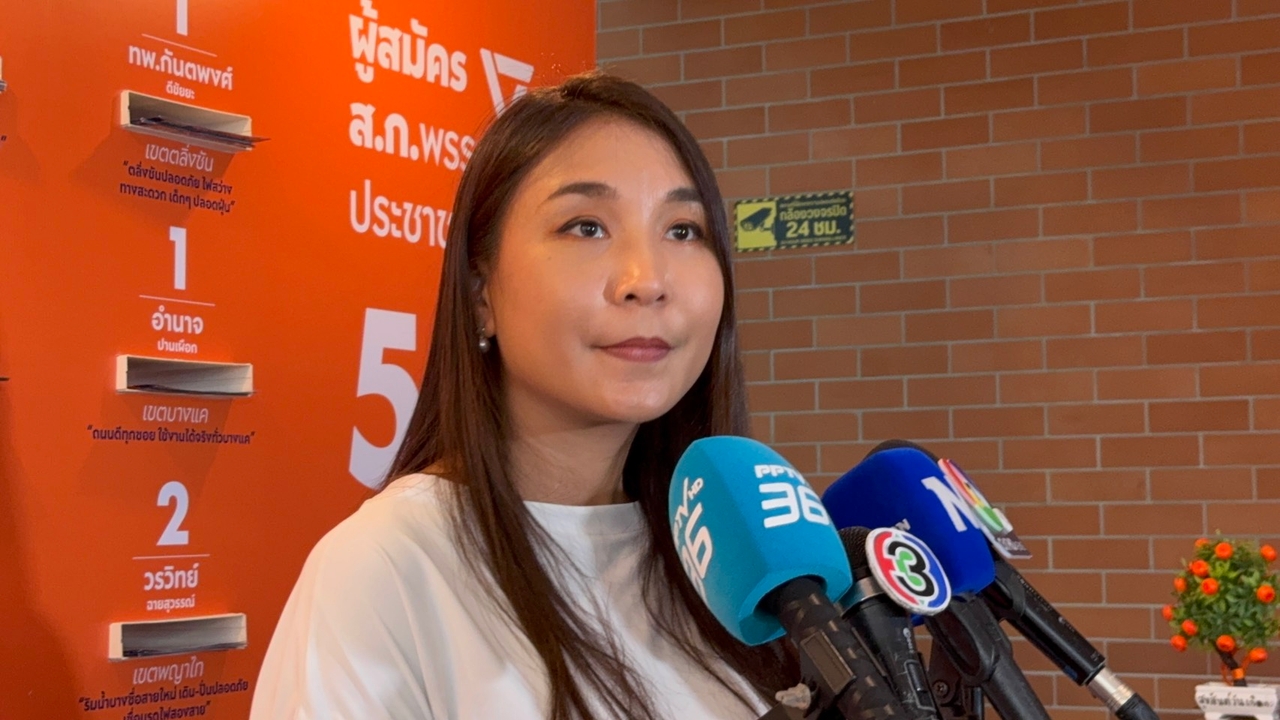
Sirikanya criticizes the 2026 budget transfer act, noting only 10.3 billion baht was actually transferred compared to the 80 billion baht target, raising concerns that government agencies may need to carry over expenses into next year.
On 23 June 2026, Sirikanya Tansakul, party-list MP and deputy leader of the People’s Party, spoke about preparations to review the 2027 fiscal year budget bill. After the Cabinet approves and uploads the budget documents online, the People’s Party will have one week to analyze them, preparing 30 MPs to debate from 29 June to 1 July. The debate will be detailed and interconnected, not focusing on individual ministries.
Sirikanya commented on the 2026 budget transfer bill set for parliamentary discussion on 25 June, saying it was delayed and the amount transferred was very low. Although the government announced a transfer of 80 billion baht, only 10.3 billion baht was actually moved, possibly not justifying the delays caused by slow procurement processes in the third quarter.
At an opposition whip meeting, a representative from the Budget Bureau explained that the government still faces about 50 billion baht in unpaid expenses, such as compensation for the Thai-Cambodia border clashes, Orange Line metro contractor claims exceeding budget provisions, and public electricity debts the government must repay. Since only 10.3 billion baht was transferred, approximately 40 billion baht remains unaddressed, raising concerns about how the government will close the 2026 fiscal year.
"We have tried to help the government explore possible options but there is no way left. The 2026 budget may close with many agencies still unpaid, forcing them to carry over expenses into 2027. This is worrying as it could worsen the situation if revenue collection targets, especially corporate income tax from businesses experiencing sales declines, are not met," Sirikanya said.
Asked about concerns over the 2027 budget allocation, Sirikanya said the People’s Party hypothesizes there might be budget allocations focused on particular provinces or suspiciously high budgets to certain ministries benefiting allies, the "blue faction." For example, in 2026 some agencies faced cuts while the Ministry of Digital Economy and Society’s budget increased by 30%.
The People’s Party is also monitoring the TH-AI Passport Phase 2 project, worth 900 million baht in the 2027 budget. In Phase 1, the government invested 1.6 billion baht, but the terms of reference did not specify state ownership of the platform, leaving ownership with private companies. If Phase 2 uses a new contractor, the government must pay to develop a new platform, causing redundancy. If the same contractor is chosen, it effectively locks specifications, potentially leading the government to pay platform rental fees in the future, reflecting poor project planning.
When asked if this issue could lead to a no-confidence debate to topple the government like the past rice pledging scandal, Sirikanya said the TH-AI Passport project is still in data collection. Legal actions will proceed alongside parliamentary debates, likely in the next session. Historically, no government has been toppled in parliament due to corruption projects but often dissolves parliament first. Therefore, the opposition must work hard to present facts to persuade coalition partners to vote based on reality rather than political loyalty.