

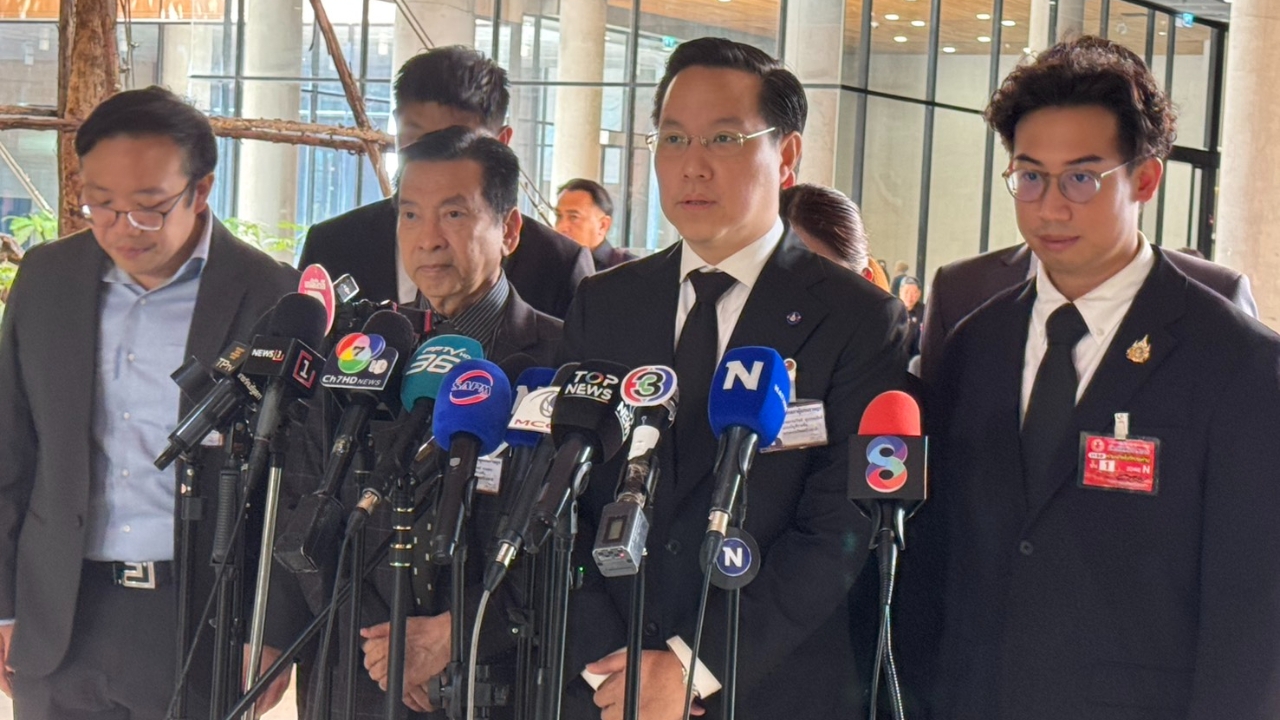
The ISPO has rejected the use of IF rebar, banning it from construction of columns and beams in high-rise buildings. This move counters billion-baht investor groups trying to amend the law. Attawit Suwanpakdee called for signatories to remain steadfast and vowed to continue investigating the Office of the Auditor General building collapse issue.
On 24 June 2026, Attawit Suwanpakdee, a party-list MP from the United Ruam Thai Sang Chart Party, revealed that after closely monitoring the matter since December 2024, the Industrial Product Standards Committee (ISPO) on 23 June approved revising steel bar standards by banning IF rebar — steel produced by melting scrap with an induction furnace and then rolled using recycled scrap — from being used in main structural elements such as columns and beams in buildings.
Attawit expressed gratitude to the Thai Industrial Standards Institute (TISI) and officials from the Ministry of Industry for their joint efforts to promote public safety. He pointed out the problem with IF steel is the inclusion of low-quality scrap in the melting process, resulting in steel unsuitable for structural load-bearing despite its lower price.
The United Ruam Thai Sang Chart MP acknowledged that this ban on IF steel will impact the multi-billion-baht business of 11 steel factories in Thailand that still produce this type of steel, which is a technology already rejected and discontinued in China.
When asked whether the ISPO resolution could be reversed, Attawit said the report is currently under approval before being officially announced as a regulation. According to legal procedures, there will be a 30-day public consultation period, during which it is highly likely that steel industry investors will lobby to try to change or overturn the decision.
"This involves a multi-billion-baht business. Those who must sign the approval documents must stay calm and not waver. We previously investigated this issue after the fire at Sin Ke Yuan Company at the end of 2024. I warned industry officials and senior figures that we must build with our hands and not destroy it with our feet. Today, TISI has upheld its dignity by daring to enact rules banning IF steel. If the policy changes and allows this type of steel back into building construction, the country will definitely face problems," Attawit said.
Additionally, Attawit announced plans to continue investigating steel standards related to the collapse of the Office of the Auditor General building. He had previously chaired the steel bar inspection and served as chief advisor to the Minister of Industry. When inspecting the debris at that time, clear evidence showed IF steel, below international standards, was used in the building's structure.
However, a government-appointed committee led by a former prime minister concluded that the collapse was due to design flaws and claimed steel and concrete quality were not involved, contradicting the physical evidence. Attawit questioned the four academic institutions involved in the investigation about their inspection methods and why their findings conflicted. He insisted this matter requires transparent answers for society after long silence.