

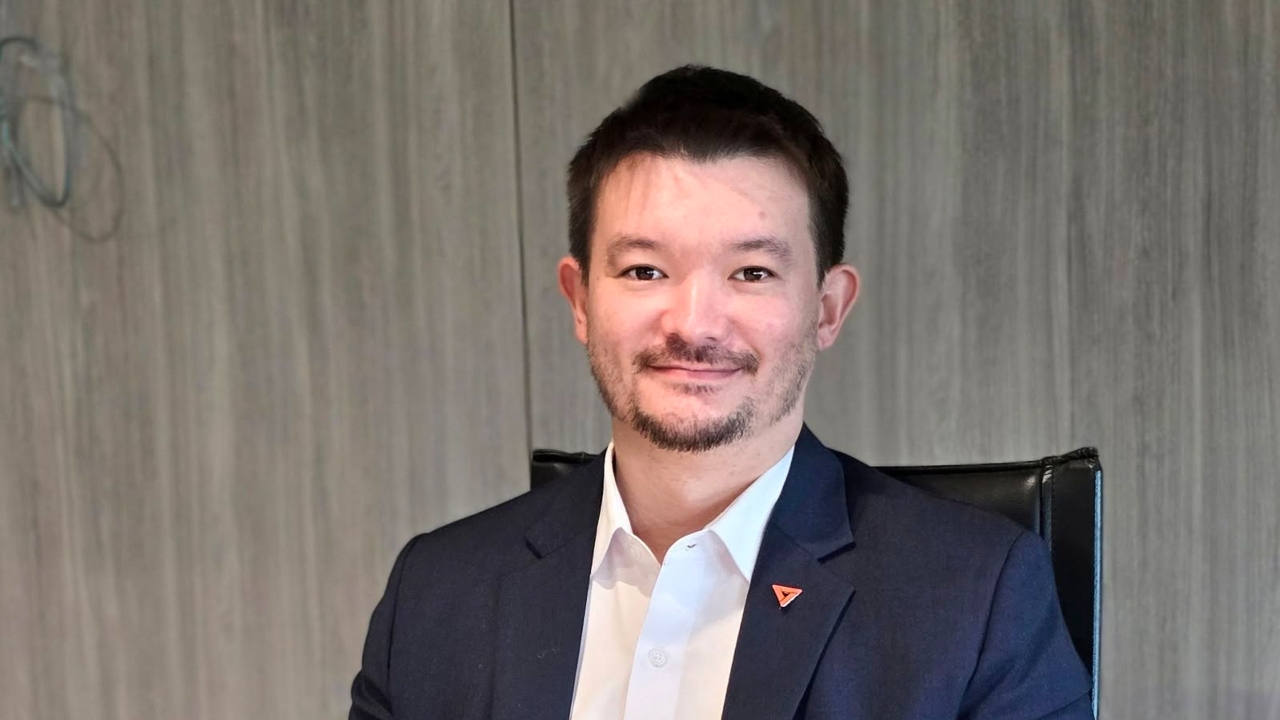
Patthapong exposed that the government is sluggish and inactive in addressing the toxic river problem from mines in neighboring countries, noting that arsenic levels in river sediments have spread to the Mekong River in northeastern Thailand, the Salawin River in Mae Hong Son, and the Kra Buri River in Ranong Province already.
On 24 June 2026, Patthapong Lilaphat, Chiang Mai MP from the People’s Party, posted on Facebook that the government remains silent and inactive on the toxic river issue caused by mines in neighboring countries, reluctant to confront the mining countries and ignoring the citizens. The toxic river problem is widely known from news reports where the Kok and Sai Rivers in Chiang Mai and Chiang Rai have arsenic levels far exceeding safety standards. But in truth, this is not limited to just those two rivers. Now the Mekong River in northern Thailand shows arsenic sediment levels over 30 times above safety limits. In northeastern Loei Province, fish have arsenic and lead levels beyond safe limits. The Salawin River in Mae Hong Son has arsenic levels five times over the standard, and the Kra Buri River in Ranong faces severe turbidity issues dangerous to aquatic life.
Patthapong said that this concerns not only the rivers but also agricultural areas and drinking water sources relying on these waters, where heavy metals above safety standards have been detected. Ultimately, this affects the food security and health of the people. This problem has existed for a long time, is visible to all, and he has debated it several times in parliament. Yet the government chooses to remain silent and inactive, ignoring the problem. The root cause is clearly the mines in Myanmar, many of which are in areas where the Myanmar government cannot fully control, and the number of mines is increasing annually. Moreover, mining in Laos is also extensive. Import-export data show the flow of minerals from Myanmar into Thailand and then on to China. Yet the government has not conducted any negotiations with countries involved in the mineral supply chain except a single discussion with Myanmar, which yielded no progress.
Patthapong stated that as chairman of the subcommittee on transboundary water pollution monitoring this issue for a long time, they held a meeting yesterday to review progress in international negotiations. Both the Ministry of Natural Resources and Environment and the Ministry of Foreign Affairs report no progress, no plans for negotiation or preparations. The working group under the committee chaired by Deputy Prime Minister Songsak, tasked with international negotiations, has never met, and the monitoring working group last met in April. How can we solve the root problem without government action? This is not only a demand from the People’s Party; the UN human rights working group sent urgent letters to the Thai, Chinese, and Myanmar governments and private sectors on 21 April 2026, yet everything remains silent.
“I call on the government to dare to speak out and act, starting to solve this problem at the source honestly by initiating multilateral negotiations among Thailand, China, Myanmar, and Laos, because now Thai people receive no benefits from these mines but bear the consequences without any management from those in power,” said Patthapong.