

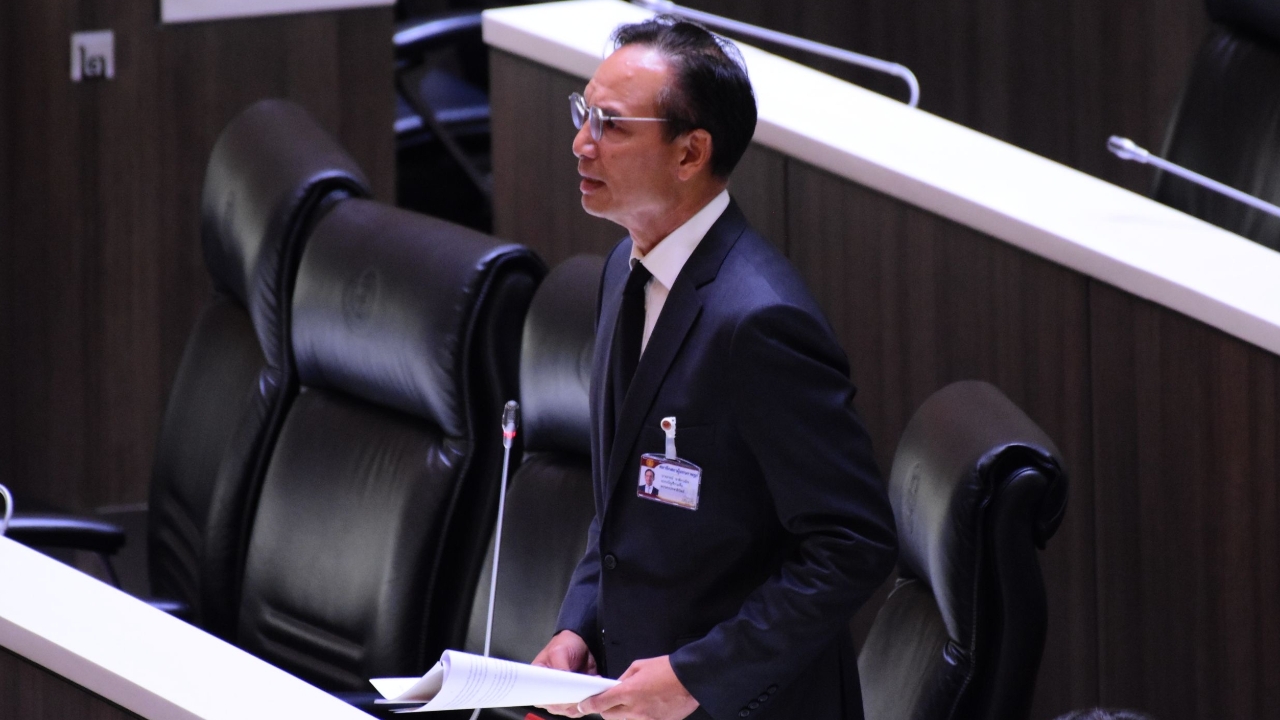
Korn criticized the government for issuing a budget transfer bill that cut the budget to just 10 billion baht, calling their actions childish. He exposed intentional delays that led ministries to rush contract signings, aiming to use this as a cover to handle embarrassment and justify a 400-billion-baht loan emergency decree.
On 25 June 2026 at the parliament, Korn Chatikavanich, a party-list MP from the Democrat Party and former finance minister, debated the budget transfer bill. He said it was regrettable that this bill would have minimal impact on the macroeconomy and provide less relief to the public than expected. He compared the government's fiscal management this time to children playing shop rather than serious administration.
Korn pointed out the government's original intention since its policy announcement on 9 April, during which the Middle East conflict increased energy costs and oil prices. Deputy Prime Minister Akiniti Nititanprapas initially signaled an intent to transfer as much as 100 billion baht, which combined with a central reserve of 25 billion would give the government 125 billion baht immediately available for public relief.
However, the situation changed when Deputy Prime Minister Pakorn disclosed to the media that the government planned to issue a 500-billion-baht loan emergency decree. On the same day, the finance ministry's permanent secretary denied any consultation and viewed the budget transfer bill as a normal fiscal tool better suited for the situation.
Korn said, “It is unfortunate that fiscal matters lost to politics. When political leaders had a clear agenda to issue a loan decree, despite Deputy Prime Minister's April 30 deadline to pull back budgets for unsigned contracts, time was neglected until 2 June. This forced ministries to rush contract signings to secure their funds. Ultimately, this budget transfer bill became a lame duck with only 10.3 billion baht left, just 0.2% of the total 3.78 trillion baht budget.”
Korn compared this with the 2020 budget transfer bill during the COVID-19 crisis under Prime Minister Prayut Chan-o-cha’s government, which transferred as much as 88 billion baht, 2.7% of that year's budget. That transfer was significant, unlike this government's 10.3 billion baht, which hardly affects the economy.
Korn analyzed that the government's continuation of this small budget transfer bill serves two main purposes:
1. To save face, since the government had announced to parliament it would issue a budget transfer bill and would face criticism if it did not.
2. To provide a legal argument to the Constitutional Court, because the loan emergency decree can only be issued if unavoidable. The government must show it has fully used normal budgetary tools but they are insufficient.
“The question is whether transferring just 10 billion baht, when it initially could have been 100 billion, truly shows the government has done its utmost to meet the unavoidable condition. That is for the Constitutional Court to decide.”
Towards the end, Korn cited current economic data, noting the Bank of Thailand has raised GDP growth forecasts above 2%, reflecting an improving economy. Global oil prices have eased and dropped quickly. Government tax revenue has met or exceeded targets, and foreign reserves are at a historic high.
“Currently, there is no economic security risk that can justify issuing a loan emergency decree. With the Constitutional Court’s ruling expected on 9 July, I warn the government not to rush spending the remaining 10.3 billion baht from the budget transfer. If the loan decree is rejected, the value of this money will become very important and increase immediately.”