

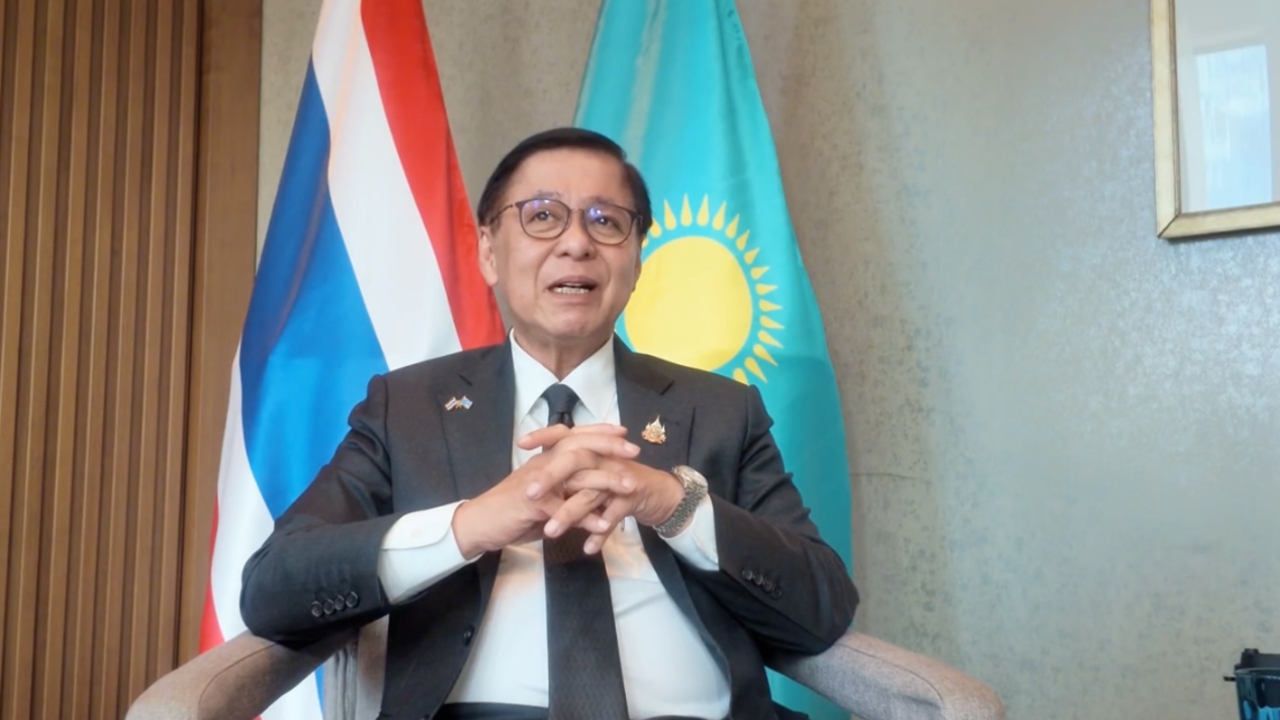
Sihasak hopes to appoint a neutral individual as chairperson to mediate the Thai-Cambodian maritime dispute. The appointment process is expected to take 30 days before negotiations begin. He emphasized that discussions will seek a resolution acceptable to both parties.
On 26 June 2026, in the city of Astana, Kazakhstan, Sihasak Puangketkaew, Deputy Prime Minister and Minister of Foreign Affairs, spoke about progress in selecting the chairperson for the compulsory conciliation commission under the United Nations Convention on the Law of the Sea (UNCLOS). He said he had met with the candidate Thailand proposed as the conciliator on its side and explained the selection process for the chairperson. Although the rules do not state that the chairperson must be approved by both disputing countries, the best outcome is when both sides agree on a neutral individual. The process will take 30 days to complete the appointment, after which the working framework will be set. Thailand will be invited to present information, with meetings possibly held once or twice monthly.
In response to why MOU 44 was canceled, Sihasak explained it was to allow negotiations under a new context because both Thailand and Cambodia are now parties to UNCLOS. There is no need yet for compulsory conciliation since voluntary negotiations remain possible, which motivated the cancellation of MOU 44. If the MOU remained, negotiations would fail. Critics noted that MOU 44 was based on Cambodia's claim marked by a line passing through Koh Kut island. He acknowledged initial difficulties pushing negotiations under MOU 44 due to disagreement but reiterated their intent was to restart talks. Cambodia, however, delayed progress, and if maritime talks succeed, discussions might also begin on land issues Cambodia prioritizes, which stem from wartime problems.
Asked whether MOU 43 might also be canceled, Sihasak said that setting politics aside, this MOU remains useful because it settles many boundary principles. The problem lies with the 1:200,000 map Thailand rejects since it causes loss of the Preah Vihear Temple, but MOU 43 also refers to other documents beyond that map, including treaties and watershed lines. Therefore, MOU 43 is still workable. Currently, public consultation is important, as with UNCLOS, and no secrecy surrounds these matters. The Foreign Ministry must adhere to national interests and laws while listening to diverse views. If Thailand does not accept the compulsory conciliation process, it cannot appoint a conciliator nor recognize international rules in negotiations, undermining trust in agreements. He emphasized Thailand's membership in the global community with rules to follow and will strive to use these processes effectively, which he believes is best.
When asked about Thailand's worst-case scenario under UNCLOS, Sihasak said not to focus on that but to see what international law produces. Many believe Cambodia’s claimed boundary line is unlikely under international law. There may be various scenarios, but Thailand can protect its sovereignty and negotiate for a win-win solution acceptable to both sides. If Cambodia accepts this approach, it is a win for Thailand; if not, talks will continue to find mutually agreeable solutions.