

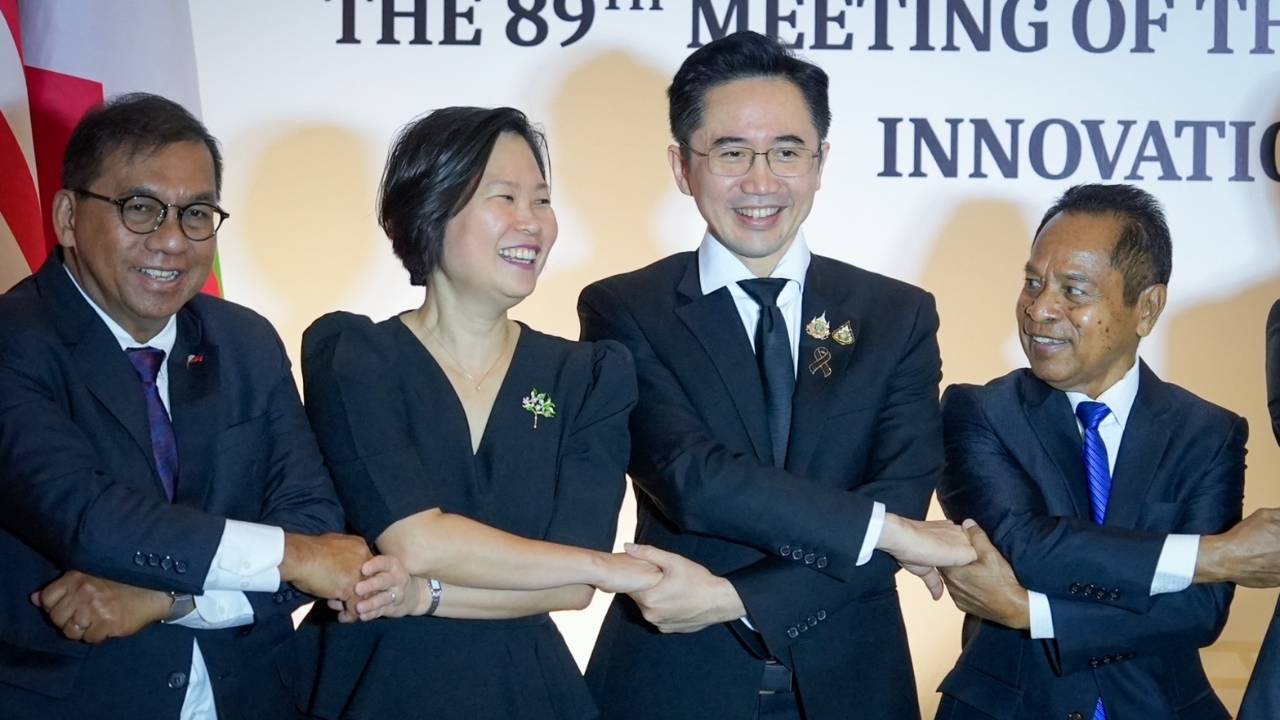
Prof. Dr. Yotsanan leads ASEAN efforts to promote the ASEAN CHIPS ACT legislation, advocating for a unified semiconductor ecosystem. He also integrates strategies in health, space, and AI to sustainably elevate Thailand as the region's innovation hub.
On 26 Jun 2026 GMT+7, in Vientiane, Lao People's Democratic Republic, Prof. Dr. Yotsanan Wongsawat, Deputy Prime Minister and Minister of Higher Education, Science, Research and Innovation (MHESI), representing Thailand, attended the 22nd ASEAN Ministerial Meeting on Science, Technology and Innovation (AMMSTI-22) at the Crowne Plaza Hotel. The meeting set policy directions and declared Thailand's strategic position in regional science and technology alongside science leaders from member countries.
At this meeting, Thailand fully supported the ASEAN Plan of Action on Science, Technology and Innovation (APASTI) for 2026-2035. Prof. Dr. Yotsanan presented a standout vision by proposing the key legal initiative “ASEAN CHIPS ACT (ACA),” aiming to connect the semiconductor industries across the region. The core idea is for ASEAN to unify its chip production and ecosystem development to compete globally, rather than growing as fragmented, small, incomplete markets.

On this occasion, Prof. Dr. Yotsanan informed the meeting that Thailand has completed drafting the initial Concept Note for the proposal. Thailand will coordinate with the chair of the committee to circulate this concept document to senior officials of member states for review and further action. Thailand is ready to engage in close discussions with all ASEAN countries moving forward.
Regarding the six strategic pillars under the legislation, Prof. Dr. Yotsanan proposed comprehensive and practical approaches starting with accelerating the development and exchange of regional experts through scholarships and support projects for prototype chip production. This aligns with Thailand's target to develop 50,000 AI specialists by 2030. Thailand also offered to be the regional training hub, providing easier access to advanced laboratories and circuit design tools, while building research networks and centers of excellence to collaboratively develop new innovations.
The strategy also covers securing supply chains by supporting synergistic production from upstream to downstream to address chip shortages. It includes setting common standards to ensure credibility and safety through the “ASEAN Semiconductor Council.” Importantly, it emphasizes sustainability by promoting environmentally friendly manufacturing, efficient energy use, and systematic management of water resources and electronic waste.

Beyond semiconductors, Thailand prioritizes using technology to improve quality of life. Prof. Dr. Yotsanan stated, “Amid challenges from pandemics and emerging health issues, Thailand is ready to lead regional medical innovation through the Wellness Thailand policy. We are advancing connections between research, innovation, and biotechnology with the health economy to build a resilient society. We propose ASEAN adopt health as a foundation to build immunity for all populations.” He cited examples of AI use in public health, such as remote patient monitoring by doctors and AI-assisted personalized nutrition analysis, with agencies like Thailand’s NECTEC fully prepared to support these initiatives.
Regarding economic opportunities, Prof. Dr. Yotsanan views the space industry as the next target. “Space technology is a new economic engine that will enhance other industries and attract global investment to the region. Thailand is fully supportive of ASEAN space cooperation,” he said.

He also invited member states to utilize the Eastern Economic Corridor innovation zone (EECi), which will soon install a new synchrotron light source—an advanced molecular-level microscope. Thailand welcomes ASEAN countries to conduct joint research here, whether in drug discovery, high-value agricultural product development, or new material creation.
On environmental issues affecting the region, such as PM 2.5 dust and natural disasters, Prof. Dr. Yotsanan emphasized Thailand’s readiness to use GISTDA satellite technology for monitoring and management to collectively restore clean air for everyone.
“Thailand believes that ASEAN’s true security must start with the health and well-being of its people. Our health policies, chip legislation push, and innovation infrastructure readiness will be key to deepening collaboration and driving ASEAN toward strong, resilient growth that leaves no one behind,” Prof. Dr. Yotsanan concluded.

