

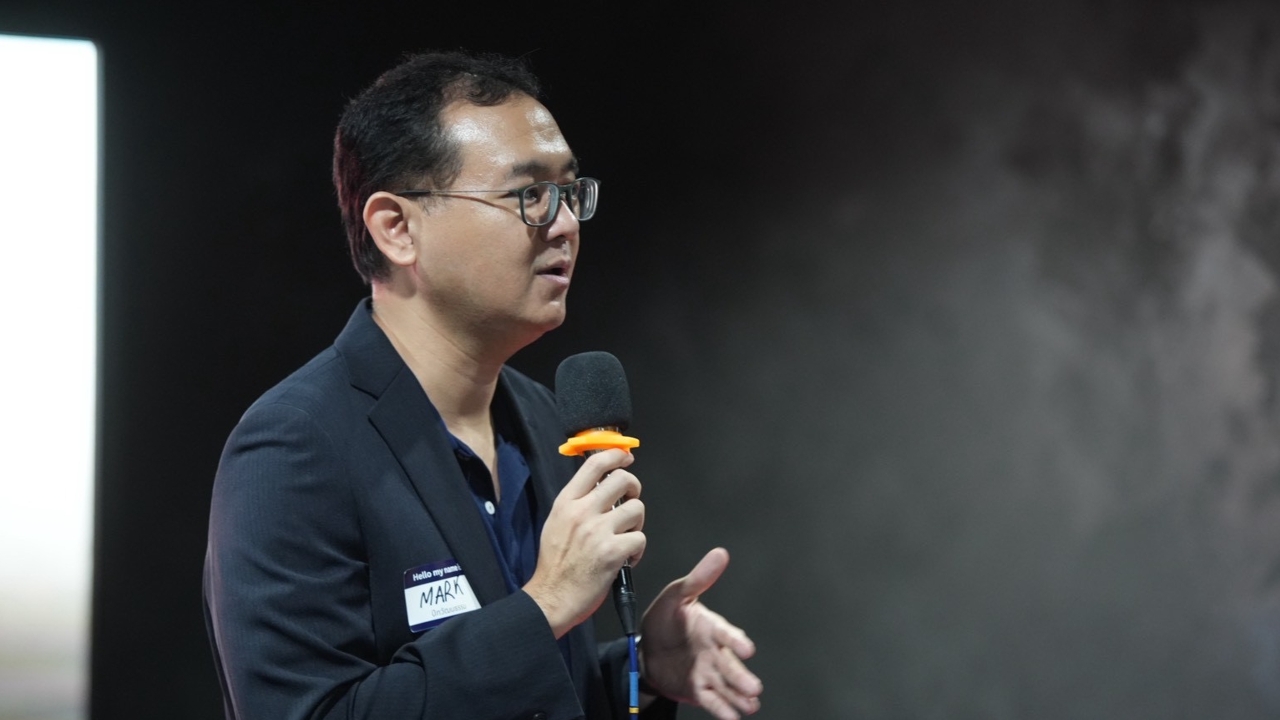
The People's Party held the Creative Budget Hack event to closely monitor the 2027 creative economy budget. MP Isariya revealed three main budget flaws: the government proclaims support but cuts budgets sharply and fails to allocate funds directly to creative workers. The party proposed three strategic measures to advance Thailand's creative economy.
On 27 June 2026, the People's Party organized “Creative Budget Hack: The Future of Thailand’s Creative Economy in the 2027 Budget,” creating a platform for the public to review and voice opinions on the 2027 budget allocation. The findings will be used to drive discussion and debate in the House of Representatives.
Isariya Pairipairit, a list MP from the People's Party, stated that in preparing the 2027 budget, all key agencies involved in advancing the country's creative economy and soft power experienced simultaneous budget cuts.
The Ministry of Culture, previously the agency with the highest budget at nearly 9.5 billion baht during 2025–2026, faced significant reductions in the 2027 fiscal year. Similarly, budgets for the Ministry of Commerce’s Department of International Trade Promotion (DITP), the Support Arts and Crafts International Centre of Thailand (SACIT), and the Gem and Jewelry Institute of Thailand (Public Organization) (GIT) — which had been relatively stable — were also cut.
Additionally, the Digital Economy Promotion Agency (DEPA) under the Ministry of Digital Economy and Society has seen continuous budget cuts since 2025. Budgets for the Creative Economy Agency (CEA), the Thailand Convention and Exhibition Bureau (Public Organization) (TCEB), and the Office of Knowledge Management and Development (Public Organization) (OKMD) under the Prime Minister’s Office — announced by the government as key bodies driving soft power policy — have also been steadily reduced.

Overall, all agencies related to the creative economy faced simultaneous budget cuts totaling 2.877 billion baht for 2027. MP Isariya questioned whether the government redirected these funds to other investments yielding better returns or simply reduced budgets without a plan to sustain the country's creative economy. He identified three main flaws in Thailand’s creative economy budget.
The first flaw is “Proclaimed support but no actual budget.” Although the Prime Minister announced full support for driving the creative economy as a new economic engine, budgets for related agencies were cut, such as the Creative Economy Agency’s budget falling by 25.4% and the Thailand Convention and Exhibition Bureau’s by 38.6%, despite their vital role in promoting Thai brands globally.
The second flaw is “Fragmented budget without a joint strategy.” Over 17 billion baht is scattered across six ministries with no agency responsible for overall coordination or a national strategy, resulting in siloed work, lack of integration, and no shared performance metrics.
The third flaw is “Budgets not reaching creative workers.” Most funds are spent on agency structures rather than creators. For example, the Ministry of Culture’s Permanent Secretary’s Office received a 6.8% budget increase, but the Office of Contemporary Art and Culture (OCAC), which directly promotes contemporary art, had its budget cut by 15.9%.
MP Isariya added that if the People's Party were responsible for the creative economy budget, it would design a more strategic and efficient budget approach with three key measures.
First, adopt a proactive strategy by establishing a National Creative Economy Board empowered to allocate cross-ministry budgets, set joint strategies, and restructure work processes to ensure all funds effectively drive the creative economy rather than being consumed by administrative costs.
Second, direct budgets to creators themselves, enabling artists, designers, and independent entrepreneurs to apply directly for support with reduced approval steps. Transparent key performance indicators would measure success based on creative economy GDP growth and export value, not just the number of activities organized.
Third, rebrand Thailand and spread opportunities to local communities by promoting the 'Spicy Thailand' image, positioning the country as a space where creativity thrives under freedom of expression, while leveraging unique community identities and charms to create economic value and make Thailand’s diverse culture known nationally and globally.
MP Isariya concluded that the event aimed to open a space for the public to monitor and scrutinize the government’s budget preparation and to reflect public suggestions for the 2027 budget bill debate in the House of Representatives on 29 June. It also serves as a policy proposal the People's Party could pursue if it becomes the government in the future.

