

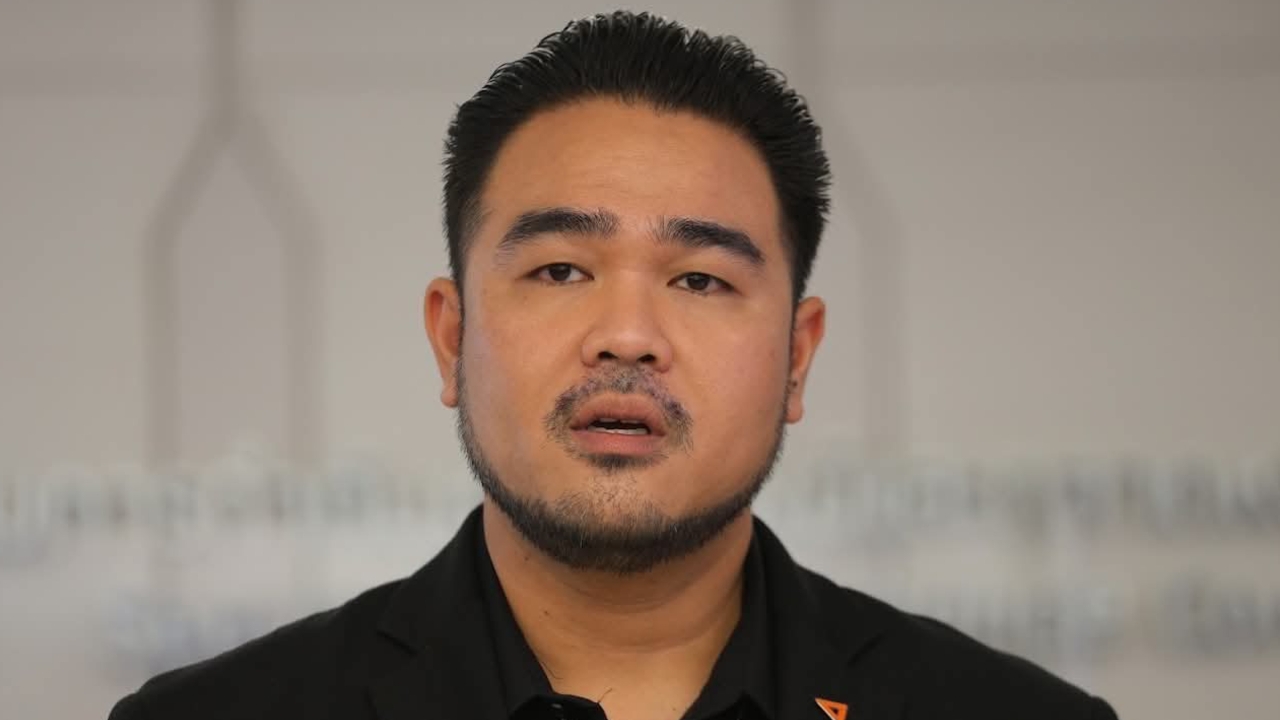
MP Sahasawat proposed eight measures to the government to address the "gray Chinese capital" issue, pointing out that illegal capital does not stem from foreigners entering the country but from a weak Thai state. He emphasized that the problem will persist without proper solutions.
On 27 June 2026, Sahasawat Khumkhong, MP for Chonburi from the People's Party, commented on the Chinese ambassador's request for Thais to avoid using the term "gray Chinese capital" as it generalizes all Chinese people. He also noted the Tourism and Sports Minister's statement about cutting visa-free stays from 60 to 30 days to better screen tourists. Sahasawat said the gray Chinese capital issue did not grow because of visa-free entry but because the Thai state granted rights to capital without strong regulatory mechanisms. Although reducing visa-free days seems like a solution, many people misunderstand that it means the government canceled visa-free entry for Chinese travelers, closing off gray capital channels. In fact, Thailand and China still have a visa exemption agreement effective from 1 March 2024, under which Chinese can enter Thailand without visas as before.
Therefore, the government's adjustment is to the Visa Exemption measure for 93 countries and territories, shortening the stay from 60 to 30 days, not canceling the Thai-Chinese visa exemption agreement. Chinese nationals can still enter Thailand visa-free under this agreement. This is the fact the government should fully communicate. Sahasawat emphasized that gray Chinese capital does not grow at immigration checkpoints but in company registrations, shareholder structures, bank accounts, real estate markets, EEC areas, BOI-privileged projects, and the gap between investment promotion and post-approval regulation.
Sahasawat raised policy questions about the effectiveness of post-investment regulatory mechanisms: how proactive inspections are, whether data from BOI, the Land Department, Department of Business Development, Factory Inspectorate, Immigration Office, Revenue Department, and Anti-Money Laundering Office are truly linked, how many promoted projects fail to meet conditions, how many privileges have been revoked, and whether nominee links and land misuse are systematically investigated. He proposed recommendations to the government for seriously addressing gray Chinese capital:
1. Publicly disclose BOI project monitoring reports after investment promotion.
2. Publicly disclose the number of projects whose privileges have been revoked.
3. Inspect land ownership of BOI-promoted enterprises.
4. Proactively crack down on nominees, especially in the EEC area.
5. Assess local content and technology transfer concretely.
6. Evaluate EEC based on investment quality, not just investment value.
7. Separate immigration policy from economic crime enforcement.
8. Create a shared database across agencies to monitor nominees and financial flows.
He also advised the government to communicate openly with the public, avoiding misconceptions that "visa-free review" equals "cracking down on gray Chinese capital," because the latter is not deterred by reducing stay duration from 60 to 30 days.
"Gray Chinese capital does not fear just a reduced stay period but fears a state that truly investigates financial flows, nominees, land use, revokes privileges upon violations, and enforces laws impartially. Unless the government addresses these root causes, reducing visa-free stay days will not eliminate the problem, because the core issue lies in regulatory gaps of the Thai state. Without tackling these, no matter how many times visa-free entry is revoked, gray Chinese capital problems will persist."
"The problem has never been the length of stay in Thailand but that the Thai state has allowed illegal capital to embed deeply over a long time."