

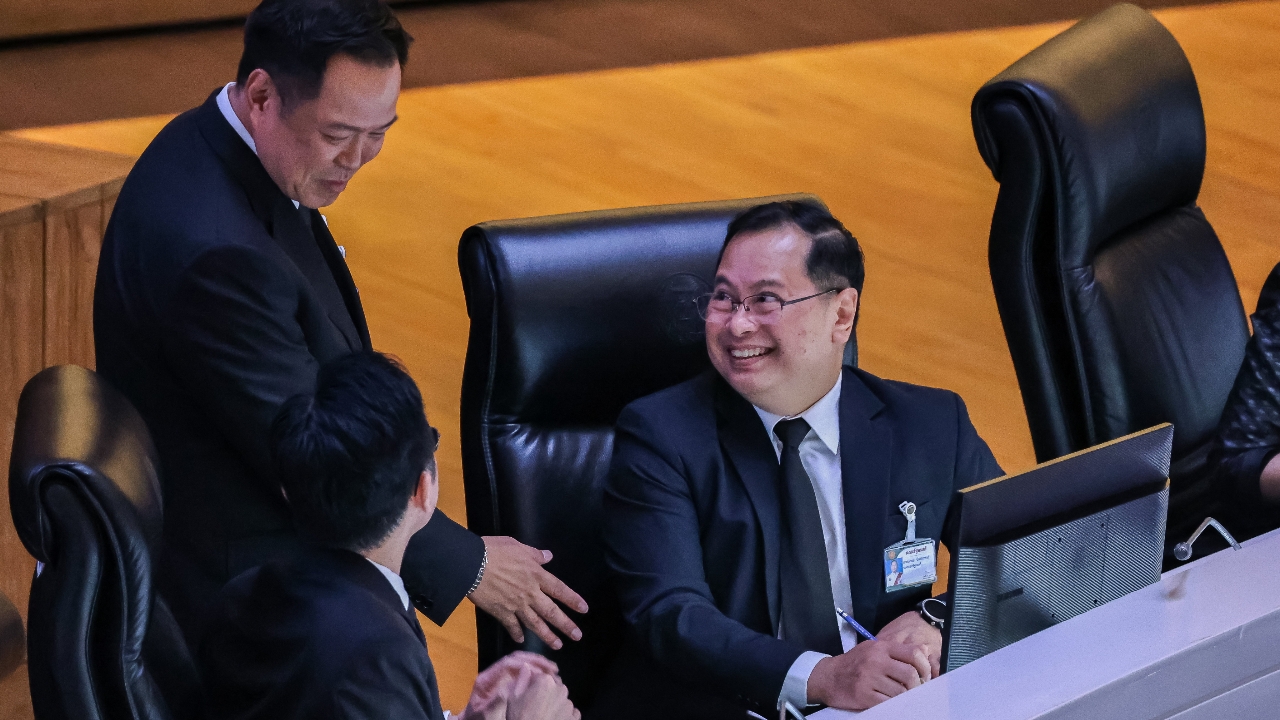
Deputy Prime Minister Pakorn unveiled three core principles to amend the draft Government Procurement Act, focusing on strict oversight of quality private contractors and addressing contractor abandonment. He noted that quality goods at very low prices rarely exist and hopes these measures will end the phrase “fool’s cost.” The bill is expected to be submitted to parliament in September.
28 June 2026 GMT+7 Mr. Pakorn Nilprapunt, Deputy Prime Minister in charge of legal affairs, spoke about the progress and reasons for revising the draft Government Procurement and Supplies Management Act of 2017, saying that it has been submitted to Deputy Prime Minister and Minister of Finance Mr. Akniti Nitithanprapas and is currently undergoing procedural steps. There are three main objectives for this revision:
1. To tighten the selection of government contractors by focusing on the benefits to the government, contractor capability, and past performance—such as work history, timely delivery, and reputation—to prevent contractors from abandoning projects. Previously, the criteria relied mainly on the lowest price per the Comptroller General’s Department, but it is acknowledged that “quality goods at cheap prices don’t always exist.” Otherwise, low-priced products may lack quality, and contractors who win with the lowest bid often abandon work after receiving the initial payment and start new companies. Therefore, these criteria must be established.
2. To clearly define contractor responsibilities before starting work—for example, contracts will specify that if contractors cause errors or damage, such as accidents or construction equipment falling and harming vehicles or people, initial minor incidents may warrant warnings, but after about three repeated incidents, the government can immediately terminate the contract. Previously, contract termination with private parties causing damage involved lengthy procedures, resulting in many projects remaining abandoned without rehabilitation.
3. To require posting an appeal bond before starting work.
Asked about how to resolve many abandoned government projects, Mr. Pakorn admitted this is another problem to fix. He has discussed with the National Anti-Corruption Commission (NACC) and the Office of the Auditor General that criteria must clearly separate “public benefit buildings” from “corruption issues.” It is necessary to consider whether a project is beneficial to the public. Therefore, these two issues (public benefit and corruption investigation) should be separated. If a project benefits the public, efforts should be made to find someone to continue it, while the corruption investigation proceeds separately so that beneficial projects are not left abandoned.
“Corruption investigations must be separated from construction benefits; otherwise, government projects will remain abandoned indefinitely, numbering in the thousands across Bangkok and the provinces. Huge amounts of money are locked up, causing significant economic losses. Therefore, if there is a way forward, projects should be completed and opened for use because each passing year matters. Otherwise, nothing is gained, and it again becomes the phrase ‘fool’s cost.’”
Mr. Pakorn believes that tightening and clarifying the new procurement law’s criteria will deter contractor corruption, as fear of corruption consequences will discourage upfront illicit payments. Contractors who perform well and deliver on time without problems should receive advantages. Regarding the timeline, the Comptroller General’s Department under the Ministry of Finance will gather public feedback on the draft law and prepare the main draft for further consultation. This process is expected to take about two months, after which the draft will be submitted to the Cabinet and then potentially to the House of Representatives for consideration in September 2026.