

“Yotchanan” teams up with three ministries to visit the “Korat Royal Silk Center,” promoting technology that upgrades full-cycle production to the “Royal Peacock Emblem” standard, aiming to provide villagers with targeted welfare and reduce labor time.
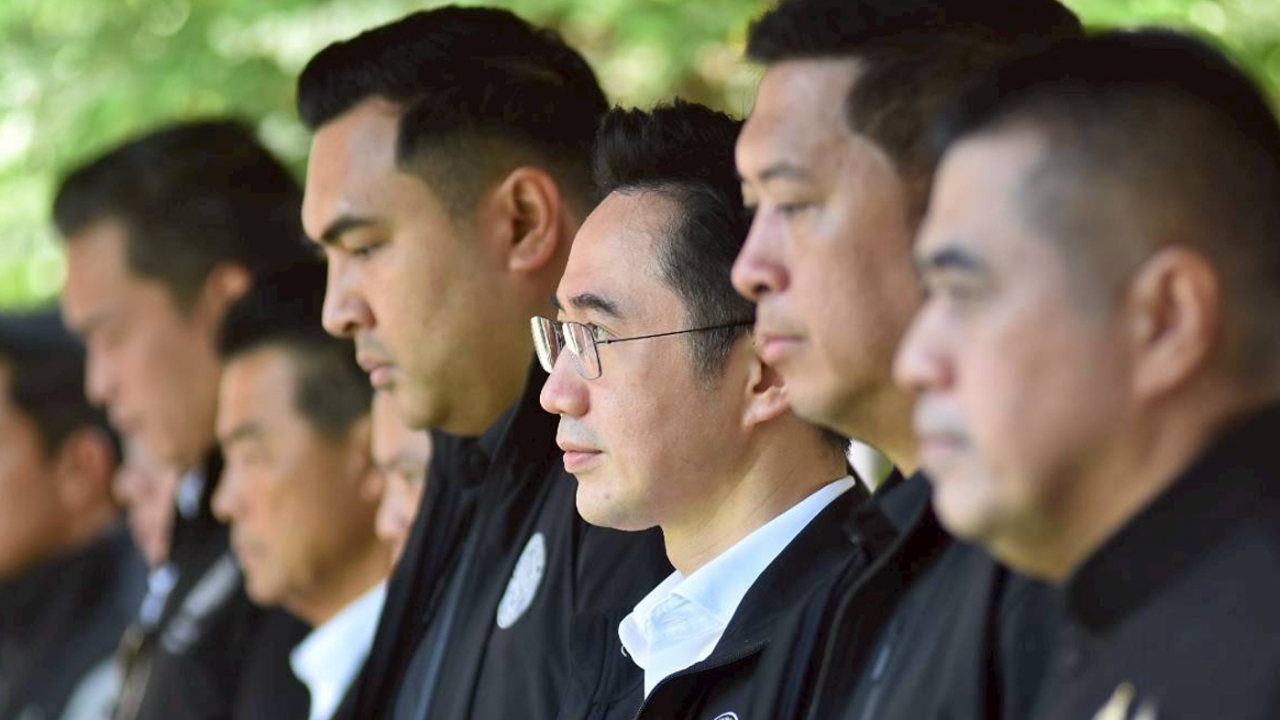
On 28 June 2026, Dr. Yotchanan Wongsawat, Deputy Prime Minister and Minister of Higher Education, Science, Research and Innovation, along with Mr. Nikhom Somklang, Minister of Social Development and Human Security, and Mr. Watcharapol Khawkhum, Deputy Minister of Agriculture and Cooperatives, together with senior executives from all three ministries and local agencies in Nakhon Ratchasima province, as well as the province’s members of parliament, visited the Korat Royal Silk Center. They were welcomed by Mr. Anupong Suksamanit, Governor of Nakhon Ratchasima.
Following that, Mr. Saranyu Phullap, Director-General of the Department of Sericulture, presented an overview of operations and progress in applying technology and innovation resulting from cooperation and support between the Department of Sericulture and Rajamangala University of Technology Isan (RMUTI). The Director-General then guided the Deputy Prime Minister and delegation to tour the silkworm rearing houses and cold storage systems to closely monitor the silkworm egg production process, including breed selection, sex sorting, mating, and egg laying. They also inspected the standard testing of silkworm eggs, egg collection, and Pebrine disease inspection. A highlight was Professor Dr. Yotchanan participating in testing the Department’s standard silkworm egg counting using a counting program, an innovation that enhances accuracy and production efficiency.
Then Dr. Yotchanan said, “Today, I would like to thank the Ministry of Agriculture and Cooperatives, particularly the Department of Sericulture, for hosting this field visit. This represents integrated collaboration among three ministries: Agriculture and Cooperatives, Higher Education, and Social Development. Our effort is to pursue a comprehensive approach to increase productivity in sericulture, covering upstream, midstream, and downstream processes.
Regarding upstream, which is mulberry leaf cultivation for feeding silkworms, we have integrated with RMUTI on water management systems, soil improvement methods, and applying circular economy concepts in mulberry plantations. In fact, we have had an MOU since 2014, and currently, we are updating technologies to increase yield.” Dr. Yotchanan added,
“After obtaining mulberry leaves, the process moves to caring for silkworm eggs and larvae. We have introduced equipment and technology such as silkworm excrement management machines to help farmers reduce time and work more efficiently, as well as devices for silk thread reeling, twisting, and strengthening. These innovations come from collaboration between the Department of Sericulture and universities to assist farmers.”
Dr. Yotchanan also noted that during the field visit, some technologies expected to fully assist farmers did not perform at 100% in real conditions. Therefore, adjustments and adaptations are necessary so farmers can combine traditional skills with technology, which also suits the elderly community context. Additionally, during the tour of the rearing houses, they jointly sought ways to improve silkworm egg quality through technology that counts egg numbers.
Subsequently, the Director-General of the Department of Sericulture, along with the RMUTI President, led the delegation to an exhibition titled “Upgrading Mulberry Cultivation and Sericulture with Technology and Innovation for Stable Income.” The exhibition displayed the full development pathway from upstream to downstream. Upstream exhibits included mulberry varieties, water management, intercropping, and silk-related technologies such as disease-free silkworm egg production, automatic controlled rearing houses, disease prevention in rearing, and silkworm care technology. Midstream and downstream covered innovations in silk reeling machines, twisting machines, silk thread standardization, natural dyeing, dyeing machines, weaving techniques, pattern design, shuttle-finding devices, silk winding machines, and certification of silk fabric with the Royal Peacock Emblem to generate income for farmers. Also displayed were silk and textile works from the Northeast Local Textile Promotion Center of the Thai-French RMUTI campuses in Khon Kaen and Surin.