

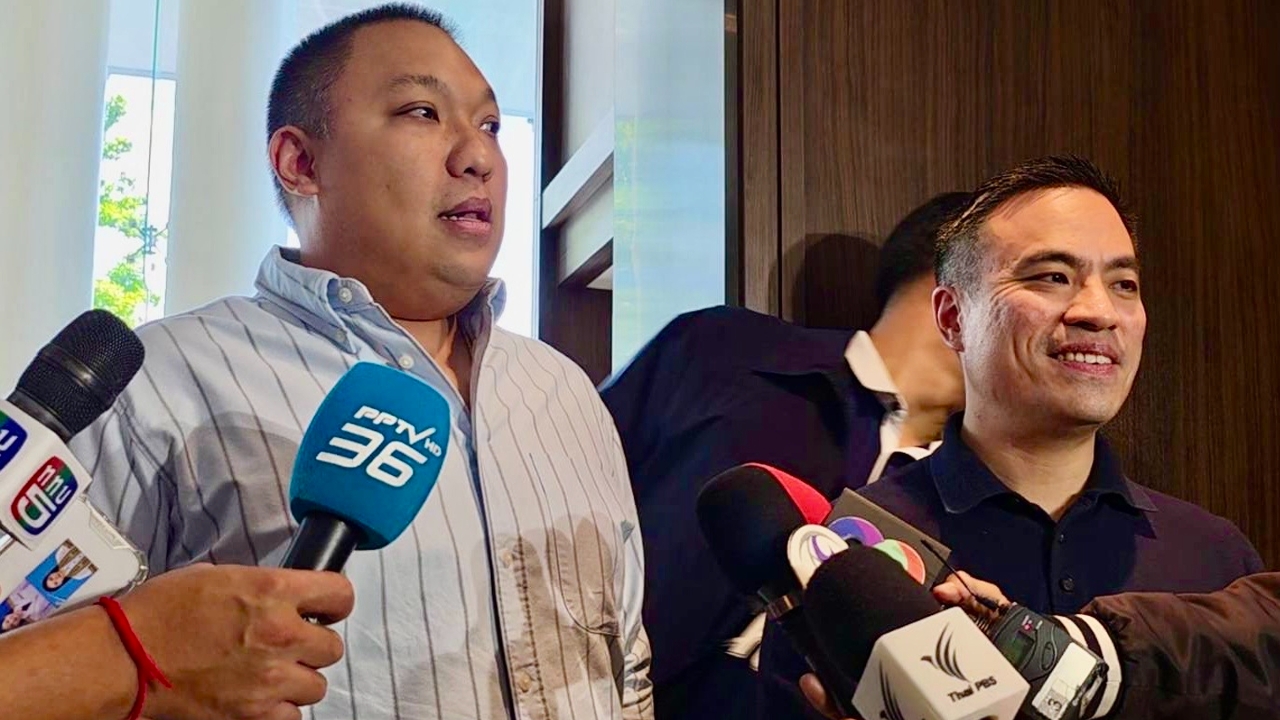
Eknat and Pholpee jointly call for urgent reduction of burden by removing public lighting fees from citizens' electricity bills, expecting to see lower bills by July-August, pending discussion with Ekniti before submitting to the Prime Minister.
At 14:30 on 28 June 2026 at the Bhumjaithai Party, Energy Minister Eknat Phromphan spoke about progress in separating public lighting fees from citizens' electricity bills. He said everyone agrees citizens must be informed, and the part currently included in electricity bills must be separated. All agencies are willing to share responsibility to ensure fairness and not hide these costs in the base electricity rate. Removing these fees will lower electricity bills, and the Energy Policy Committee will set new rates. Regarding responsibility, all three electricity authorities will need to improve efficiency and cost management to compensate for lost revenue, which poses no problem. The bigger picture requires talks with the Ministry of Finance, local governments, Bangkok Metropolitan Administration, Department of Highways, Department of Rural Roads, and all relevant agencies to decide on management, but the fees must first be removed from citizens' bills.
Eknat also explained the steps: first, after separating public lighting fees from bills, meetings of the Energy Policy Committee and the Energy Regulatory Commission will be held to address the issue immediately. Second, simultaneously with fee removal, electricity rates charged to citizens can be reduced. Steps one and two can happen quickly. Third, the revenue of the three electricity authorities will decrease, but they will find ways to improve efficiency and coordinate with highways, rural roads, local governments, and Bangkok to share responsibility. There is still time, but the urgent task is removing public lighting fees from citizens' bills, which all parties have agreed to proceed with.
When asked how soon public lighting fees can be removed from citizens' bills, Eknat reiterated the intention to act immediately and as fast as possible. He expects the next Energy Policy Committee meeting in July will discuss this matter, followed by the Energy Regulatory Commission for public consultation. They aim to complete this in the new billing cycle, with results visible between July and August.
Asked roughly how much electricity bills will drop, Eknat explained that by removing the base electricity fee, the plan is to prioritize urgent necessary uses, especially residential households. He believes this aligns with the policy to reduce citizens' electricity bills to 3 baht per unit without passing on the burden to the public. This can be done immediately after removal and will reduce bills.
Asked whether this issue must be submitted to the Cabinet for consideration, Eknat stated it must go to the Energy Policy Committee and Energy Regulatory Commission. Regarding whether there are hidden charges in bills unknown to the public, Eknat said he has repeatedly spoken about reducing fees fairly, such as public lighting fees, which is one of many necessary reforms. Even losses that actually occur must be managed efficiently. Everyone responsible must manage costs. Importantly, they have continually managed efficiency and costs, addressing expensive past contracts, high-priced power purchase agreements from power plants, adder contracts for small power producers (SPPs), which forced electricity authorities to buy power at high prices, and past overestimations of electricity use that led to unnecessary power plant construction and standby fees. Also, for certain consumers like data centers, rates have never been reviewed for appropriateness and must be set properly. Addressing these three issues will make electricity cheaper for citizens.
Eknat emphasized this is a reduction in electricity bills without shifting the burden to anyone else, but by improving system efficiency and fairness for all parties.
Deputy Minister of Interior Pholpee Suwanchawee stressed the need to find a formula where citizens do not bear the electricity cost burden and another agency assumes these expenses. Public lighting fees alone amount to nearly 20 billion baht per year. A preliminary formula has been developed but requires consultation with Deputy Prime Minister and Finance Minister Ekniti Nitithanprapas, as some aspects involve the Ministry of Finance. Afterwards, discussions with Prime Minister Anutin Charnvirakul will follow, with subsequent legal steps. Whether this will go before the Cabinet depends on these discussions to find a solution that immediately helps citizens.
"The principle is the same: remove the burden from citizens and prevent this problem from recurring. We apologize to the public because this fee collection in citizens' bills has existed for over 30 years. I was only in my early teens when the Ft fee first appeared on electricity bills. We thank Eknat for raising this issue. This government prioritizes reducing expenses for the people. Soon, we will know the formula," said Pholpee. Pholpee said.
When asked how the adder issue will be resolved, Pholpee said several formulas are under discussion but wants to finalize them before announcing to the public and media to ensure a consistent message on how the issue will be addressed.