

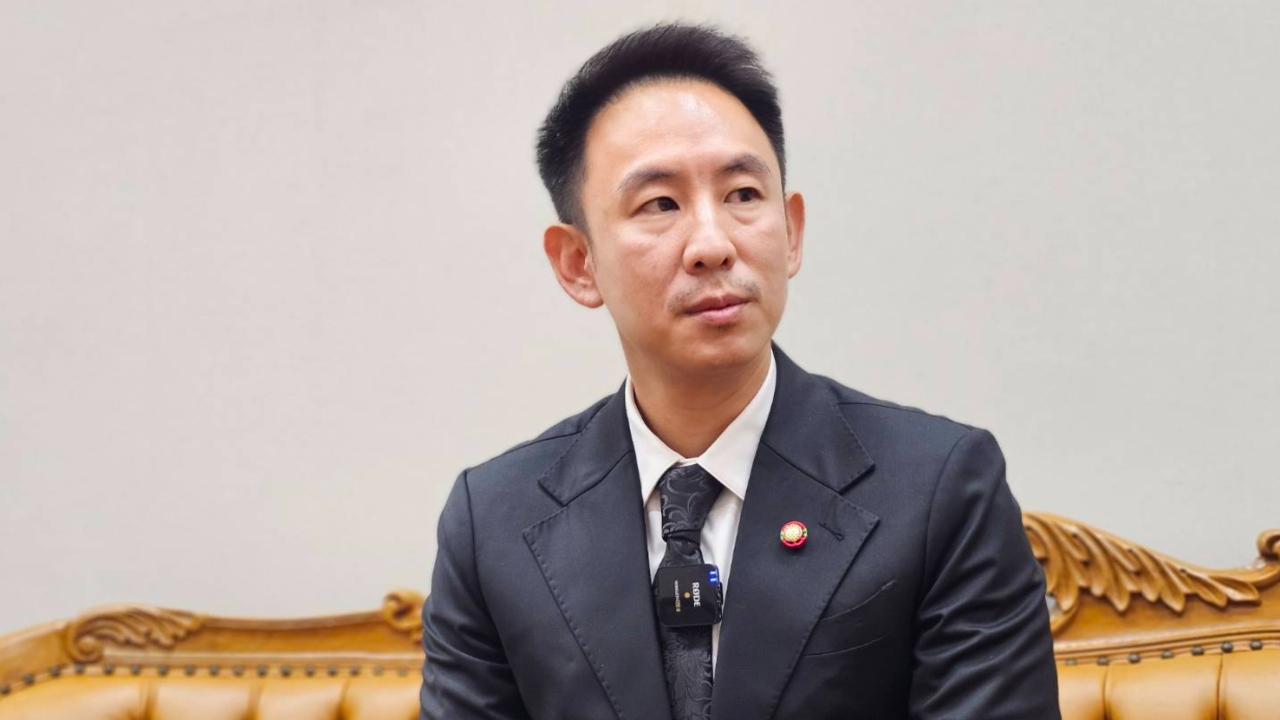
Worasit refuted rumors of a blood feud within the Bhumjaithai Party over the transfer of the Director-General of the Department of Local Administration, stressing it is not a power struggle. He declared the party is like a family, announced a campaign to eradicate corruption in local exams, vowed to pursue all involved, and reaffirmed the principle of punishing wrongdoers while protecting those who act correctly.
On 28 Jun 2026 GMT+7, Worasit Liangprasert, Deputy Minister of Interior and an executive committee member of the Bhumjaithai Party, gave a special interview regarding the Central Committee meeting on local officials and employees (K.S.T.). He explained that the committee emphasized tackling corruption in local exams. This initiative began in 2024-2025 under Anutin Charnvirakul as Minister of Interior, with a memorandum of understanding among five oversight agencies—including the National Anti-Corruption Commission (NACC), the Public Sector Anti-Corruption Commission (PACC), the Office of the Auditor General, K.S.T., and the Department of Local Administration—to jointly monitor and oversee the entire process closely.
When asked if they started working together right after receiving complaints, Worasit said it was even earlier, before the exams took place. Usually, exams happen simultaneously, but this time there were two rounds: at the end of 2025 and another early 2026 due to floods in the south. As policy overseer, he ordered strict anti-corruption measures during exams. Asked how he and the Minister of Interior discussed solutions after corruption emerged, Worasit replied that the Prime Minister had clearly instructed from the start to prevent corruption. When incidents occur, the wrongdoers must be identified and dealt with thoroughly, regardless of who is involved. Fact-finding must reach all responsible parties.
Asked if the K.S.T. meeting required re-examination of all exam results and coordination with the NACC to access seized evidence for new exam reviews, Worasit explained that after K.S.T. resolved to investigate, they are awaiting conclusions on procedures and steps. A committee will be formed per regulations to determine members' roles. Additionally, oversight agencies and civil society will be involved as observers to ensure transparency and dispel doubts. Asked about the role of Srinakharinwirot University, which organized the exams, Worasit urged not to single them out. The focus is to identify all involved and hold accountable whoever is responsible. He stressed working based on facts, not feelings. Regarding the scale of corruption given the high sums involved, he said the amounts discovered were in the thousands, which is significant.
When asked about the challenges posed by the issue, including the transfer of Director-General Theerut Supawiboon, and public attention on a prominent politician in the Bhumjaithai Party, Worasit acknowledged that negative news about the party is uncomfortable. However, he emphasized that current information is scattered and mixed with truths and falsehoods. The judgment is not his or the Director-General's or Minister's role but lies with oversight agencies that decide based on facts, not feelings or beliefs.
Asked if more wrongdoers exist beyond those reported, Worasit said the investigation will expand accordingly. Regardless of the number, all must be dealt with because ignoring this issue is untenable. When asked how to remove those who passed exams through corruption, he said they must prove the facts. Even if someone has been appointed, if wrongdoing is proven, action can be taken. He is confident in ensuring fairness for all, especially those who passed legitimately. He reaffirmed the principle of punishing the guilty and protecting the innocent. Asked about the Prime Minister's concern and ongoing financial investigations potentially involving politicians or those exchanging money, Worasit said if credible links are found, it is the investigators' duty to coordinate. Their sole focus is uncovering facts and identifying wrongdoers.
Asked about being part of the 'Look Thep faction,' where everyone strives to prove their administrative skills, and how he copes with such problems, Worasit said this is part of his responsibility, so discouragement is not an option. When problems arise, as a supervisor, he must investigate who is involved and clearly instruct that operations must comply with laws, regulations, and societal standards in all dimensions. Regarding past events like cracking down on Phuket mafia and exam corruption, and speculation about conflicts between supporters of Anutin Charnvirakul, Prime Minister and Minister of Interior, and Pipat Ratchakitprakarn, Deputy Prime Minister and Minister of Transport, Worasit said these are unrelated. The Prime Minister has provided clear policies. For example, in Phuket, operations were fact-based, with transfers of several provincial and district officials by the Department of Provincial Administration to assist with investigations. Once no issues were found, matters concluded without controversy.
Asked about rumors that Nawin Chidchob, a key figure in Bhumjaithai Party, is pushing for the appointment of the Director-General of the Department of Provincial Administration as Permanent Secretary of the Ministry of Interior, and that the Director-General of the Department of Local Administration, suspected to be close to Pipat Ratchakitprakarn, was transferred as part of internal party maneuvering, Worasit said there is nothing to that.
When pressed again about Nawin's alleged push for the Department of Provincial Administration Director-General to become Permanent Secretary of the Ministry of Interior, while the Minister of Interior still wants that role, and the transfer of the Department of Local Administration Director-General seen as a power struggle within Bhumjaithai, Worasit said that is not true. The decision-making authority in administration lies with the Prime Minister. If others attempt interference, the Prime Minister will not allow it.
Asked about Naruetcha Kosasirilaith, Director-General of the Department of Provincial Administration, coming from Buriram province, Worasit said the Prime Minister is also from Buriram and has a home there. This is not a condition affecting appointments. Everyone chooses their origin; suitability and performance matter more. Also, appointing a Director-General is the prerogative of the Permanent Secretary of the Ministry of Interior, who submits names for the Minister of Interior to oversee policies of subordinate agencies.

Asked how he views those raising such issues, like attempts to undermine Bhumjaithai Party, Worasit said this is normal in politics, where such matters often arise. He focuses solely on his responsibilities and does not dwell on other issues.
Asked how he plans to work after the Prime Minister introduced KPI assessments for ministers, Worasit said ministers should already know whether they are beneficial without waiting for KPIs. One should self-assess. He has many policy goals but currently focuses on two main tasks: the Phuket case and ongoing investigations into local-level exams.
Asked about being part of the 'Look Thep faction' and what he must do to prove himself, Worasit said no need to show off. Regardless of faction or background, every minister must work diligently to demonstrate their worth. Asked about pressures as part of the Look Thep faction, he replied that all ministers face pressure. When asked about internal party conflicts as rumored, Worasit said the party is like a family with no factions, often gathering hundreds for meals. If there were divisions, such unity would not be visible.
