

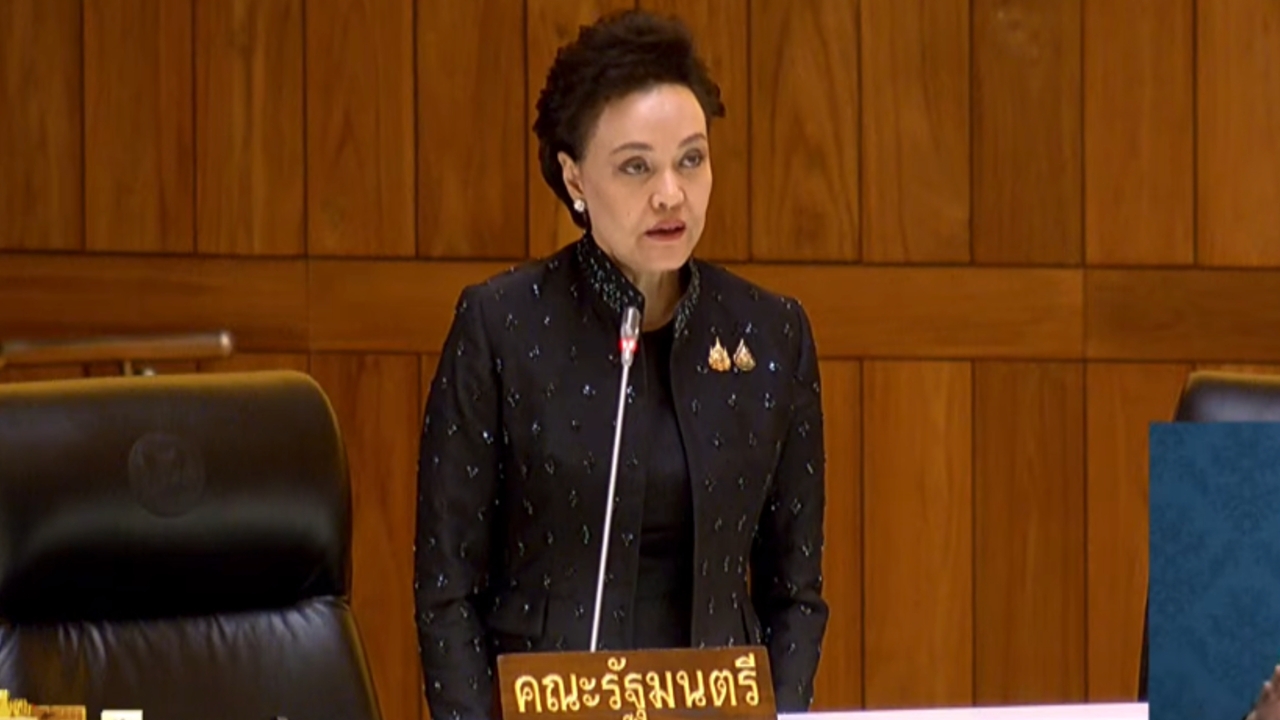
Supachai explained that the Ministry of Commerce faces four main challenges, aiming for SMEs to grow 40% to help the country escape the middle-income trap, stressing the importance of combating nominees and gray capital using AI to assist in verification.
At 18:35 on 29 Jun 2026 at the parliament during the budget bill deliberation for fiscal year 2027 chaired by Sopon Sarum, Speaker of the House, Supachai Suthumpun, Deputy Prime Minister and Minister of Commerce, stated that the country faces four challenges: first, geopolitical tensions have greatly increased, complicating trade due to divided power blocs each pushing their own agendas. Thailand, as a smaller nation, must maintain balance by working with all sides. The challenge is how to survive amid this global geopolitical landscape.
Second, conflicts in the Middle East cause significant volatility in energy prices, a primary commodity in trade. Although peace talks between warring countries may be possible, uncertainty remains as energy infrastructure has been damaged, increasing operational costs for farmers, small and large entrepreneurs, transportation, and insurance.
Third, Thailand’s human resource structure faces an aging population entering full elderly society status, requiring skills enhancement in all areas including technology. Fourth, the economic structure remains stuck in the middle-income trap for a long time, and there is a need to break free from this trap.
Supachai said that given these challenges and limited government budgets, efforts must focus simultaneously on short-term fixes and long-term structural planning. These are chronic problems requiring immediate relief where possible, but also structural reforms that cannot be addressed overnight due to budget constraints.
Structural reforms must be addressed comprehensively.
Supachai also addressed agricultural products, which attract much public interest and are a priority. Although agriculture contributes less than 10% of national income, over 30% of the workforce is in this sector. Solving agricultural problems would assist one-third of the population. Agricultural issues cannot be viewed in isolation due to many factors and limitations, so reforms must cover the entire value chain from production to market.
"Problem-solving must not focus on a single point but look at the structure and act preventively before problems arise. People may be used to waiting for problems to occur before fixing them, but we do not have such a large budget. By marketing and addressing issues proactively, no additional budget is spent. This requires working on structures at the upstream, midstream, and downstream levels." Supachai said,
All issues cannot be resolved in a single day.
Supachai added that due to global conditions, Thailand’s agriculture faces impacts from increased competition, high transportation costs, and market oversupply. Although some agricultural prices dropped in June compared to last year, overall prices have risen for nearly all products.
"Certainly, some products still underperform and need care, but many are doing well. We strive to prevent the collapse of agricultural products and ask for a comprehensive view. I am not saying we have done our best yet, but we are learning to keep this agricultural sector afloat amid challenging global trade. We aim to minimize shocks so our crops can survive. This requires adjustments at every stage—upstream, midstream, downstream—and will take time. Nothing can be fixed overnight," Supachai said.
Price stabilization efforts.
The Minister of Commerce also spoke about rice, noting this year’s situation is relatively good with lower surplus supply than last year and preparations to stabilize rice prices. He said conversations with farmers confirmed rice prices are currently favorable, though stocks are held by collectors, millers, or exporters. The government’s role is to maintain price stability within its mechanisms and budget. Additionally, efforts are underway to upgrade Thai rice’s value, calling it "Future Economic Rice."
Setting a 40% growth target for SMEs.
Regarding SMEs, this is a major issue because the country’s economy must grow through small entrepreneurs and communities, not only large businesses. The government fully supports this. Since 99% of registered legal entities are SMEs, it is the government’s duty to help them grow. Currently, SME income accounts for 35% of GDP, and the goal is to increase SME income by at least 40%, especially as government policies promote SME development, which will help Thailand escape the middle-income trap.
Preventing exploitation by external capital.
We should ensure our SMEs are not exploited by foreign capital or market dumpers. Therefore, the government prioritizes combating nominees, having signed MOUs with 23 public agencies to fight nominees and gray capital. Some may say we only sign MOUs without action, but though the MOUs were signed in May, work began in October to ensure all parties share information concretely. This has led to prevention of improper company registrations and verification of funding sources requiring proof of origin, reducing the number of risky nominee cases by over 65%. However, the government sees this as insufficient and plans to implement a hearing process so legitimate operators are not affected by stricter measures. In August, payees will be required to submit supporting documents to further reduce nominee risks.
Additionally, technology services have been upgraded, not requiring budget but internal ministry integration and a small budget to use AI for business risk assessment, enhancing transparency and accuracy.