

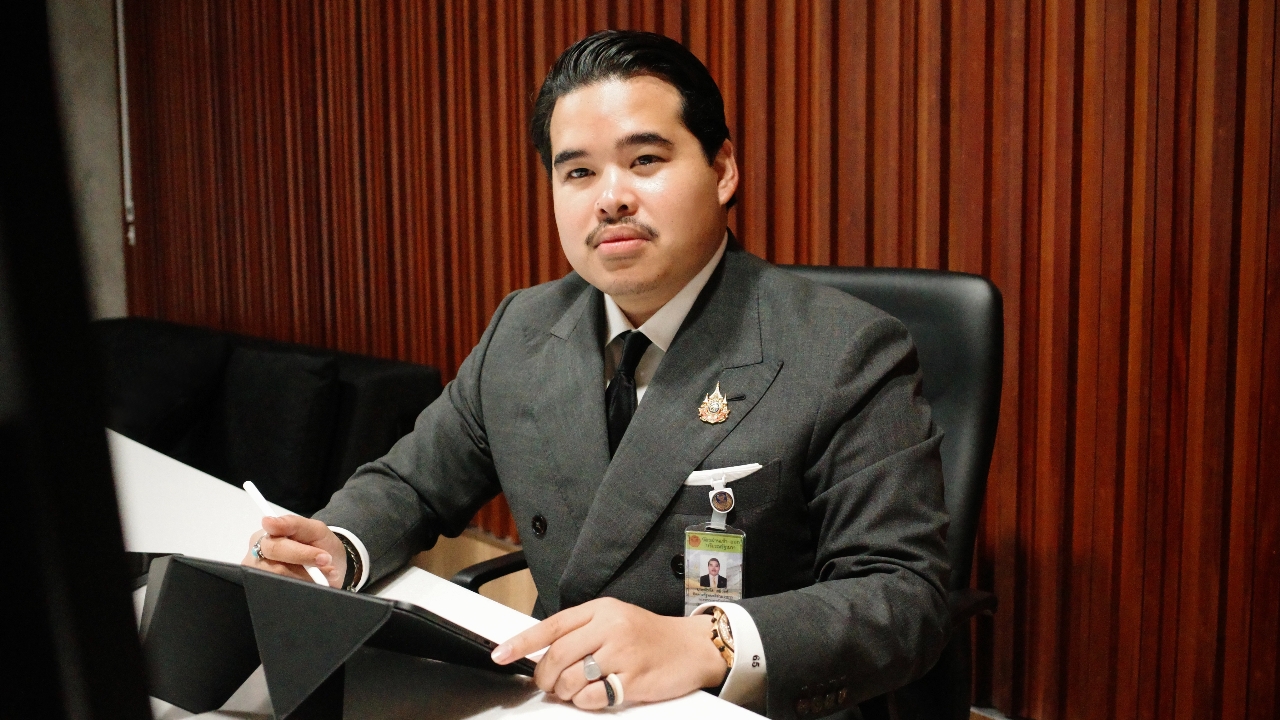
Peerawat, deputy spokesperson of the Klaatham Party, is investigating the shadowy industrial masked figure interfering in the 5.9 billion baht mining case. He revealed attempts to influence the case and urged Warawut that since the court has ruled, the government must enforce the judgment.
On 30 June 2026, Peerawat Somwong, deputy spokesperson of the Klaatham Party and opposition member, commented on the enforcement of the mining dispute between the Department of Primary Industries and Mines (DPIM) and TPI Polene Public Company Limited. He raised critical questions about who is using power to pressure officials into approving mineral backfilling despite incomplete verification processes. The dispute involves about 47.9 million tons of minerals to be returned and land restored or payment according to the judgment totaling approximately 5.94 billion baht plus interest.
“Nearly 48 million tons of minerals — if when they are backfilled without informing DPIM, without supervision, without weight data, and without even knowing the mineral type, then what does the department have to certify that every ton is correct?”
Peerawat said that if anyone is pressuring DPIM to approve or relax enforcement, the Minister of Industry must immediately disclose who this person is, whether they have political orders, and which company executives have met with the minister, advisors, or senior officials.
Additionally, the ministry must clarify the figure being reported that the state has only enforced about 40 million baht—is this true? This conflicts enormously with the judgment’s multi-billion baht value.
“If 40 million baht is not true, then disclose the actual amount. But if it is true, the minister must explain who allowed the multi-billion baht verdict to be enforced for only a fraction and who is trying to turn the nation’s debt into a mere ceremonial acceptance. Today, the public questions not only whether the backfilling has happened but who saw it, who weighed it, who inspected it, and who is pressuring officials to sign off. If there is an industrial masked figure behind this, the minister must come forward and not let the shadow of a more powerful authority than the court’s judgment remain.”
Peerawat explained that the root of the dispute involves not a single case but a set of five civil and environmental lawsuits concerning limestone mining at the company’s factory and mine in Thap Kwang Subdistrict, Kaeng Khoi District, Saraburi Province. The main issue is extracting limestone and shale from areas DPIM considers outside the concession boundary, within prohibited buffer zones, or mining in violation of concession conditions.
DPIM accuses TPI Polene of removing large amounts of limestone and shale for cement production, dividing the violations into three major groups:
1. Mining outside the concession area.
2. Mining within the buffer zone, where mining is prohibited.
3. Mining within the concession area but violating the conditions or restrictions set.
DPIM filed suit demanding the company restore the land by returning the minerals and rehabilitating the area. If not done, the company must pay for the mineral value, damages, interest, royalties, and fees. The remedy of “restore first, pay if unable” is the key that distinguishes this case from typical damage claims.