

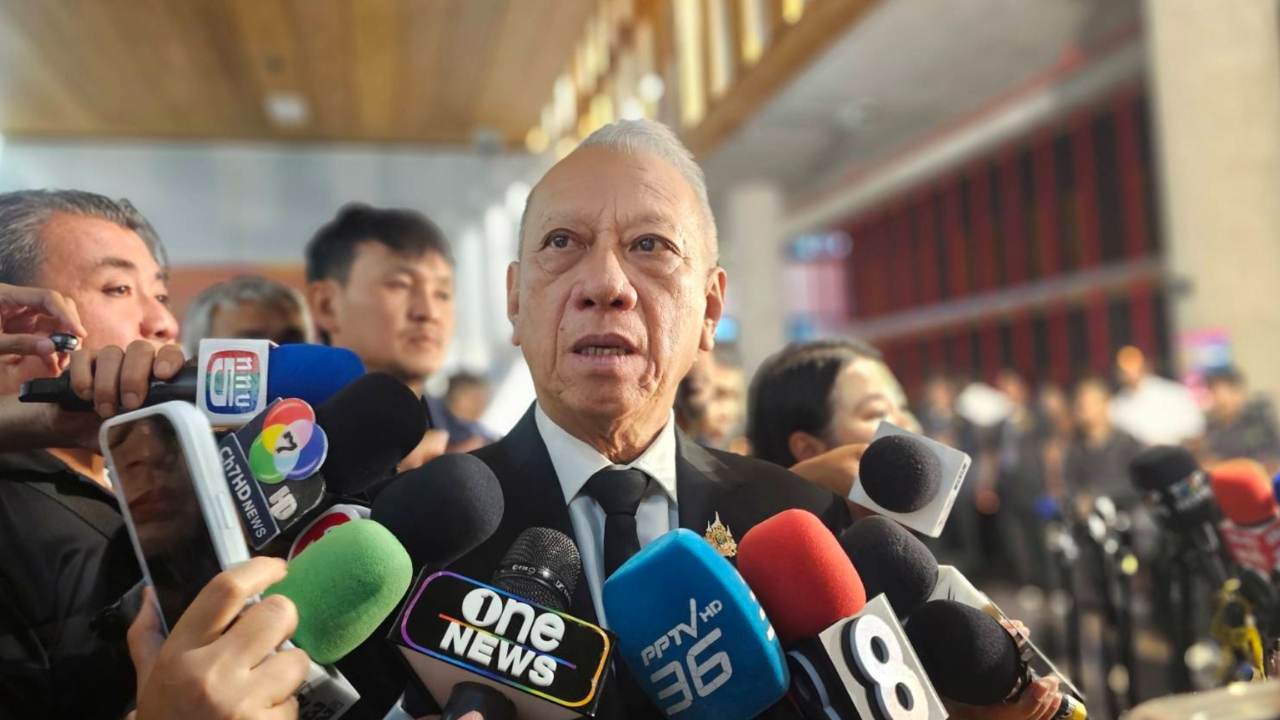
Phiphat emphasized that enforcement was not lax following the arrest of a flight attendant smuggling heroin in Australia. He acknowledged that respect for captains, flight attendants, and stewards had led to less stringent drug testing in the past but declared that personnel screening would now be intensified. He confirmed Thailand has not been banned by airlines.
At 09:40 on 30 June 2026 at the Parliament, Deputy Prime Minister and Minister of Transport Phiphat Ratchakitprakarn spoke regarding the Australian Federal Police arresting a Thai airline employee found carrying one kilogram of heroin into Australia. He said he had informed the director of Airports of Thailand (AOT), noting that while outbound security normally includes explosive detection and drug-sniffing dogs assist with drug checks, improvements are needed—especially concerning captains, stewards, and flight attendants. Respect between personnel meant only explosives were strictly checked, and drug checks were done but without canine assistance, allowing smugglers to use various concealment methods, as in the Australian case. He accepted responsibility and said new preventive measures must be devised, particularly since outbound drug checks are uncommon in many countries. Upon arrival, destination airports typically conduct random drug-sniffing dog inspections while passengers await baggage. Thailand must now enhance its screening rigor, as it may be a transit point for various drugs.
Asked whether Thai travelers face increased difficulties abroad, Phiphat said random inspections occur internationally—not only for Thais—in destinations such as Europe, the U.S., Australia, Japan, and China. Drug-sniffing dogs randomly check all nationalities; there is no targeting of Thais. This incident highlights the need for stricter screening of airline personnel, aligning them with passenger standards.
When asked if Australia has introduced new measures, Phiphat replied no, emphasizing ongoing coordination with Australia. Since the incident is recent, he instructed Thai Airways executives, the AOT director-general, and the director of the Civil Aviation Authority of Thailand (CAAT) to enforce stricter controls. Several international airports under different management also require attention. Asked if flights to Australia have been canceled, he confirmed no cancellations have occurred.
Regarding whether this incident might lead to intensified scrutiny of Thai airlines by other countries, Phiphat said no, explaining that rigorous inspections are routine for all airlines regardless of origin, especially upon entering Australia. Even food brought into the country is subject to seizure if found prohibited, reflecting differing national policies.
Asked if the incident resulted from laxity in Thailand, Phiphat said it would be inaccurate to call their system lax since standard procedures were followed. He stressed ongoing drug testing and collaboration with the Office of the Narcotics Control Board (ONCB) for intelligence-led checks. Smuggling attempts are natural in the cat-and-mouse dynamic between smugglers and authorities and are not unique to Thailand. Nonetheless, enhanced measures and technologies are needed to prevent such incidents. When pressed whether lenient crew inspections enabled smuggling, he acknowledged that mutual respect may have led to less detail, but this will change to more thorough checks.
Asked if foreign countries use detection equipment, Phiphat said most use drug-sniffing dogs, but smugglers employ diverse concealment methods, such as hiding drugs inside canned food, which makes detection difficult. He emphasized the need for modern technology capable of scanning contents for drugs.
When questioned if Australia might ban Thai airlines, Phiphat expressed confidence this would not happen due to existing cooperative processes. He affirmed Thailand's reputation remains intact, as it adheres to international standards.