

[Local News (Domestic)]
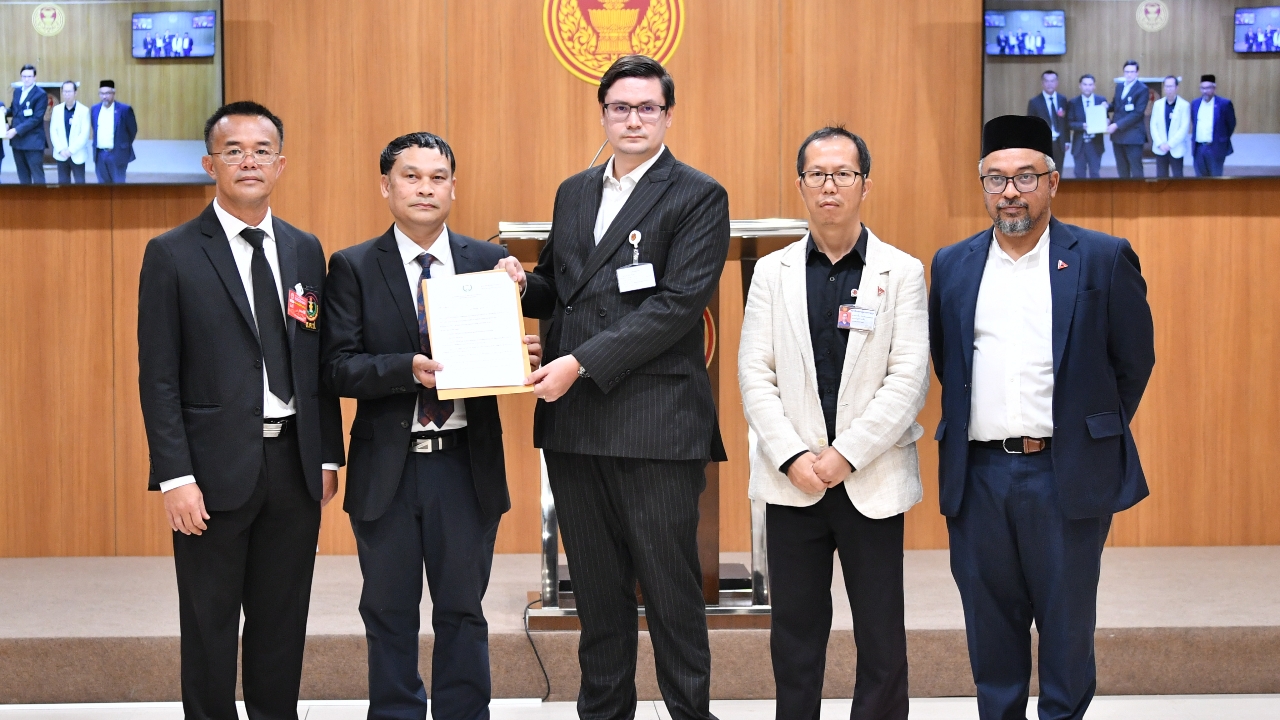
At 11:00 a.m. on 30 June 2026 GMT+7, Mr. Rangsiman Rome, Chairman of the Committee on Law, Justice, and Human Rights, received a letter requesting an investigation into, corruption and legal violations in recruiting local government officials for 2024-2026, from, Mr. Pichai Pitak, Secretary of the Association for Promoting Public Oversight of State Power (S.T.P.), This issue has been ongoing since 2024, with S.T.P. continuously monitoring it. The recruitment started in 2024, followed by objections from multiple parties. The Department of Special Investigation (DSI) requested a project suspension due to bribery allegations dating back to 2024.
In 2025, issues arose regarding the Terms of Reference (TOR) draft. Complaints claimed the TOR lacked transparency, with objections from bidders including Surindra Rajabhat University. A government change occurred—from Acting Prime Minister Phumtham Wechayachai's administration to the current government, which announced the winner as Srinakharinwirot University (SWU). Several points were requested for committee review as follows:
Point 1, The TOR drafting may have loopholes facilitating corruption. The TOR drafting committee is linked to the exam question committee at Srinakharinwirot University (SWU), raising questions about responsibilities between the employer, the Department of Local Administration (DLA), and the contractor, SWU.
Subsequent facts revealed that the Central Investigation Bureau (CIB) arrested individuals in Bang Bua Thong and found about 3,000 exam answer sheets linked to data stored on a flash drive. This suggests initial TOR issues. Previously, S.T.P. filed complaints but could not prove facts until police searches and arrests confirmed S.T.P.'s claims. Therefore, the committee is asked to thoroughly investigate this matter.
Point 2, Regarding the 1999 Act on Offenses Related to Bidding for State Agencies, although the acts may not have been intentional, negligence or misconduct caused state damage. The overseeing authorities are the Minister of Interior and the Director-General of the Department of Local Administration, who signed the contract and announced the winner. Two key observations include:
1. The program correction period was extended from 48 hours to 15 days, raising questions about the purpose of this extension.
2. The TOR required data storage in two formats: JPEG images and PDF files on a flash drive, but did not specify encryption or data security measures. This raises questions about responsibility when the flash drive appeared at a company’s office in Bang Bua Thong, Nonthaburi, where police found over 3,000 printed exam sets.
Point 3, Follow-up is requested on Mr. Phichit, owner of a company in Wichian Buri district, as flash drives or portable hard disks can help prove the data source. S.T.P. noted the files are in LTSC format, uncommon for general use like Microsoft Excel, but used internally by government bodies such as SWU and the Department of Local Administration (DLA). This may be key evidence to identify who extracted the files. Additionally, financial trails of offenders should be examined. The committee is urged to coordinate with the Anti-Money Laundering Office (AMLO) to freeze assets promptly before any relocation, concealment, or money laundering occurs, which could harm the state and impede asset recovery.
Mr. Rangsiman stated that the corruption issues in recruiting local government officials for 2024-2026 have been in the news for some time, with visible signs emerging. Today, S.T.P. submitted a letter to the committee for further consideration. If the claims about the TOR and flash drive are accurate, it questions the standards of such an important examination affecting many people and the bureaucracy. Crucially, it is necessary to determine if the limited or absent standards caused these errors and who is responsible. This responsibility might extend to senior executives with supervisory authority. Society questions this, and the committee will formally consider the complaint.
There is also the question whether previous exams involved corruption. Initially, the committee found reports of cheating and accusations of wrongdoing, often ending with transfers of personnel who later return without clear penalties. The committee intends to fully investigate. Based on experience, corruption cases often overlap with other offenses. Asset freezing is an effective long-term deterrent to offenders. Such measures have proven successful.
Therefore, this issue will be closely monitored. It is believed some MPs and several committees share interest. The loud question now is whether only permanent officials are at fault or if political supervisors are also involved. Regardless, all are presumed innocent until proven guilty. The committee plans to invite all relevant parties, including political officials with oversight duties, for discussions to find long-term preventive measures. .