

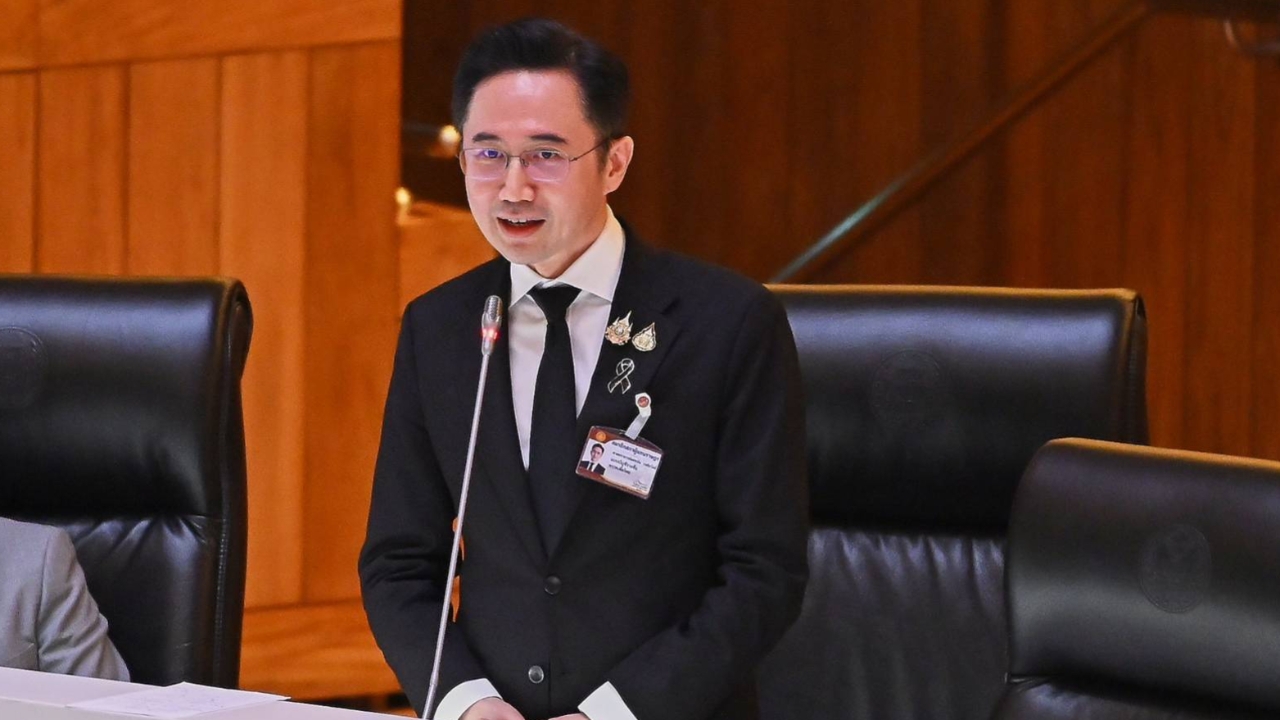
Yossanan explains the Ministry of Higher Education's 2027 budget framework, highlighting the need to consider both short- and long-term projects, focusing on developing high-skill human capital, creating a consolidated research database, and unlocking patents to boost innovation value.
On 30 June 2026, Yossanan Wongsawat, Deputy Prime Minister and Minister of Higher Education, Science, Research and Innovation, expressed gratitude for colleagues' suggestions and elaborated on the ministry's budget framework. He emphasized the need for collaborative work and a long-term view over the government's four-year term to prepare for near and distant futures by building infrastructure, while simultaneously addressing immediate social and economic hardships.
Regarding the economic sector, the ministry applies the NESDC process. Research supports attracting investment and technology transfer. Concurrently, the focus is on cultivating sufficient, highly skilled human resources through reskilling and upskilling efforts. Universities are being transformed from mere student intake centers into incubators and platforms for opportunity.
Yossanan noted a two-pronged economic approach: sustaining existing economic engines amid an aging society, and developing new engines via high-value agriculture and industries. This approach allows universities to enhance their value and generate income through knowledge commercialization. Collaborations with the Ministry of Commerce aim to accelerate Thai patent issuance and support international patents through the ministry's front office to increase patent value.
He added that social innovation and national security are key priorities. The ministry has linked funding agencies with the Ministry of Defence and consolidated these agencies into a unit called RWP. This forward-looking strategy ensures funding bodies can comprehensively support national needs and problem-solving efforts.
Furthermore, there is concern about corruption. The ministry is implementing Open Data initiatives to integrate research data and consolidate research databases to enhance transparency and oversight.
Yossanan said the budget framework covers four areas: the innovation ecosystem in both economic and social aspects, improving universities (abbreviated as HE for Higher Education), and science, research, and innovation (SRI). These two sectors receive funding from two separate funds—one for higher education and another for SRI. He expressed gratitude for the emphasis on research funding, noting that as global knowledge and thinking rapidly evolve, merely following applications and downstream use is insufficient. Fundamental knowledge through research and education remains crucial for enabling Thai people to advance and transition the country into a new era.
Finally, regarding the environment and air quality, the ministry collaborates with the Ministries of Labour, Industry, Energy, and Natural Resources and Environment to deliver quality research and tools that contribute to a healthier environment.