

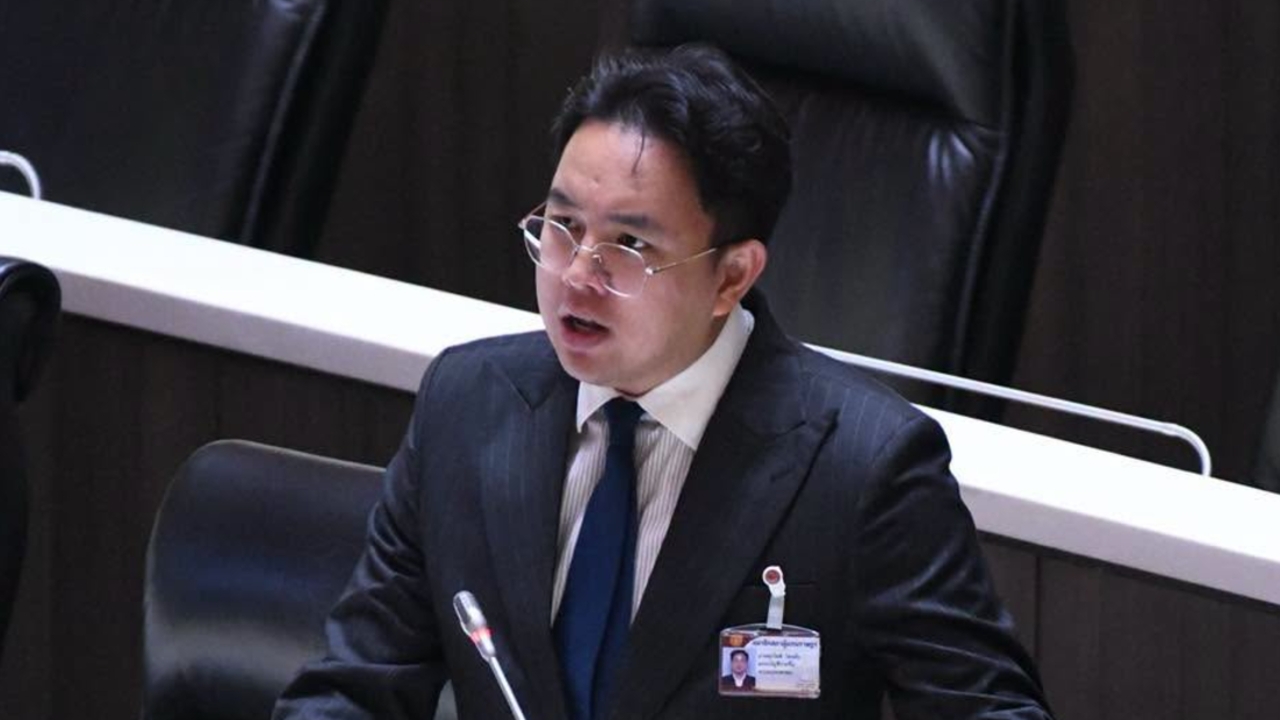
Supachot, a People's Party MP, criticized the government’s plan to borrow 200 billion baht to address hidden electricity costs as "unwise." He pointed out alternatives such as using existing funds and involving private sector partnerships without incurring debt, urging an end to diversion tactics and a prompt overhaul of the energy structure, the root cause of high electricity prices.
At 18:31 on 30 Jun 2026 GMT+7. Mr. Supachot Chaisat, a party-list MP from the People's Party. He posted a message viaFacebook.Regarding the government's plan to address the issue of “hidden electricity costs” or “public electricity fees,” which have been shifted onto consumers’ electricity bills, with signals indicating the government may borrow over 200 billion baht to fund projects replacing LED bulbs and installing solar panels for government agencies. He stated that if the government chooses to solve this by borrowing real money, it must be said frankly that this is an extremely “unwise” method.
Supachot further explained that this problem is not due to a lack of investment funds in the country but because the government refuses to consider other tools that can be implemented immediately without increasing debt burdens for citizens. Ultimately, society might question whether the government is paving the way for corruption through large-scale energy procurement projects. Because when looking into details, the country clearly has better alternatives than borrowing money, namely:
1. Replacing public lighting with LED bulbs, for which the government does not need to borrow a single baht, as it can immediately draw from the “Energy Conservation Promotion Fund,” which currently has 17 billion baht available. This fund directly supports energy reduction projects, a basic measure with low costs and quick payback.
2. Installing solar panels to reduce electricity costs for government agencies, where the government can use the ESCO Model by having private investors install the system first, then receive returns from the share of saved electricity costs. This method allows the government to avoid spending its own budget, prevents creating additional public debt, and accelerates investment faster than waiting for budget disbursements from the public sector.
Before discussing borrowing funds, the government must urgently fix the root problem of public electricity fees by installing meters and separating accounts as soon as possible. This will clearly distinguish between “Technical Loss” — the natural electricity lost during transmission through lines or transformers — and “Non-Technical Loss” such as illegal connections stealing electricity, unmetered usage, or billing system errors, allowing transparent audits.
At the same time, the government should separate “genuine public electricity costs,” such as highway lighting, determining whether these costs should be paid by electricity users or taxpayers, from “false public electricity costs,” especially the burden on local administrative organizations (LAOs) that often include other expenses in these costs. These should be the responsibility of the electricity users themselves to encourage energy conservation.
Supachot also pointed out that the government should not allow the issue of “hidden electricity costs” to divert attention from the larger root cause of high electricity prices. Besides public electricity fees, citizens also bear much larger hidden costs, such as Availability Payment (AP) fees or overpriced power purchase agreements like Adder. “If the government truly wants to reduce electricity costs for people, it should start by reforming the energy structure and managing excess costs that benefit vested interests, not begin by borrowing more money and pushing the burden back onto the people in the future.”