

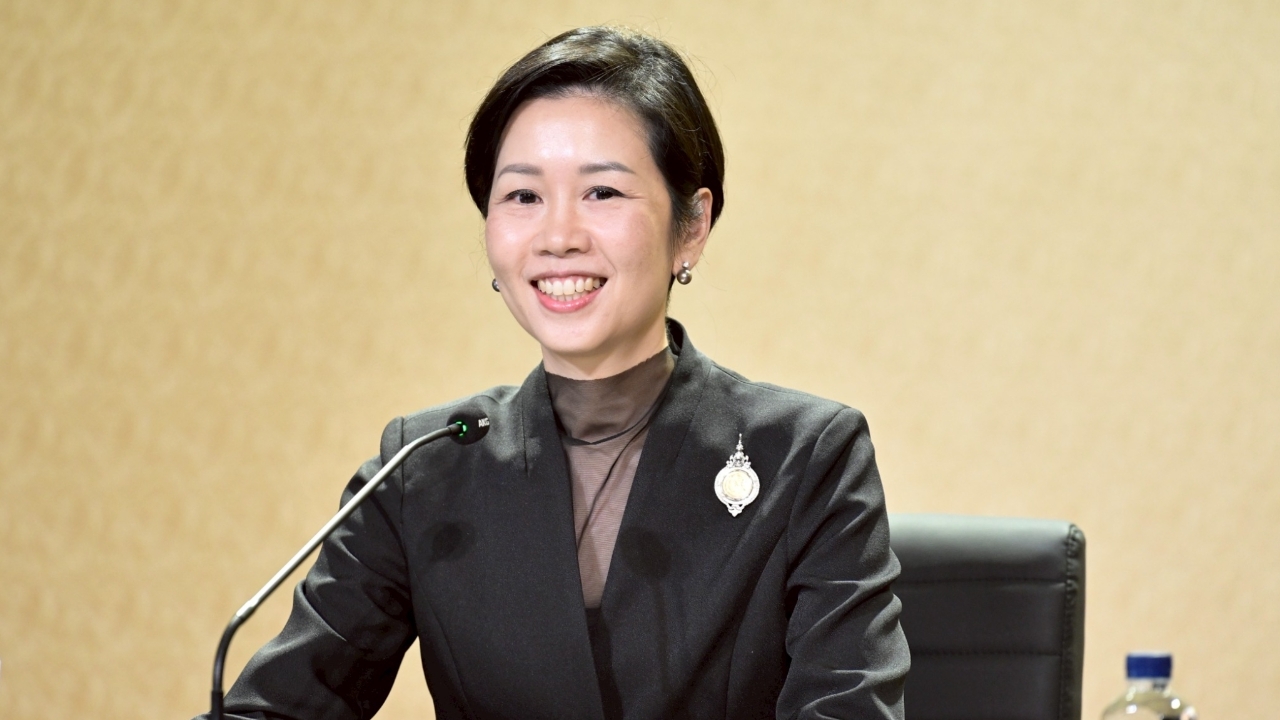
Government spokesperson Ratchada emphasized that the fiscal year 70 budget is targeted to care for the people, maintain fiscal discipline, and proceed with investing in the country's future. She pointed out that the budget deficit is designed to support the economy and revealed that under the 10-Plus policy, the government aims to care for all groups.
On 1 July 2026, Ms. Ratchada Thanadirek, spokesperson for the Office of the Prime Minister, stated that during the budget bill debate in the House of Representatives from 29 June to today (1 July), members of parliament have offered constructive suggestions but also expressed concerns on various issues, including investment budgets, budget deficits, and the direction of national budget spending.
The government understands the concerns of MPs and the public regarding the overall budget, especially investment and deficit issues, but stressed that this budget is prepared with targeted allocation and reprioritization within fiscal constraints, taking into account citizen welfare, economic stability, fiscal discipline, and investment for the country's future.
At the same time, this budget preparation does not only consider increases or decreases in individual items but assesses the entire system to ensure every baht addresses specific issues, solves problems, and builds the country's future capacity.
Ms. Ratchada said that although the investment budget for fiscal year 2570 at 789.1715 billion baht is 72.5648 billion baht or 8.4% less than in 2569, this does not mean the country is reducing investment. Other investment channels remain, including state enterprise investments of 286.682 billion baht, public-private partnership (PPP) projects worth 40.631 billion baht, and the TFFIF infrastructure fund with 10 billion baht, totaling more than 330 billion baht in additional investment funds.
Regarding the deficit budget, it is not a deficit for unfocused spending but is limited to what is necessary to support the economy during resistance periods, care for citizens and vulnerable groups, while gradually reducing the deficit. For fiscal year 2570, the deficit is set at 788 billion baht, down from 860 billion baht in 2569, or from 4.4% to 3.9% of GDP.
Ms. Ratchada noted that actual investment spending is not only for roads, buildings, or constructions but also includes expenditures that transform today's budget into capital and national capacity, such as equipment, land, buildings, intangible assets, patents, trademarks, and subsidies or transfers to create capital assets, all following budget principles and international standards.
Under the 10-Plus policy, with a total budget of 1.2329845 trillion baht, the government focuses on caring for small entrepreneurs, the elderly, communities, education, SMEs, trade, the green economy, AI, and future-building investments. Welfare, education, and healthcare budgets directly benefit citizens with 639.8536 billion baht, an increase of over 43.277 billion baht.
Ms. Ratchada stated that the fiscal year 2570 budget totals 3.788 trillion baht, a 7.4 billion baht or 0.20% increase from the previous year. This is not a budget that spreads funds thinly but one that reprioritizes, becoming more precise, targeted, and responsible to care for those in need, maintain fiscal discipline, and continue investing in the country's future.