

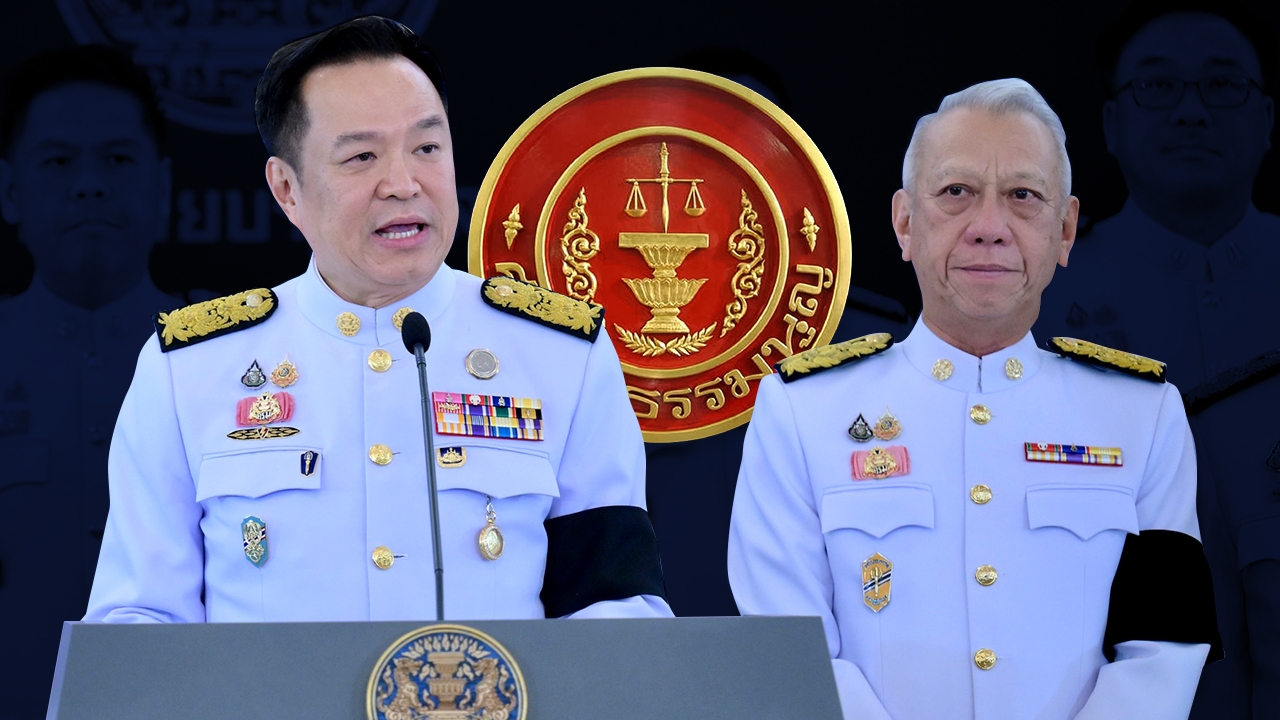
The Constitutional Court unanimously decided not to accept the petition seeking to remove Anutin from office over the appointment of Phiphat to oversee energy policy, which was alleged to benefit relatives. The court noted the petitioner is not directly harmed and emphasized that only MPs, senators, or the Election Commission have the right to examine ministerial qualifications.
On 1 Jul 2026 GMT+7, the Constitutional Court unanimously ordered not to accept for consideration the petition filed by Thanawit Wongtharnthip. The petitioner requested the court to rule on Prime Minister Anutin Charnvirakul's appointment of Phiphat Ratchakitprakarn, Deputy Prime Minister and Minister of Transport, to a position with authority over energy policy and management of the country's fuel situation. The petitioner alleged that Phiphat has interests in energy businesses, potentially benefiting himself and relatives. Additionally, Phiphat's public statements on resolving fuel shortages, which affected the public, caused the petitioner direct harm through rapid fuel price increases. Therefore, the petitioner claimed that Anutin and Phiphat acted dishonestly, violated ethical standards severely, and used their positions for conflicts of interest, either directly or indirectly. The petitioner asked the court to consider disqualifying both officials under Sections 160 (4) and (5), and to rule on prohibited conduct under Sections 184 paragraph one (2) and 186, which would end their ministerial status under Section 170 paragraphs one (4) and (5) of the Constitution.
After deliberation, the Constitutional Court found that the facts in the petition, additional filings, and supporting documents did not show that the petitioner was directly violated or suffered harm from the appointment of the respondents. The petitioner is not a person whose rights or freedoms were violated under the Constitutional Court Procedure Act of 2018 Section 46 paragraph one. Furthermore, the request for the court to decide on termination of ministerial status under Section 170 is subject to Section 170 paragraph three and Section 82 of the Constitution, which grant the right to at least one-tenth of members of either the House or Senate to petition the speaker of their chamber to forward the petition to the Constitutional Court, or for the Election Commission to submit the matter to the court. This process is specifically prescribed by the Constitution and related laws under Section 47 (2) of the Procedure Act. Section 46 paragraph three mandates the court to reject petitions not meeting these conditions. Therefore, the petitioner cannot submit the petition under Section 213 of the Constitution.