

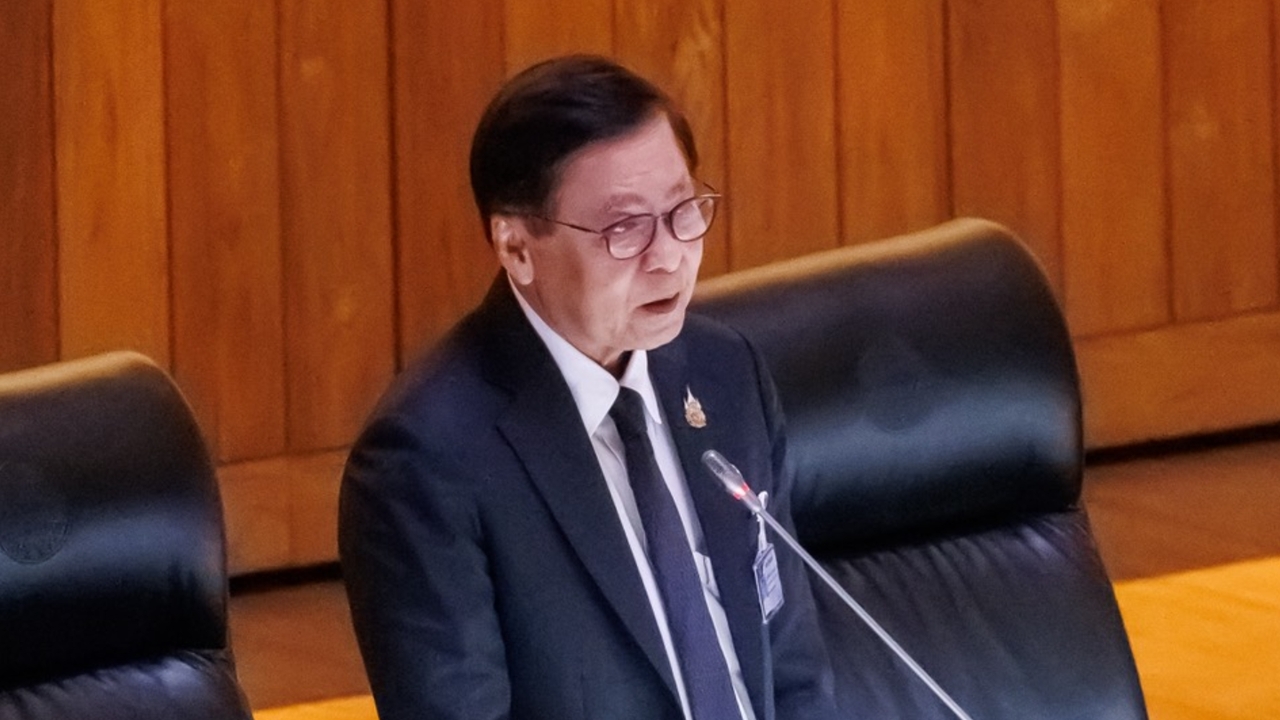
Minister Sihasak emphasized that Thailand's participation in UNCLOS aims to negotiate overlapping maritime areas with Cambodia for compromise, not litigation. He pointed out the necessity of using international rules to find solutions, preserve the country's credibility, and protect national interests without impact.
On 1 July 2026 at 17:30 at the Parliament Building, Deputy Prime Minister and Minister of Foreign Affairs Sihasak Puangketkaew explained to the House of Representatives that the United Nations Convention on the Law of the Sea (UNCLOS) 1982 serves as the main framework for resolving overlapping maritime claims between Thailand and Cambodia. He stated that the matter must be handled carefully, within international rules, and without harming the country's interests.
The issue of overlapping maritime areas concerns the public, especially regarding Cambodia's claimed boundary line, which many see as extending to the middle of Koh Kut Island. This has caused the previous negotiation framework to stall and ongoing concerns in Thai society.
Minister Sihasak said that since Cambodia became a party to UNCLOS in March, both Thailand and Cambodia are now under the same maritime international law. Therefore, the government believes it is appropriate to restart bilateral talks under the UNCLOS framework.
This approach aligns with the spirit of discussions between the two leaders—Thai Prime Minister and Minister of Interior Anutin Charnvirakul and Cambodian Prime Minister Hun Manet—at the ASEAN Summit in Cebu, Philippines. Both sides agreed to emphasize bilateral talks and build mutual trust.
Regarding Cambodia entering compulsory conciliation under UNCLOS, Minister Sihasak said Thailand must consider carefully because this process follows UNCLOS rules. He emphasized that it does not mean acceptance of court jurisdiction or litigation in an international court but is a compromise to find a solution and balance interests. Two Thai experts, two Cambodian experts, and an independently selected chairman review the case based on international law without deciding a winner or loser.
If Thailand refuses this process, it may affect the country's credibility internationally, especially when negotiating other agreements or obligations such as free trade agreements (FTAs). Negotiating partners may question Thailand's reliability in adhering to international rules.
Minister Sihasak added that recommendations from the conciliation process are not final. If either Thailand or Cambodia does not accept them, they can return to bilateral negotiations to seek a new agreement. The government will keep negotiation channels open while prioritizing Thailand's sovereignty and interests.
Additionally, Minister Sihasak mentioned water pollution, air pollution, and scams as transnational security threats requiring the Ministry of Foreign Affairs' involvement. He discussed these issues with leaders from Myanmar and Laos to promote cooperation on problems directly affecting Thai citizens.