

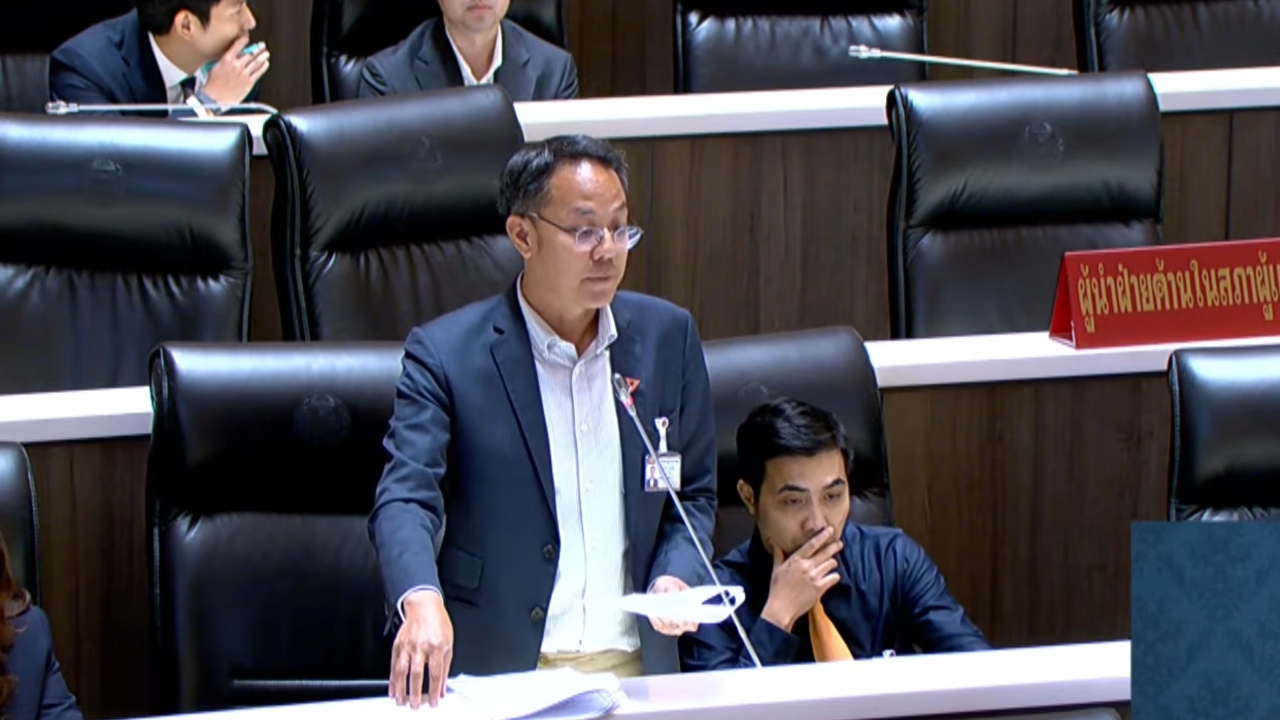
Phandil raised three observations on the amendment of the Bankruptcy Act after the Senate returned it to the House of Representatives, pointing out that bankrupt individuals are barred from civil service opportunities, although business bankruptcy does not necessarily mean fraudulent bankruptcy.
On 2 July 2026, Phandil Nuamjerm, MP for Bangkok's 4th District from the Prachachon Party, debated the Bankruptcy Act draft that the Senate had completed reviewing, amended, and sent back to the House. Phandil raised three observations on the Senate's amendments. Regarding Section 90/116 (3) on the time frame, the period was extended to 20 years. This point was disputed in the opposition whip meeting about the basis for setting the debt rehabilitation plan's duration, which previously had no fixed term. Arguments noted that for large assets like houses, mortgage periods can be 30 years, which is a relevant criterion, and business rehabilitation plans typically last 30 years. Thus, he questioned the basis for the 20-year period, asking what criteria were used since smaller debts might not require such a lengthy repayment time.
Regarding Section 90/151 about raising the minimum individual debt threshold from 100,000 baht to 300,000 baht, which could cause debtors to lose eligibility, Phandil noted that the average unpaid debt reported by credit bureaus might be below 100,000 baht. Increasing the threshold could exclude some debtors. Officials argued that if the threshold remained at 100,000 baht, the number of people subject to asset protection due to failure to repay under rehabilitation plans might be quite large.
"Therefore, the question is what criteria were used to set the minimum individual debt threshold at 300,000 baht and how many debtors would be affected. I have yet to see the documents I requested from the opposition whip meeting," he said.
Phandil addressed a final point on Section 90/170, paragraph 2, concerning 'honest bankruptcy,' which differs from fraudulent bankruptcy. This was newly added and explained that in the future it could become a criterion for civil service eligibility. However, he argued these should be separated because business bankruptcy does not imply fraud and such individuals should not be disqualified from civil service. Some argued this proposal might conflict with other laws, but he said this would be problematic since reforming other laws might clash with this act, preventing its amendment. For example, civil service qualification laws might also need revision. The key is to uphold protection for honest bankrupt individuals who should have opportunities to enter civil service.