

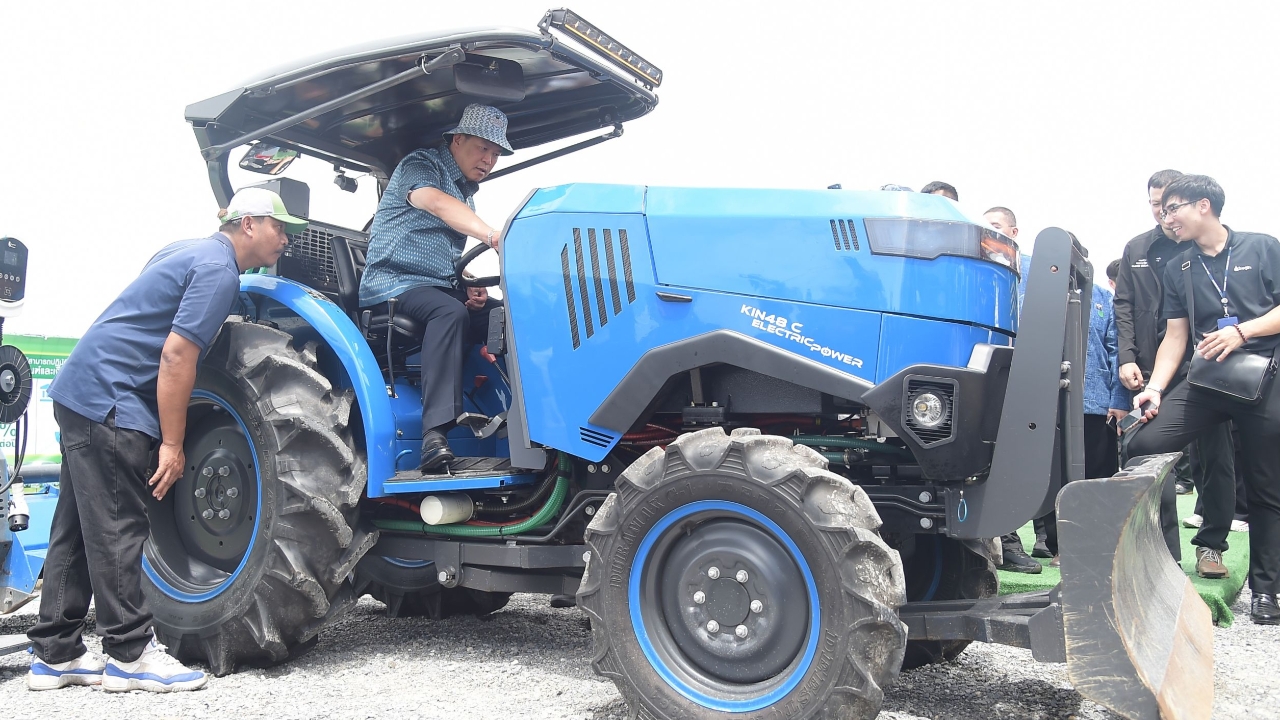
The Prime Minister launched a half-interest loan project to reduce production costs, creating opportunities for farmers to access capital and increase income. He emphasized not just handing out fish but providing quality fishing rods, and demonstrated driving an electric tractor made by Thai engineers.
At 10:00 a.m. on 3 July 2026, at the Agricultural Marketing Cooperative of BAAC in Phra Nakhon Si Ayutthaya Province’s Bang Ban District, Prime Minister and Minister of Interior Anutin Charnvirakul presided over the opening ceremony of the half-interest loan project designed to reduce production costs.
Before the opening ceremony, the Prime Minister led attendees in a moment of silence to pay respects to Her Majesty Queen Sirikit, the Queen Mother, and Princess Bajrakitiyabha Narendiradebyavati, the Princess Royal and daughter of the Queen Mother.


Ratchada Thanadirek, spokesperson for the Prime Minister's Office, reported that the Prime Minister warmly greeted the people of Phra Nakhon Si Ayutthaya Province. He opened the project by stating that the government is offering this half-interest loan program to help farmers by sharing half the interest cost to reduce expenses, increase liquidity, and improve access to quality production inputs.
“The government must implement multiple measures to support this initiative. This project is not merely about lending money but creating opportunities for farmers to access low-interest capital, enabling them to purchase quality inputs that effectively reduce costs. Participants will also receive training to enhance skills in cost management and efficient use of production inputs,” he said.


The Prime Minister added that the government will support, monitor, and promote cooperation to elevate the agricultural sector using technology and innovation to improve yields. This includes encouraging appropriate fertilizer use based on soil conditions, employing technology for crop planning and cost management, using drones in cultivation, and selecting high-yield, climate-resilient plant varieties. These measures aim to help farmers “reduce costs to increase future income” as the government’s goal is to raise incomes and improve quality of life.
“The government must lay a strong foundation for Thailand’s agricultural sector for the long term. We do not just hand out fish but provide better fishing rods so that people can manage resources to their full potential. This project is an investment in the future of Thai agriculture alongside accelerating infrastructure development to ensure sustainable agricultural security,” he stated.


At the conclusion, the Prime Minister expressed hope that the half-interest loan project will uplift Thailand’s agricultural sector by reducing costs, increasing incomes, and providing stability to farmers nationwide. He thanked the Ministry of Finance, the Bank for Agriculture and Agricultural Cooperatives, and all agencies involved in driving the project to support farmers, wishing for its success in raising incomes and improving farmers’ quality of life sustainably.
Following this, the Prime Minister and his delegation officially launched the “Half-Interest Loan” project to reduce production costs and took photos with participating farmers.


The Prime Minister then toured a demonstration of agricultural drone use and tested driving a Thai-made electric tractor, an innovation that helps reduce farmers’ costs and expenses. This supports government policies to reduce greenhouse gas emissions and generate carbon credits, aiming for the country’s Net Zero goal, while creating high-skilled jobs, stimulating employment along the supply chain, and enhancing national competitiveness.


Prior to the Prime Minister’s arrival, the Government Public Relations Office of the Prime Minister’s Secretariat organized an outreach campaign inviting the public to follow news via the Facebook page “Thai Koo Fah” to stay informed about government information and policies. The public is encouraged to share opinions and suggestions with the Secretariat, promoting public participation between the government and citizens.