

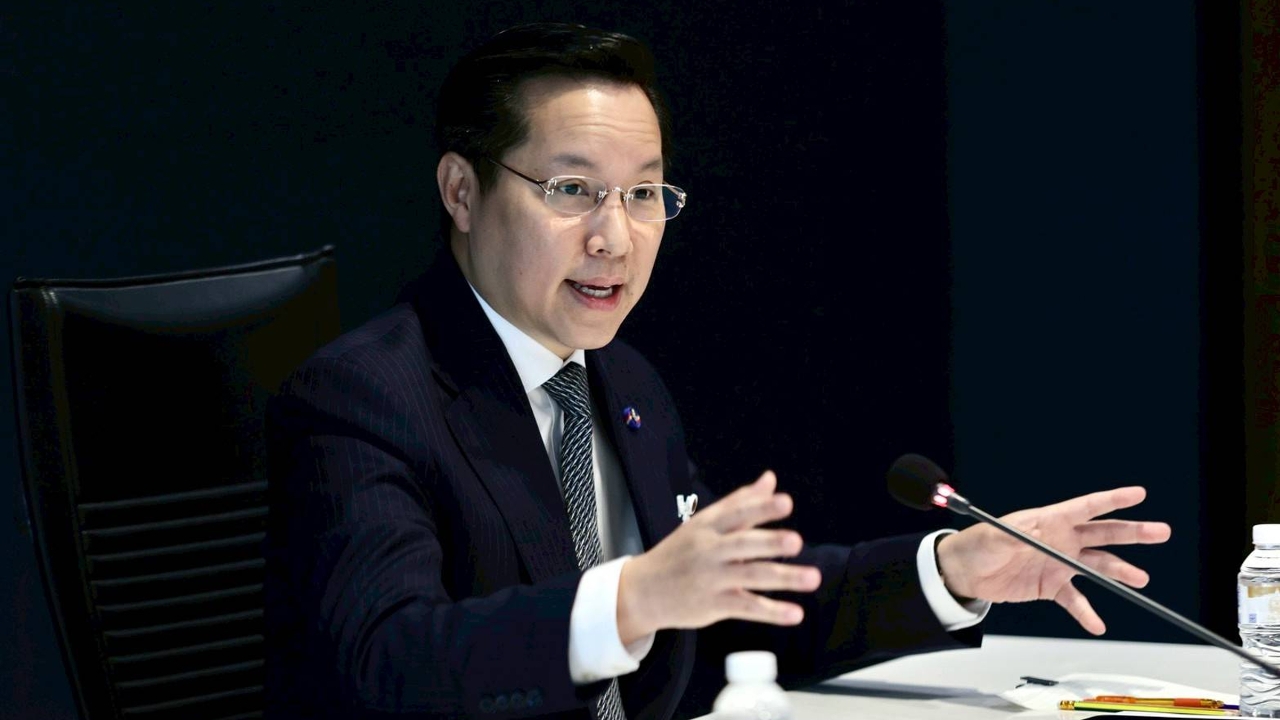
Attawit teams up with the EGAT union to reduce the Energy Regulatory Commission's (ERC) authority, restore EGAT's power generation capacity, and decrease private sector monopolies in the energy market.
On 3 Jul 2026 GMT+7, Attawit Suwanpakdee, MP from the United Thai Nation Party, held discussions with the Electricity Generating Authority of Thailand (EGAT) labor union group to propose energy structural reforms aimed at "breaking the chains" restricting EGAT, allowing it to operate at full potential.
Attawit stated that currently EGAT is regulated by the Energy Regulatory Commission (ERC) despite having its own legal framework and being 100% state-owned. He said it is unnecessary for EGAT to remain under the ERC, which was originally established to strengthen private power plants during previous state enterprise privatization policies. Since the policy to privatize electricity sales no longer exists, the ERC should no longer suppress EGAT's potential. He emphasized the need for EGAT to become a "free-ranging tiger," generating income for Thai people rather than allowing private companies to continue monopolizing the market.
He pointed out that since the ERC was established in 2008, EGAT's role has steadily diminished while private companies have rapidly grown and monopolized the market. For example, in the 2018 auction of 8,300 megawatts of power plants, the ERC set conditions that prevented EGAT from bidding directly, forcing the organization to "bonsai itself" despite having superior capacity.
Attawit proposed that EGAT, the Metropolitan Electricity Authority (MEA), and the Provincial Electricity Authority (PEA), all 100% state-owned, be removed from ERC oversight and be directly accountable to the minister. He suggested transforming the ERC's role into merely the secretariat for the National Energy Policy Committee (NEPC). He also reiterated opposition to separating the System Operation (SO) function from EGAT, describing SO as the "key instrument" for controlling the power system; removing it would further shackle EGAT and diminish its role.
Another proposal concerns the burden of public lighting costs. Attawit suggested that EGAT assume responsibility for these costs through the Public Service Obligation (PSO) mechanism, instead of passing the costs to citizens or relying on the state budget. He assured this would not affect EGAT's financial performance or employee bonuses, as it could be recorded as a public service mission similar to other state enterprises.
The discussion results are seen as a positive sign, with all parties reaching unanimous agreement to restore EGAT's significant role in ensuring the country's energy security. Plans are underway to advance drafting legislation to amend and improve EGAT's governing laws in due course.